How to Say "blank" in Spanish
The most common Spanish word for “blank” is “blanco” — use 'blanco' as an adjective when describing something that is empty or unmarked, like a page, a screen, or a color.



blanco
BLAHN-koˈblaŋko

Examples
La página está en blanco.
The page is blank.
Mi camisa favorita es blanca.
My favorite shirt is white.
Las nubes son blancas y esponjosas.
The clouds are white and fluffy.
Se puso blanco del susto.
He turned pale with fright.
Making Adjectives Agree
'Blanco' is a describing word, so it changes to match the thing it describes. If the thing is feminine, use 'blanca'. If it's plural, add an 's': 'blancos' or 'blancas'. For example: el coche blanco (the white car), la casa blanca (the white house), los coches blancos (the white cars).
Forgetting to Match
Mistake: “La pared es blanco.”
Correction: Say 'La pared es blanca.' because 'pared' (wall) is a feminine word, so the describing word needs to match it.
espacio
es-PA-syoesˈpa.sjo

Examples
Deja un espacio para tu firma.
Leave a blank for your signature.
Escribe tu nombre en el espacio en blanco.
Write your name in the blank space.
Deja un espacio de dos centímetros en el margen.
Leave a two-centimeter space in the margin.
blanco
BLAHN-koˈblaŋko
Examples
Rellena el blanco con tu apellido.
Fill in the blank with your last name.
Mi camisa favorita es blanca.
My favorite shirt is white.
Las nubes son blancas y esponjosas.
The clouds are white and fluffy.
Se puso blanco del susto.
He turned pale with fright.
Making Adjectives Agree
'Blanco' is a describing word, so it changes to match the thing it describes. If the thing is feminine, use 'blanca'. If it's plural, add an 's': 'blancos' or 'blancas'. For example: el coche blanco (the white car), la casa blanca (the white house), los coches blancos (the white cars).
Forgetting to Match
Mistake: “La pared es blanco.”
Correction: Say 'La pared es blanca.' because 'pared' (wall) is a feminine word, so the describing word needs to match it.
virgen
BEE-rhen'biɾxen

Examples
Compró un cuaderno de hojas vírgenes.
He bought a notebook with blank pages.
Exploramos una selva virgen donde nunca había estado nadie.
We explored a pristine jungle where no one had ever been.
El disco duro está virgen, no tiene archivos.
The hard drive is blank; it has no files.
Agreement
As an adjective, 'virgen' must match the noun it describes in number and gender: 'una playa virgen' (a pristine beach) or 'territorios vírgenes' (pristine territories).
bloqueado
blo-kay-AH-thoblo.keˈa.ðo
Examples
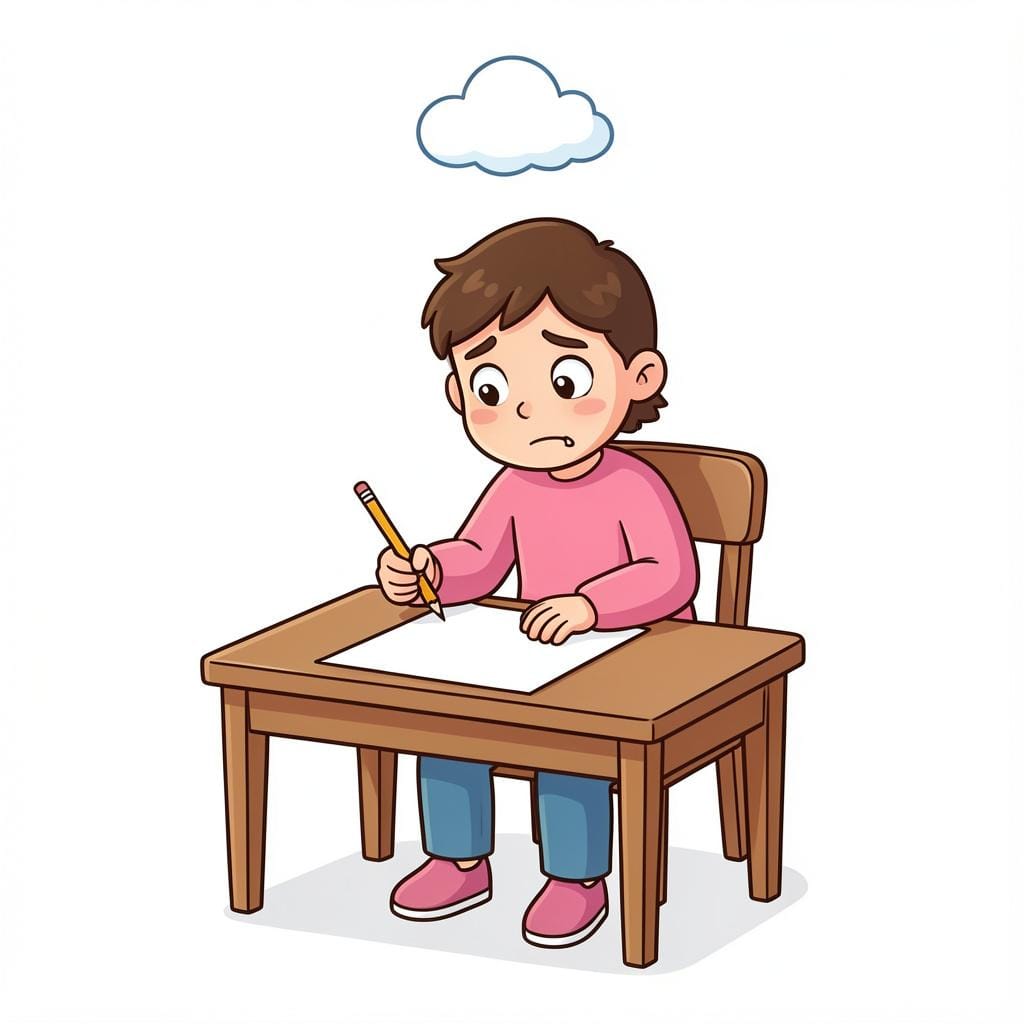
Me quedé bloqueado y no pude responder.
I went blank and couldn't answer.
Me quedé bloqueado en el examen y no recordaba nada.
My mind went blank during the exam and I didn't remember anything.
El escritor se siente bloqueado y no puede terminar su novela.
The writer feels stuck and cannot finish his novel.
The verb 'quedarse'
We often use 'quedarse' (to stay/become) with bloqueado to describe the moment your mind suddenly stops working.
laguna
lah-GOO-nahlaˈɡuna

Examples
Tuve una laguna mental y olvidé su nombre.
I had a mental blank and forgot his name.
Tengo una laguna mental y no recuerdo su nombre.
I have a mental blank and don't remember his name.
El abogado encontró una laguna legal en el contrato.
The lawyer found a legal loophole in the contract.
Hay lagunas importantes en su educación.
There are significant gaps in his education.
Abstract Use
Even though it's the same word as the body of water, it functions abstractly to show that a piece of information is 'missing' like a hole in a surface.
Plural Use
Using the plural 'lagunas' often implies a general lack of preparation or knowledge in a subject.
Not just for water
Mistake: “Thinking 'laguna' only refers to nature.”
Correction: Remember that if someone says they have a 'laguna', they likely forgot something, not that they own a lake!
Choosing between 'espacio' and 'blanco'
Related Translations
Learn Spanish with Inklingo
Interactive stories, personalized learning, and more.