How to Say "cascade" in Spanish
The most common Spanish word for “cascade” is “cascada” — use 'cascada' for a literal waterfall, especially a smaller one, or for a metaphorical cascade of events happening quickly in succession, like laughter or applause.


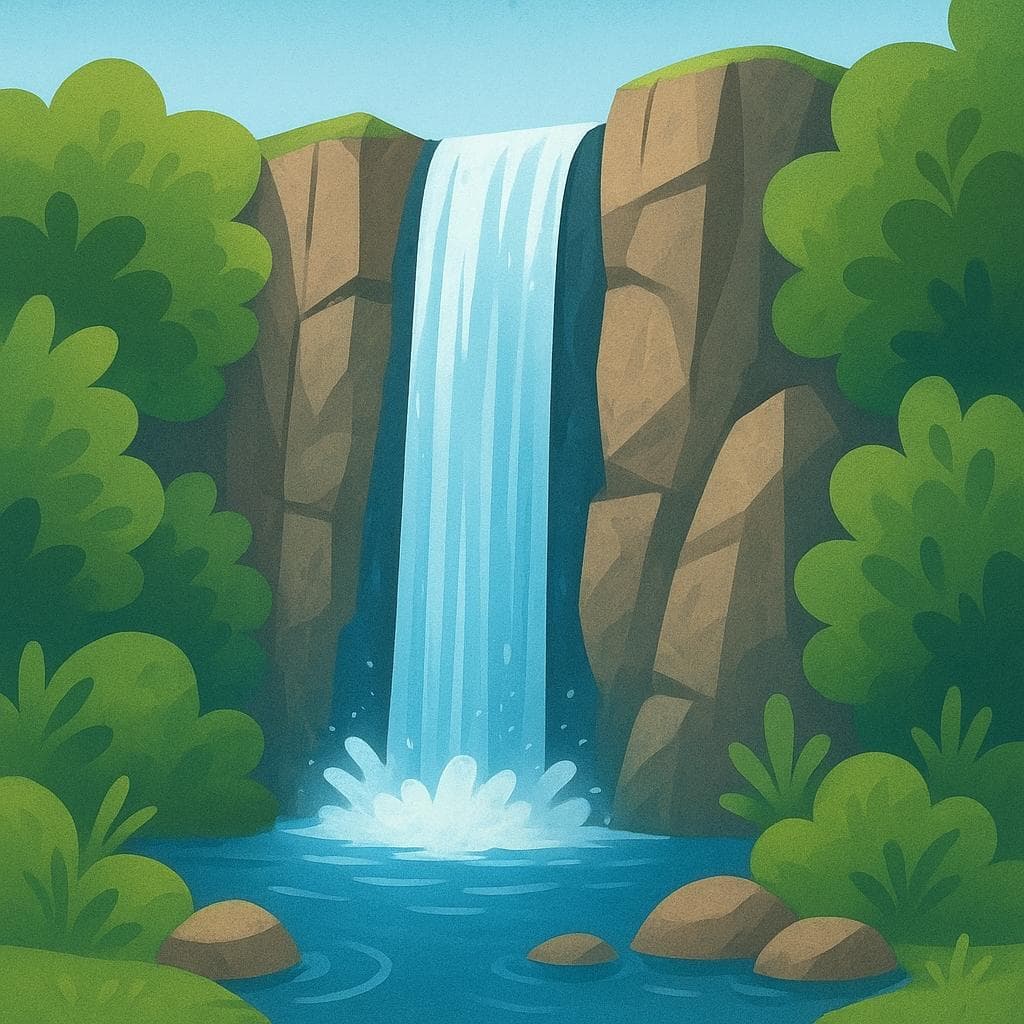
cascada
kas-KAH-dahkasˈkaða
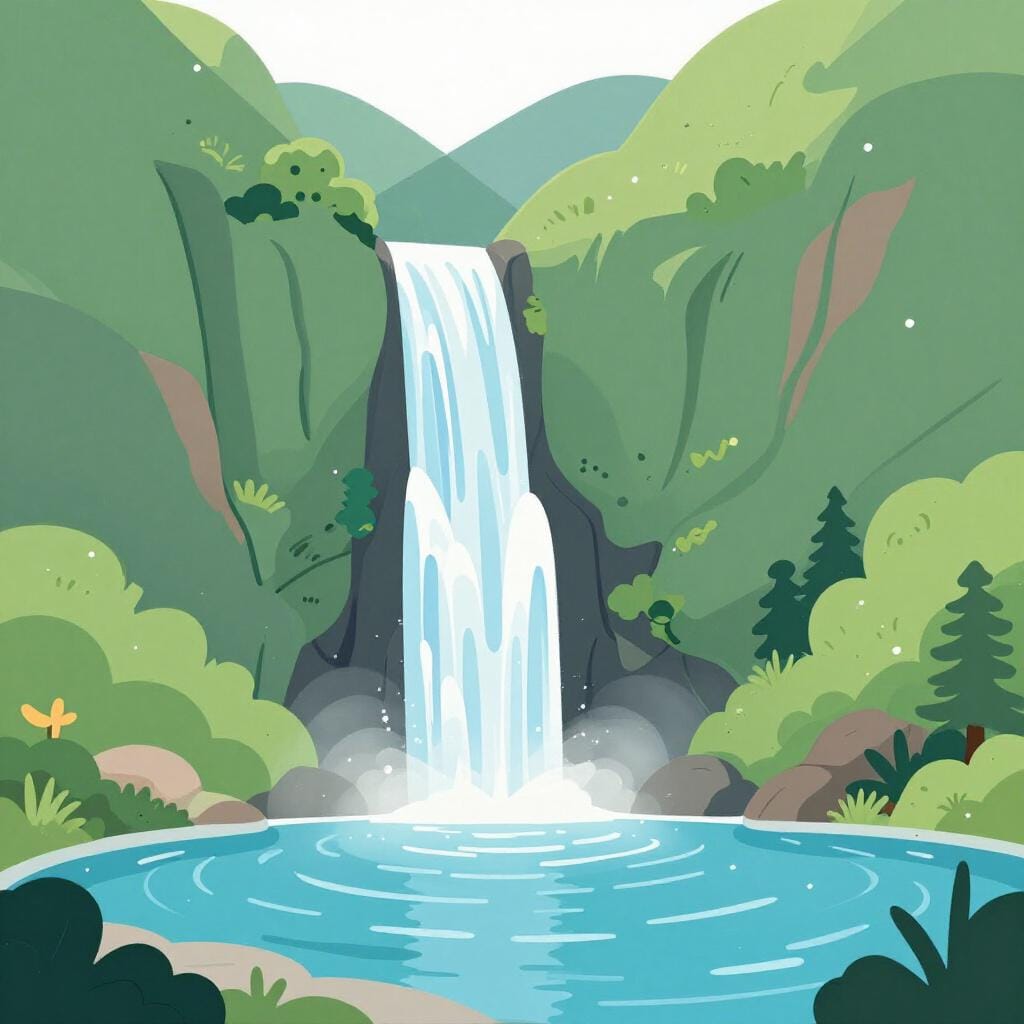
Examples
La cascada es muy bonita.
The waterfall is very pretty.
Fuimos de excursión para ver la cascada en la montaña.
We went on a hike to see the waterfall in the mountain.
El agua de la cascada estaba muy fría pero cristalina.
The water from the waterfall was very cold but crystal clear.
Su comentario provocó una cascada de risas.
His comment sparked a cascade of laughter.
Always Feminine
This word is always feminine, so you must use 'la' or 'una'. Even if the waterfall is huge and powerful, it stays 'la cascada'.
Describing Movement
When water moves downward in this way, we use the verb 'caer' (to fall). Example: 'El agua cae de la cascada'.
Figurative Language
Just like in English, you can use 'cascada' to describe anything that 'pours' or follows in a fast sequence, not just water.
Cascada vs. Catarata
Mistake: “Using 'cascada' for Niagara Falls.”
Correction: While 'cascada' is okay, 'catarata' is better for massive, giant waterfalls like Niagara or Iguazu. Think of 'cascada' as the general or smaller version.
catarata
kah-tah-rah-tahkataˈɾata
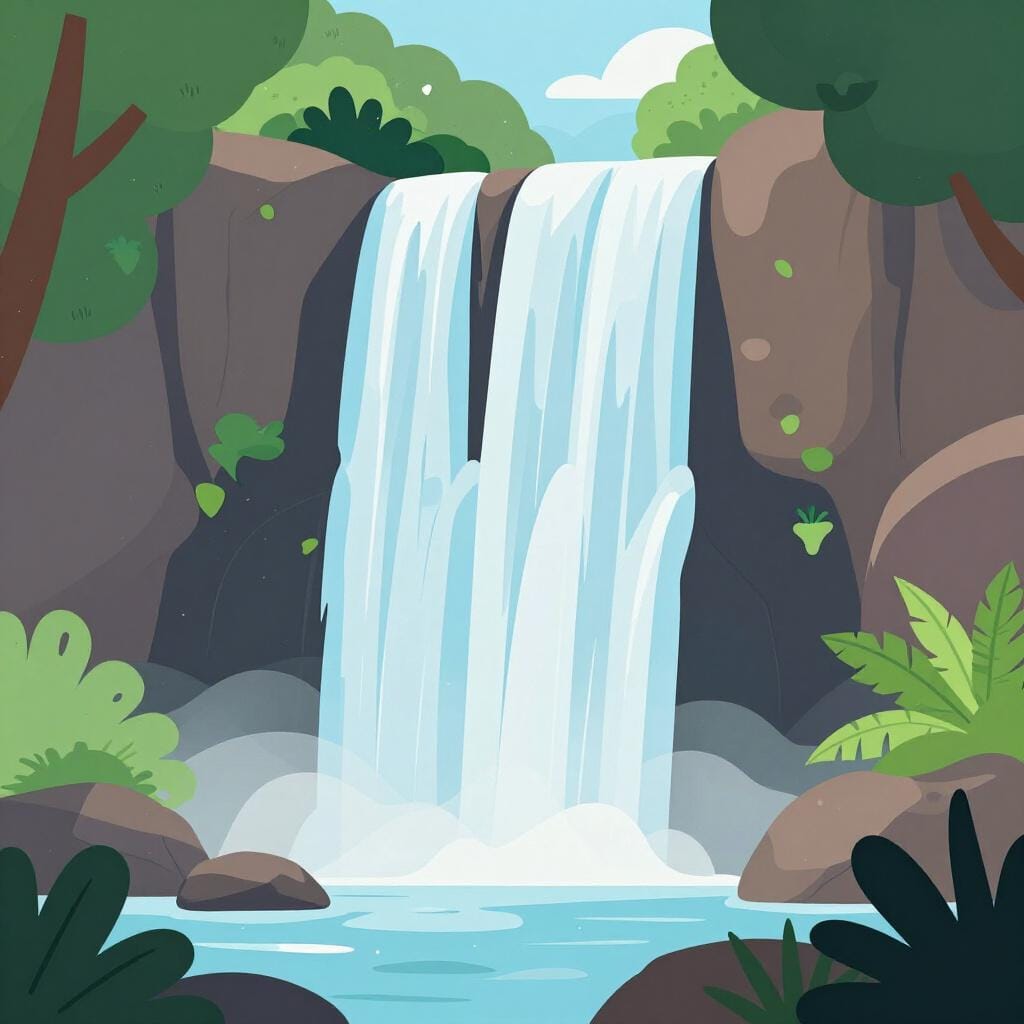
Examples
Las cataratas del Niágara son impresionantes.
Niagara Falls are impressive.
Escuchamos el ruido de la catarata desde el camino.
We heard the noise of the waterfall from the path.
Hay una catarata escondida detrás de esos árboles.
There is a waterfall hidden behind those trees.
Always Feminine
Even though it describes something powerful and huge, 'catarata' is always a feminine word. You must always use 'la' or 'una' with it.
Waterfall vs. Falls
When talking about famous landmarks like Niagara or Iguazu, Spanish speakers almost always use the plural form 'las cataratas'.
Confusing with Cascada
Mistake: “Using 'catarata' for a tiny garden fountain.”
Correction: Use 'cascada' for smaller, gentler flows of water. 'Catarata' implies a large volume of water and height.
salto
sahl-tohˈsalto
Examples
Fuimos de excursión para ver el impresionante salto de agua.
We went hiking to see the impressive waterfall.
El Salto Ángel es la cascada más alta del mundo.
Angel Falls is the highest waterfall in the world.
Using the modifier
When talking about a waterfall, Spanish often uses the full phrase 'salto de agua' (literally, 'jump of water') to make the meaning clear, although 'salto' alone can sometimes be understood in context.
caída
Examples
Las cataratas del Iguazú son la caída de agua más famosa de la región.
The Iguazu Falls are the most famous waterfall in the region.
Literal Waterfall vs. Metaphorical Cascade
Learn Spanish with Inklingo
Interactive stories, personalized learning, and more.