How to Say "power" in Spanish
The most common Spanish word for “power” is “poder” — use 'poder' for abstract concepts of authority, influence, or control, like 'knowledge is power'.














poder
poh-DEHRpoˈðeɾ

Examples
El conocimiento es poder.
Knowledge is power.
El presidente tiene mucho poder.
The president has a lot of power.
Ella tiene el poder de cambiar las cosas.
She has the ability to change things.
Always Masculine
Even though it ends in '-er' like a verb, when 'poder' is a noun, it's always masculine. So, remember to use 'el poder' or 'un poder'.
energía
Examples
Necesitamos encontrar fuentes de energía más limpias.
We need to find cleaner energy sources.
electricidad
eh-lek-trih-see-dahdelek.tɾi.siˈðað

Examples
Necesito pagar la factura de la electricidad este mes.
I need to pay the electricity bill this month.
Cuando hay tormenta, a veces se va la electricidad.
When there is a storm, sometimes the power goes out.
Descubrieron cómo almacenar la electricidad de forma más eficiente.
They discovered how to store electricity more efficiently.
Gender Alert
Remember that 'electricidad' is always feminine, so you must use 'la' before it: 'la electricidad'. Nouns ending in -dad are almost always feminine.
Using 'luz' instead of 'electricidad'
Mistake: “La luz se fue.”
Correction: Se fue la electricidad. (While 'luz' is often used informally to mean power, 'electricidad' is the precise, broader term for the power supply when discussing technical aspects.)
fuerza
FWER-sahˈfweɾ.θa

Examples
No tengo la fuerza para levantar esa caja.
I don't have the strength to lift that box.
El viento soplaba con mucha fuerza.
The wind was blowing with a lot of force.
Para abrirlo, tienes que hacer fuerza.
To open it, you have to use force.
La fuerza de su argumento convenció a todos.
The force of his argument convinced everyone.
Always Feminine
Fuerza is a feminine word, so you'll always pair it with feminine words like 'la', 'una', 'mucha', or 'poca'. For example, 'la fuerza' (the strength) or 'mucha fuerza' (a lot of strength).
autoridad
au-to-ri-DADaw.to.ɾiˈðað

Examples
El director tiene la autoridad de aprobar el presupuesto.
The director has the authority to approve the budget.
No tienes autoridad para decirme qué hacer.
You don't have the power/right to tell me what to do.
La ley le da autoridad al policía en ese momento.
The law gives the police officer authority at that moment.
Feminine Noun Rule
Even though many Spanish nouns ending in -ad are feminine (like 'amistad' or 'ciudad'), 'autoridad' is a great reminder that you must always use the feminine articles: 'la autoridad', 'una autoridad'.
Using the wrong article
Mistake: “El autoridad (Incorrect)”
Correction: La autoridad (Correct). Remember that -dad endings usually signal a feminine noun.
control
kon-trolkonˈtɾol

Examples
El nuevo gerente tiene el control total del proyecto.
The new manager has total control of the project.
Es importante mantener el control en situaciones de estrés.
It's important to maintain control in stressful situations.
Perdió el control del coche en el hielo.
He lost control of the car on the ice.
Always Masculine
Even though it doesn't end in -o, 'control' is a masculine word. Always say 'el control' or 'un control', not 'la control'.
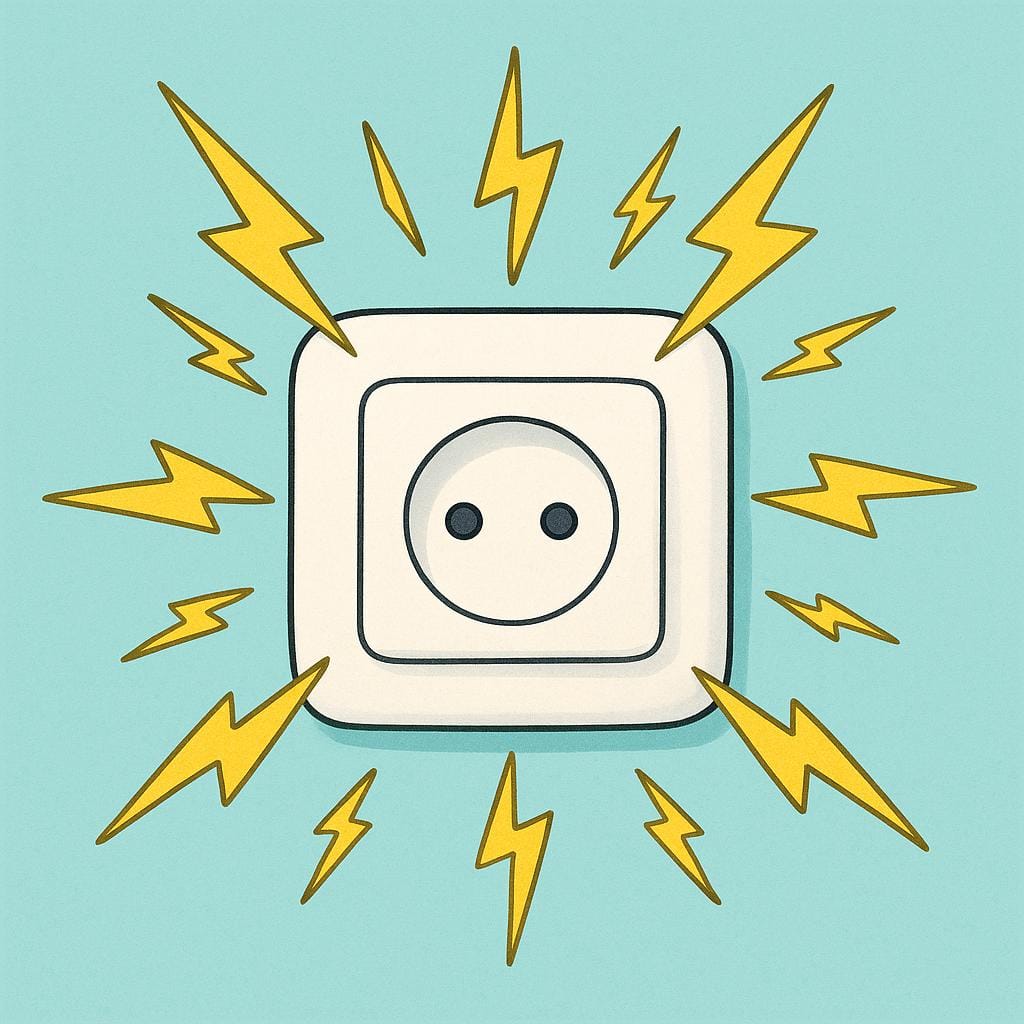
corriente
koh-rree-EN-tehkoˈrjente
Examples
¿Puedes conectar esto a la corriente?
Can you plug this into the power/electricity?
Se fue la corriente por la tormenta.
The power went out because of the storm.
The Outlet
The word for the wall socket where you plug things in is often 'tomacorriente' (literally 'take current'), which helps reinforce this meaning.
Confusing Power
Mistake: “Using 'poder' to mean 'electrical power'.”
Correction: Use 'corriente' or 'electricidad'. 'Poder' means ability or authority.
potencia
poh-TEN-syahpoˈten.sja

Examples
El motor de este coche tiene mucha potencia.
This car's engine has a lot of power.
Necesitas más potencia para levantar esa caja pesada.
You need more strength to lift that heavy box.
La potencia de su voz llenó la sala de conciertos.
The power of her voice filled the concert hall.
La nueva potencia económica está emergiendo en Asia.
The new economic power is emerging in Asia.
Gender Reminder
Even though it ends in '-a,' 'potencia' is always a feminine noun, so use 'la potencia' or 'una potencia'.
Math Usage
In math, you usually say 'elevado a la potencia de...' (raised to the power of...). For example, 'diez a la potencia de cinco' (ten to the power of five).
capacidad
kah-pah-see-dahdkapaˈsiðað

Examples
Tiene una gran capacidad para aprender idiomas rápidamente.
She has a great ability to learn languages quickly.
Dudo de mi capacidad para terminar el proyecto a tiempo.
I doubt my capability to finish the project on time.
Todos tenemos la capacidad de cambiar nuestras vidas.
We all have the capacity (potential) to change our lives.
Always Feminine
Even though it ends in '-d', 'capacidad' is always a feminine noun, so you use feminine articles: 'la capacidad', 'una capacidad'.
Using 'de' after
When talking about the ability to do something, use the preposition 'de' followed by the base form of the verb (the infinitive): 'capacidad de trabajar' (ability to work).
Gender confusion
Mistake: “El capacidad”
Correction: La capacidad. Remember most nouns ending in '-dad' are feminine.
facultad
fah-kool-TAHDfa.kulˈtað

Examples
Perdió la facultad de movimiento tras el accidente.
She lost the ability to move after the accident.
El director tiene la facultad de contratar y despedir personal.
The director has the power (or authority/right) to hire and fire staff.
La facultad de razonar es lo que nos distingue.
The capacity for reason is what distinguishes us.
Using 'Tener la facultad'
When talking about having the right or authority to do something, use 'tener la facultad de' followed by the action (in the infinitive form).
energético
Examples
Muchos países buscan nuevas fuentes de recursos energéticos.
Many countries are looking for new sources of energy resources.
luz
looseluθ

Examples
Se fue la luz durante la tormenta.
The power went out during the storm.
Este mes la luz ha subido mucho.
The electricity bill has gone up a lot this month.
Tengo que pagar la luz mañana.
I have to pay the electricity bill tomorrow.
Using 'irse' for power outages
To say 'the power went out,' Spanish uses the verb 'irse' (to leave). You say 'se fue la luz' (the light left).
Power Outages
Mistake: “La luz está muerta.”
Correction: No hay luz or Se fue la luz. Spanish speakers don't say the power is 'dead'.
potencial
poh-ten-SYALpo.tenˈsjal

Examples
El joven tiene un gran potencial para la música.
The young man has great potential for music.
Debemos aprovechar el potencial de la energía solar.
We must harness the potential of solar energy.
It's Always Masculine
When used as a noun meaning 'capacity' or 'capability,' 'potencial' is always masculine: 'el potencial'.
Using the Feminine Article
Mistake: “La potencial de la empresa.”
Correction: El potencial de la empresa. (Remember to use 'el' because 'potencial' as a noun is masculine.)
agencia
a-HEN-syaaˈxen.sja

Examples
Los trabajadores exigieron mayor agencia sobre cómo se organizaba la producción.
The workers demanded greater agency over how production was organized.
Perder la agencia sobre tu propio destino es aterrador.
Losing agency over your own destiny is terrifying.
Abstract Use
This advanced meaning is often found in combination with abstract concepts like 'moral,' 'política,' or 'económica' to discuss control within those areas.
brazos
BRAH-sohsˈbɾasos

Examples
Encontró consuelo en los brazos de su abuela.
She found comfort in her grandmother's embrace (or arms).
La joven cayó en los brazos de la delincuencia.
The young woman fell into the grasp (or power) of crime.
virtud
beer-TOODbiɾˈtuð

Examples
En virtud de la nueva ley, el contrato queda cancelado.
By virtue of the new law, the contract is cancelled.
potencia
poh-TEN-syahpoˈten.sja
Examples
La potencia eléctrica se mide en vatios.
Electrical power is measured in watts.
El motor de este coche tiene mucha potencia.
This car's engine has a lot of power.
Necesitas más potencia para levantar esa caja pesada.
You need more strength to lift that heavy box.
La potencia de su voz llenó la sala de conciertos.
The power of her voice filled the concert hall.
Gender Reminder
Even though it ends in '-a,' 'potencia' is always a feminine noun, so use 'la potencia' or 'una potencia'.
Math Usage
In math, you usually say 'elevado a la potencia de...' (raised to the power of...). For example, 'diez a la potencia de cinco' (ten to the power of five).
Electrical vs. Abstract Power
Related Translations
Learn Spanish with Inklingo
Interactive stories, personalized learning, and more.