How to Say "precipice" in Spanish
The most common Spanish word for “precipice” is “abismo” — use 'abismo' when referring to a very deep, vast, and often dangerous precipice, evoking a sense of an abyss or chasm.
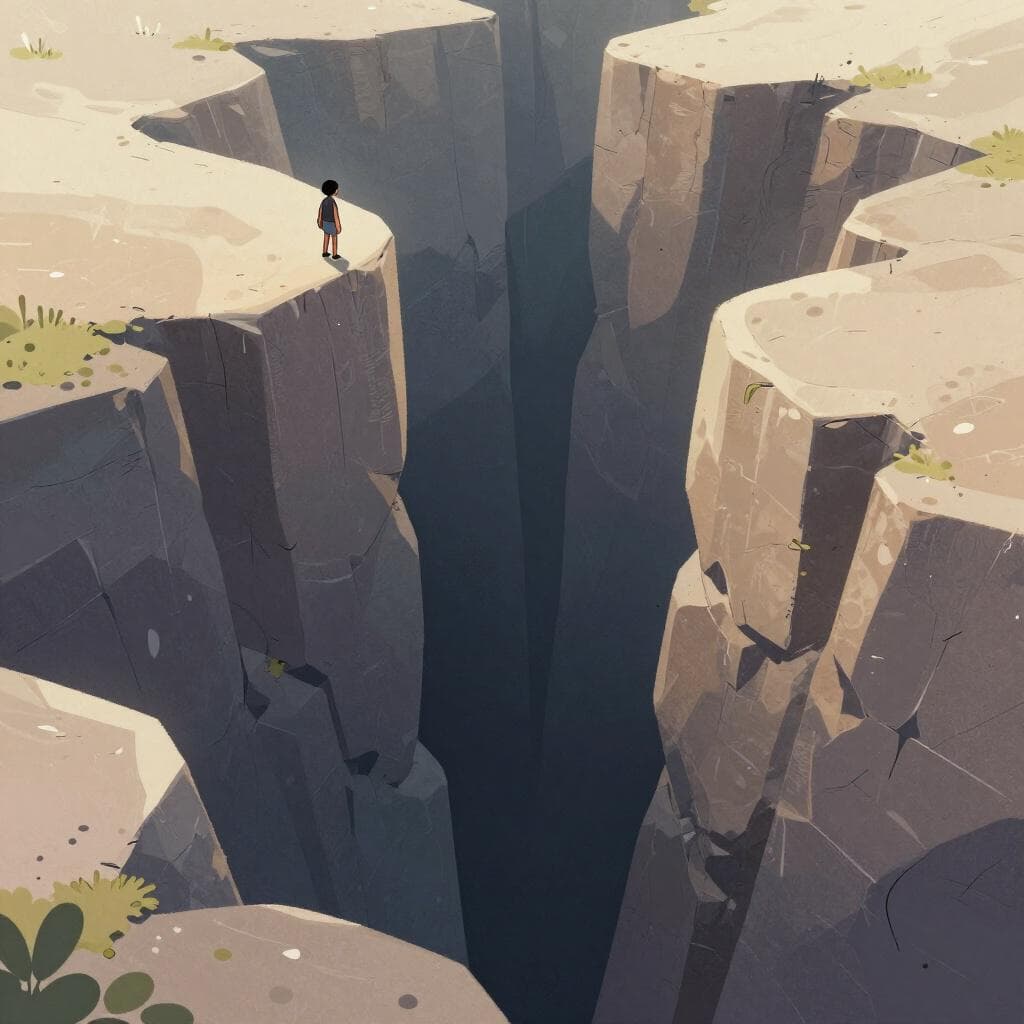
abismo
ah-BEES-mohaˈβismo
Examples
El explorador miró hacia el profundo abismo.
The explorer looked into the deep abyss.
El montañista se detuvo al borde del abismo.
The mountain climber stopped at the edge of the abyss.
Las profundidades del océano son un abismo oscuro.
The depths of the ocean are a dark abyss.
Sentí miedo al mirar hacia el abismo desde el puente.
I felt afraid looking down into the chasm from the bridge.
Always Masculine
Even though it ends in 'o', it is helpful to remember it is a masculine word: 'el abismo'. It never changes to 'abisma'.
Using 'al'
When you say you are going 'to the' abyss, combine 'a' and 'el' to make 'al': 'Caminó al abismo'.
Confusing with 'precipicio'
Mistake: “Using 'abismo' for a small drop.”
Correction: Use 'abismo' for something that feels bottomless or incredibly deep; 'precipicio' is better for a standard cliff.
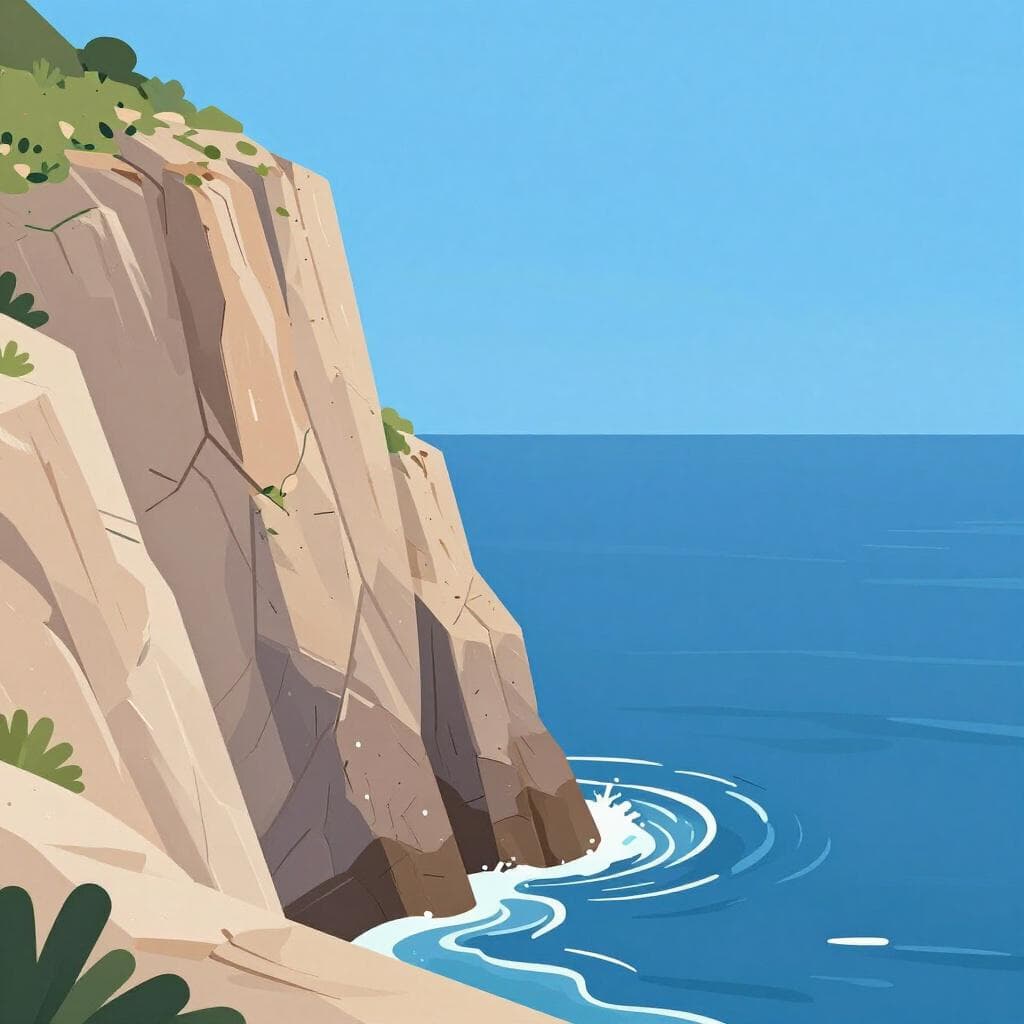
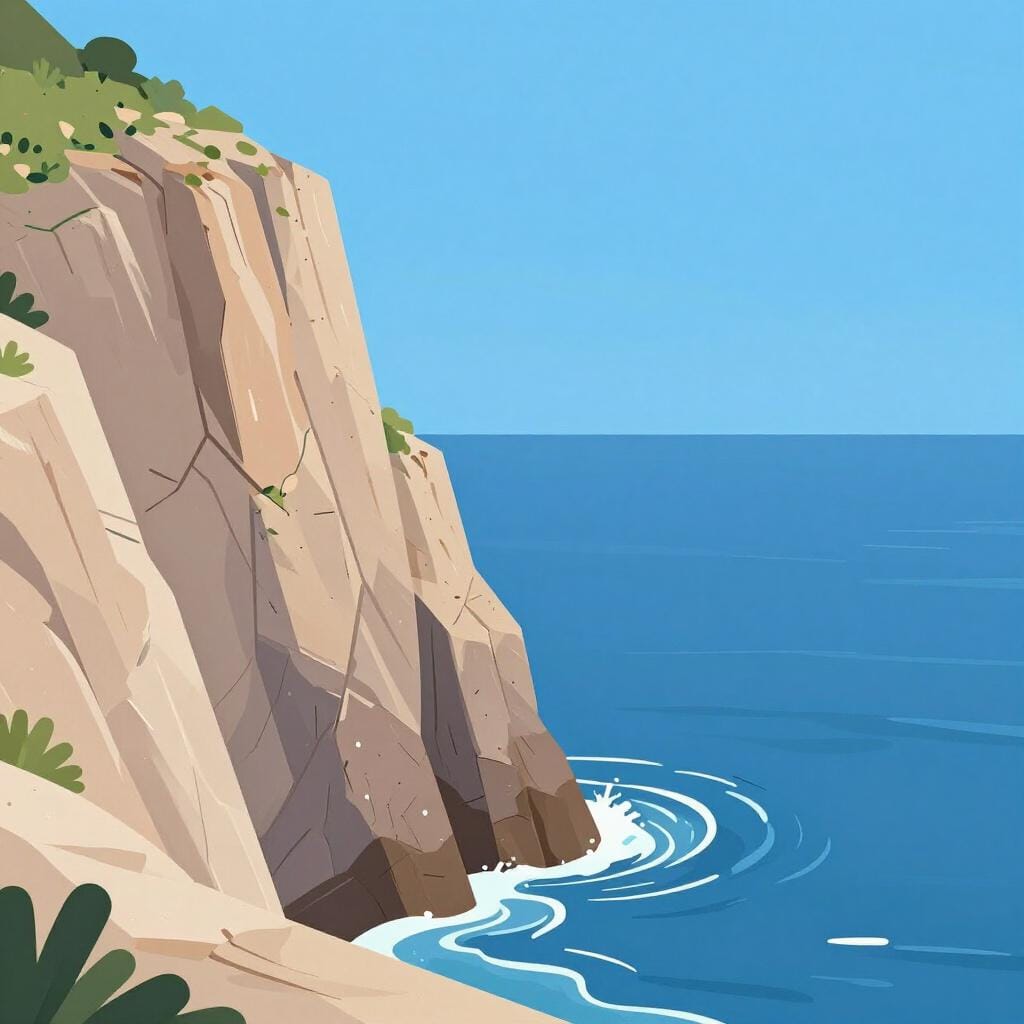
acantilado
ah-kahn-tee-LAH-dohakantiˈlaðo
Examples
Las olas rompían con fuerza contra el acantilado.
The waves crashed hard against the cliff.
Las vistas desde el acantilado son impresionantes.
The views from the cliff are impressive.
Hay un camino estrecho que bordea el acantilado.
There is a narrow path that goes along the edge of the cliff.
Las olas rompen con fuerza contra la base del acantilado.
The waves break with force against the base of the cliff.
Gender and Articles
This word is masculine. Always use 'el' or 'un'. Even if the cliff is part of 'la montaña' (the mountain), the cliff itself is 'el acantilado'.
Using 'Desde' for Views
When you want to say you are looking out from a high place like a cliff, use 'desde' (from) to describe the perspective.
Wrong Word for Ravines
Mistake: “Using 'acantilado' for a crack in the ground in the mountains.”
Correction: Use 'acantilado' mainly for steep drops by the sea. For inland cracks or deep valleys, use 'barranco' or 'cañón'.
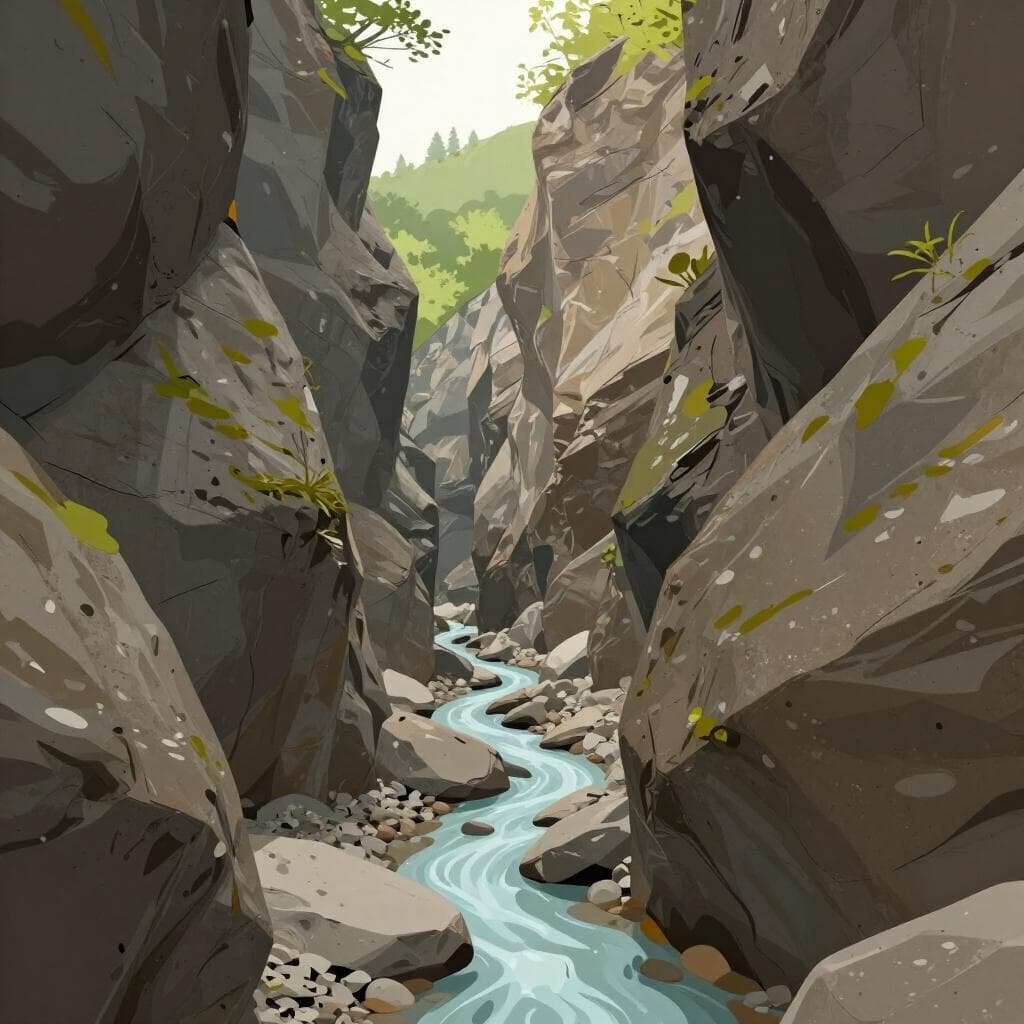
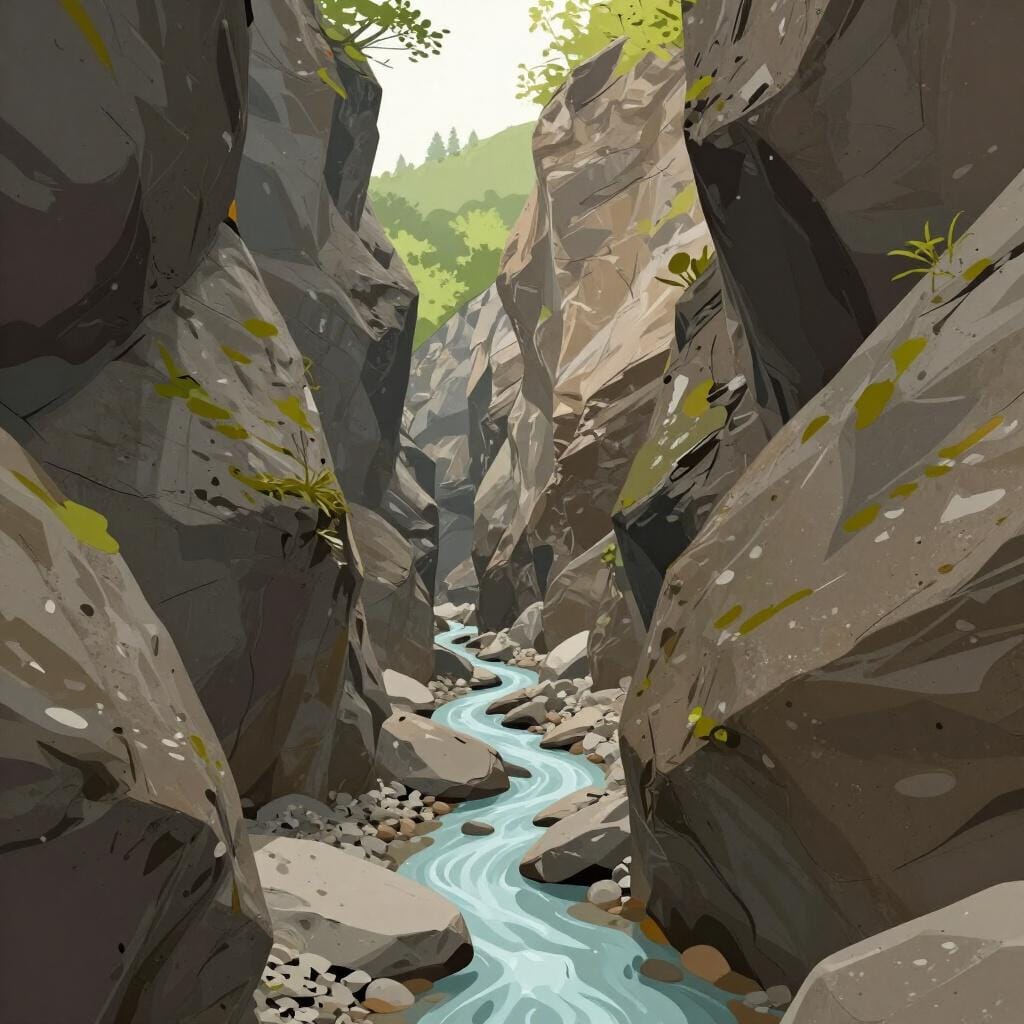
barranco
bah-RAHN-kohbaˈraŋko
Examples
El camino serpenteaba junto a un barranco peligroso.
The road wound alongside a dangerous ravine.
Hay un barranco muy profundo al lado de la carretera.
There is a very deep ravine next to the road.
El agua de la lluvia corre con fuerza por el barranco.
The rainwater flows strongly through the gully.
Ten cuidado al caminar cerca del barranco.
Be careful when walking near the cliff edge.
Always Masculine
This word ends in -o and is masculine, so you should always use 'el' or 'un' with it (el barranco).
Describing Movement
When talking about something falling into it, use 'por el barranco' to describe the path down, or 'al barranco' for the destination.
Gender confusion
Mistake: “la barranco”
Correction: el barranco (it is a masculine word).
Abismo vs. Acantilado vs. Barranco
Learn Spanish with Inklingo
Interactive stories, personalized learning, and more.