How to Say "rift" in Spanish
The most common Spanish word for “rift” is “abismo” — use 'abismo' when the rift signifies a vast, unbridgeable gap or chasm, often implying a lack of understanding or connection, particularly in relationships.



abismo
ah-BEES-mohaˈβismo

Examples
Hay un abismo entre lo que dice y lo que hace.
There is a huge gap between what he says and what he does.
La falta de comunicación creó un abismo en su matrimonio.
The lack of communication created a rift in their marriage.
Existe un abismo generacional entre abuelos y nietos.
There is a generational gap between grandparents and grandchildren.
Describing Differences
When comparing two things using 'abismo', we often use the word 'entre' (between) to show what is being separated.
Direct Translation
Mistake: “Saying 'una brecha' when you want to sound more intense.”
Correction: While 'brecha' means gap, 'abismo' emphasizes that the difference is so large it feels impossible to cross.
grieta
GREE-eh-tahˈɡɾjeta

Examples
La grieta política divide a las familias durante las elecciones.
The political rift divides families during elections.
Sus diferencias abrieron una grieta en su amistad de años.
Their differences opened a rift in their years-long friendship.
Es necesario trabajar para cerrar la grieta social.
It is necessary to work to bridge the social gap.
Abstract Use
Just like in English, physical words can be used for feelings. 'Grieta' describes a relationship that is broken but hasn't completely collapsed yet.
Don't use 'ruptura' for everything
Mistake: “Using 'ruptura' for a small disagreement.”
Correction: Use 'grieta' for the beginning of a problem or a long-standing division. 'Ruptura' is for the final breakup.
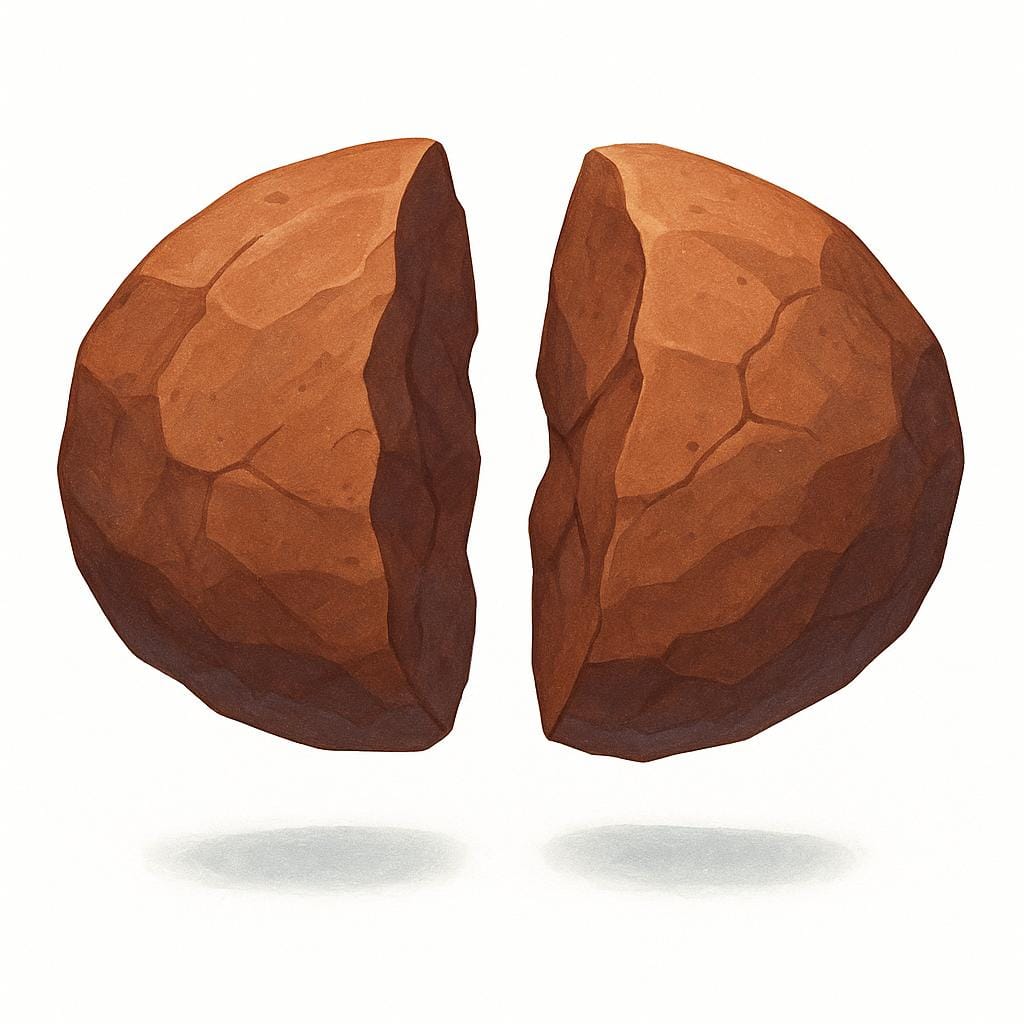
fractura
frak-TOO-rahfɾakˈtuɾa
Examples
Existe una fractura social profunda entre el campo y la ciudad.
There is a deep social rift between the countryside and the city.
La decisión del líder causó una fractura interna en el partido.
The leader's decision caused an internal split in the party.
Abstract usage
When using the word for ideas or groups, it functions exactly like the physical version but describes a 'break' in unity.
división
Examples
Hay mucha división en el partido político.
There is a lot of division in the political party.
Choosing between 'grieta' and 'fractura'
Learn Spanish with Inklingo
Interactive stories, personalized learning, and more.