abismo
“abismo” means “abyss” in Spanish. It has 2 different meanings depending on context:
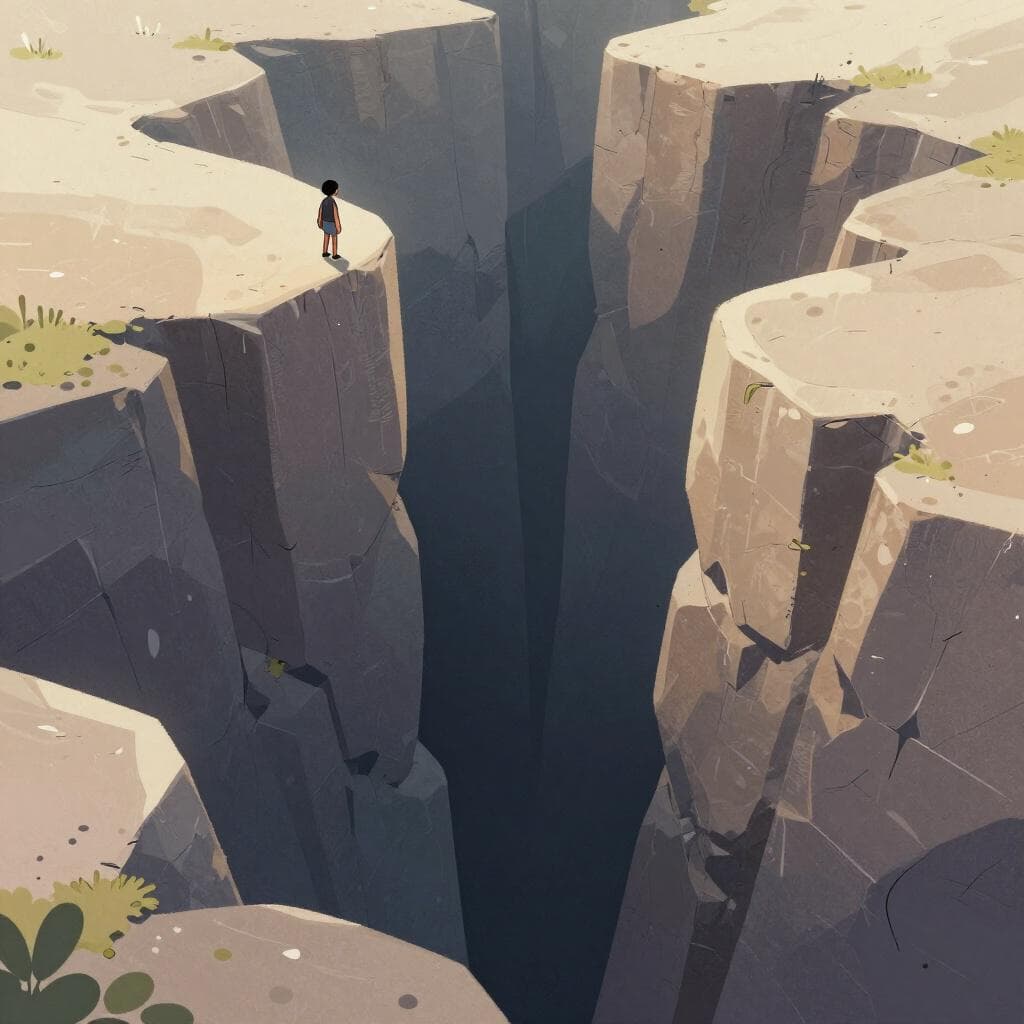

abyss
Also: precipice, chasm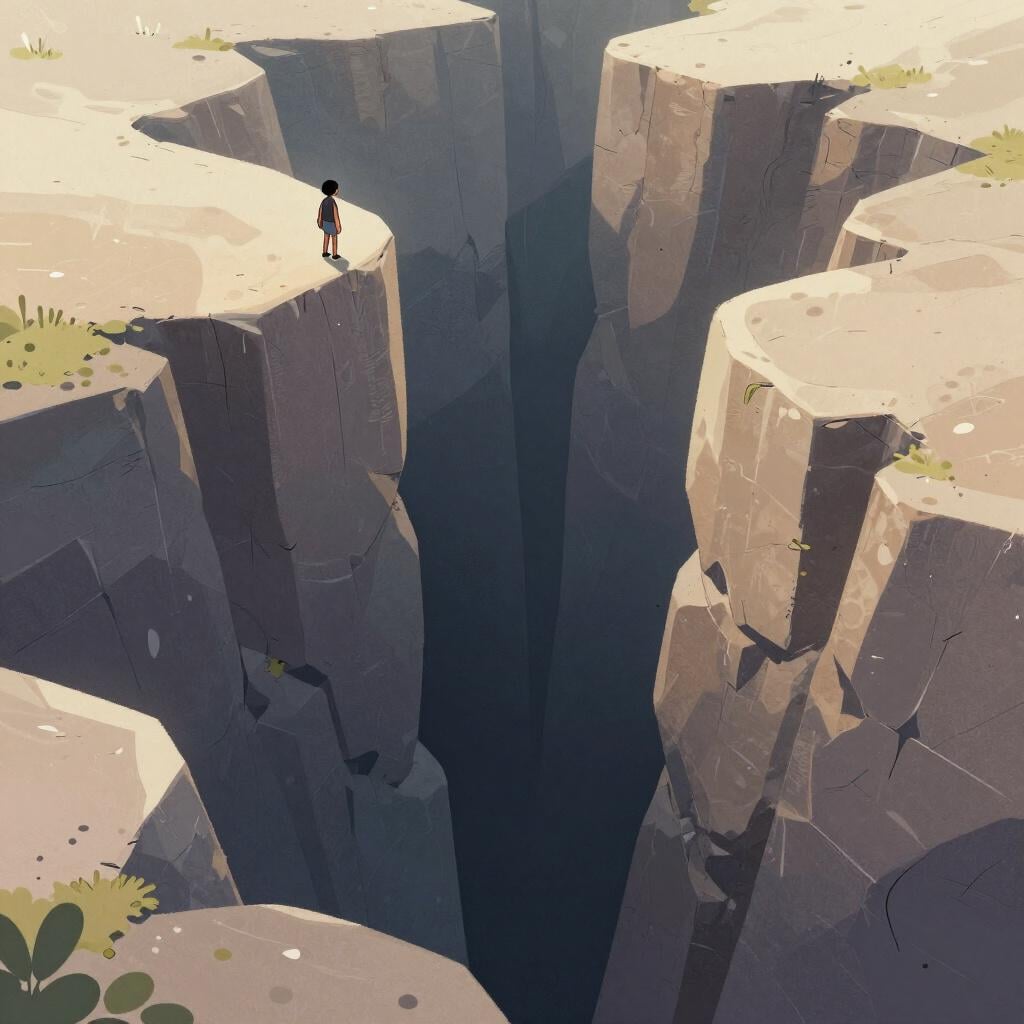
📝 In Action
El montañista se detuvo al borde del abismo.
B1The mountain climber stopped at the edge of the abyss.
Las profundidades del océano son un abismo oscuro.
B1The depths of the ocean are a dark abyss.
Sentí miedo al mirar hacia el abismo desde el puente.
B2I felt afraid looking down into the chasm from the bridge.
gulf / gap
Also: rift
📝 In Action
Hay un abismo entre lo que dice y lo que hace.
B2There is a huge gap between what he says and what he does.
La falta de comunicación creó un abismo en su matrimonio.
C1The lack of communication created a rift in their marriage.
Existe un abismo generacional entre abuelos y nietos.
B2There is a generational gap between grandparents and grandchildren.
Translate to Spanish
✏️ Quick Practice
Quick Quiz: abismo
Question 1 of 3
Which sentence uses 'abismo' to describe a big difference between two people?
📚 More Resources
👥 Word Family▼
📚 Etymology▼
From the Greek word 'abyssos' meaning 'bottomless', which traveled through Latin as 'abyssimus' before becoming the Spanish 'abismo'.
First recorded: 13th century
Cognates (Related words)
💡 Master Spanish
Take your Spanish to the next level. Read 200+ illustrated and narrated Spanish stories tailored to your level with the Inklingo app!
Frequently Asked Questions
Is 'abismo' always a bad thing?
Usually, yes. It almost always describes a dangerous physical drop or a negative distance between people or ideas. It's rare to use it for something positive.
What is the difference between 'abismo' and 'precipicio'?
A 'precipicio' is specifically the steep face of a cliff. An 'abismo' is the scary, seemingly bottomless space or hole itself.
Can I use 'abismo' to describe a deep sleep?
Not directly. While you can say someone is 'abismado en sus pensamientos' (lost in thought), for sleep, Spanish speakers usually use 'sueño profundo'.