How to Say "press" in Spanish
The most common Spanish word for “press” is “aprieta” — use this when referring to the physical act of applying pressure to something, like a button or a switch.
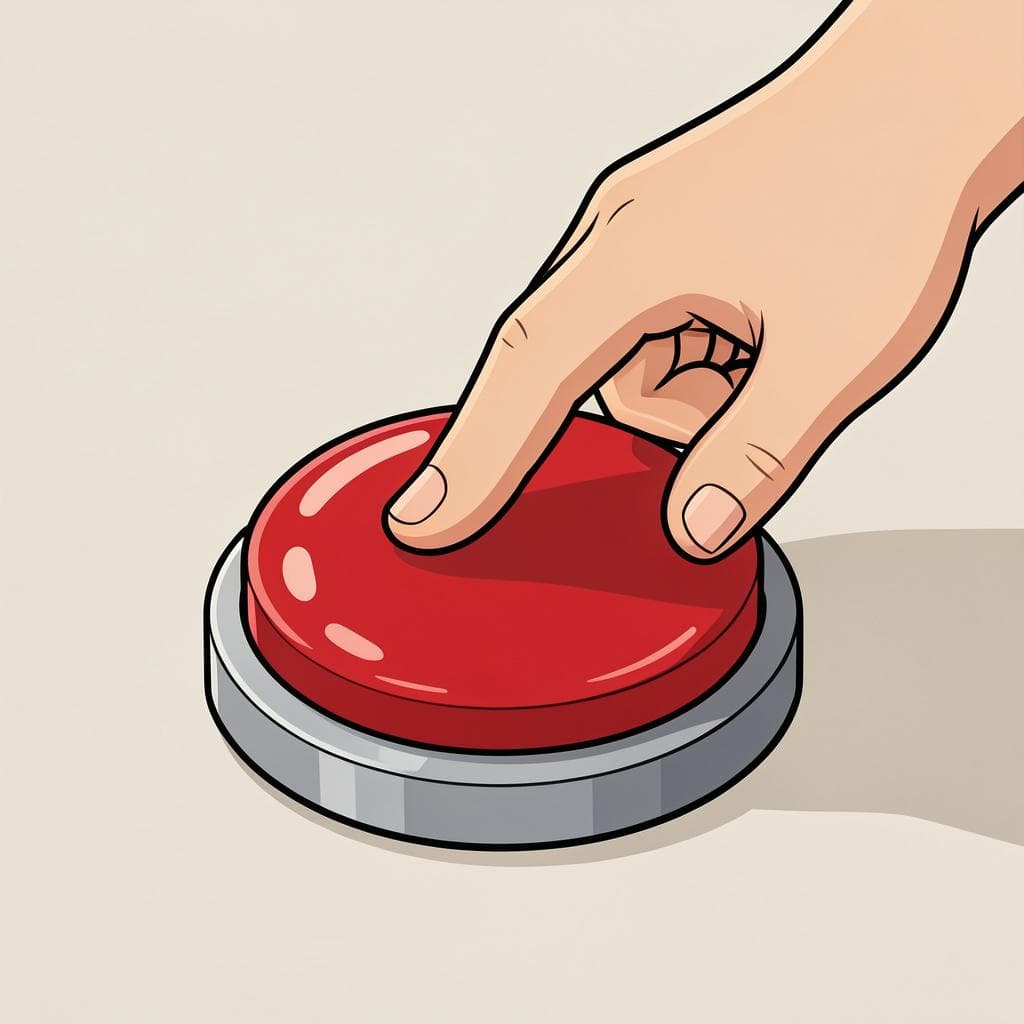
Use this when referring to the physical act of applying pressure to something, like a button or a switch.
Learn more →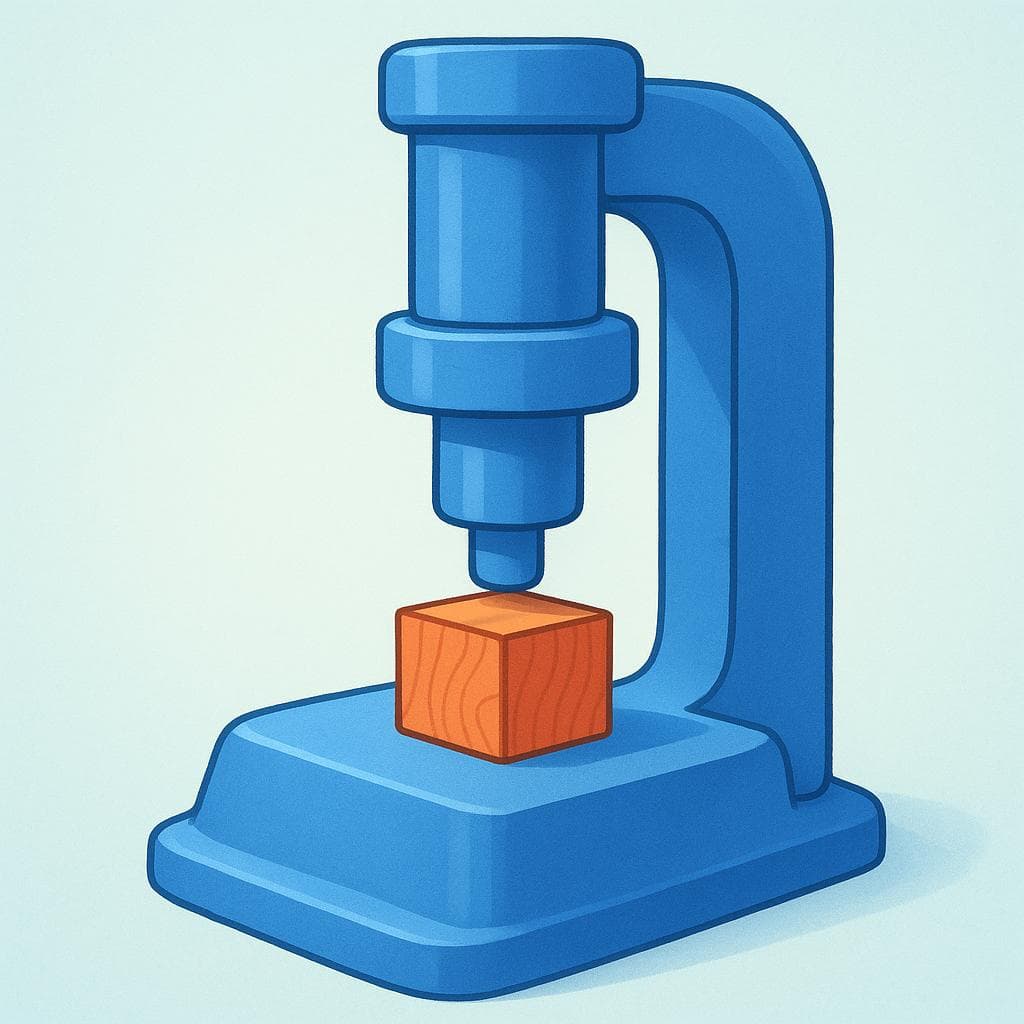
Use this for a machine designed to squeeze, shape, or hold objects firmly, like a vise or a printing press.
Learn more →This refers to the process or industry of printing, such as books, magazines, or documents.
Learn more →
Use this when 'press' refers collectively to news organizations like newspapers, television, and radio.
Learn more →This adjective describes something related to journalism or the work of journalists, as in 'press coverage'.
Learn more →
Use this specific English loanword for the weightlifting exercise, such as 'bench press'.
Learn more →
In UK English, 'press' can mean a wardrobe or cupboard; use 'armario' for this meaning.
Learn more →ah-pree-EH-tahaˈpɾjeta
Examples
Aprieta el botón para llamar al ascensor.
Press the button to call the elevator.
Ella me aprieta la mano cuando tiene miedo.
She squeezes my hand when she is afraid.
The Stem-Change Rule
This verb is a 'boot verb.' The middle 'e' changes to 'ie' in all forms except for 'we' (nosotros) and 'you all' (vosotros).
Apreta vs. Aprieta
Mistake: “Using 'apreta' for 'he/she presses'.”
Correction: Say 'aprieta'. Because the emphasis is on that syllable, the 'e' must expand into 'ie'.
pren-saˈpɾensa
Examples
El mecánico puso la pieza en la prensa para sujetarla.
The mechanic put the piece in the vise to hold it.
Usan una gran prensa para hacer aceite de oliva.
They use a large press to make olive oil.
impresión
Examples
La impresión de estos folletos es de alta calidad.
The printing of these brochures is high quality.
MEH-dee-ohsˈmeðjos

Examples
Los medios de comunicación cubrieron el evento en vivo.
The media covered the event live.
Ella trabaja en los medios, haciendo publicidad.
She works in media, doing advertising.
Las redes sociales son considerados nuevos medios.
Social networks are considered new media.
Always Plural
When referring to mass communication, 'medios' is always used in the plural, even though 'media' in English can sometimes be treated as singular.
Using Singular for Media
Mistake: “El medio es muy poderoso.”
Correction: Los medios son muy poderosos. (Use the plural form when talking about the industry or outlets.)
periodístico
Examples
Ella tiene un estilo periodístico muy directo.
She has a very direct journalistic style.
presspɾes

Examples
Él hace press en el gimnasio los lunes.
He does bench press at the gym on Mondays.
El press de banca es fundamental para fortalecer el pecho.
The bench press is essential for strengthening the chest.
Debes tener cuidado con los hombros al hacer un press militar.
You must be careful with your shoulders when doing a military press.
El departamento de marketing envió el press kit a todos los periodistas.
The marketing department sent the press kit to all the journalists.
Borrowed Words and Gender
In Spanish, words borrowed from English that end in a consonant are usually masculine. That's why we say 'el press' instead of 'la press'.
Using 'de' for Specificity
To describe exactly which type of press you are doing, just add 'de' followed by the name of the exercise, like 'press de hombros' (shoulder press).
English Loanwords in Business
In professional Spanish, many English terms like 'press kit' are kept in their original form rather than being translated to 'carpeta de prensa'.
Using 'press' for 'the media'
Mistake: “Leo las noticias en el press.”
Correction: Leo las noticias en la prensa.
Confusing 'press' with 'prensa'
Mistake: “Trabajo en el press.”
Correction: Trabajo en la prensa.
ar-MAH-ree-ohaɾˈma.ɾjo

Examples
Necesito colgar mi vestido en el armario nuevo.
I need to hang my dress in the new wardrobe.
¿Dónde está la llave del armario?
Where is the closet key?
El armario de mi abuela es muy antiguo y huele a naftalina.
My grandmother's wardrobe is very old and smells like mothballs.
Gender Rule
Even though it ends in '-o', 'armario' is a masculine noun. This means you always use 'el' (the) or 'un' (a) before it.
Confusing 'armario' and 'cajón'
Mistake: “Poner la ropa en el cajón (Putting clothes in the drawer) when meaning the whole wardrobe.”
Correction: Use 'armario' for the large piece of furniture, and 'cajón' for a single drawer that slides out.
press
Examples
El departamento de marketing envió el press kit a todos los periodistas.
The marketing department sent the press kit to all the journalists.
Pressing a Button vs. The Press
Learners often confuse 'aprieta' (to press a button) with 'prensa' (a machine). Remember that 'aprieta' is an action verb, while 'prensa' refers to a physical object or piece of equipment.
Related Translations
Learn Spanish with Inklingo
Interactive stories, personalized learning, and more.