How to Say "stubborn person" in Spanish
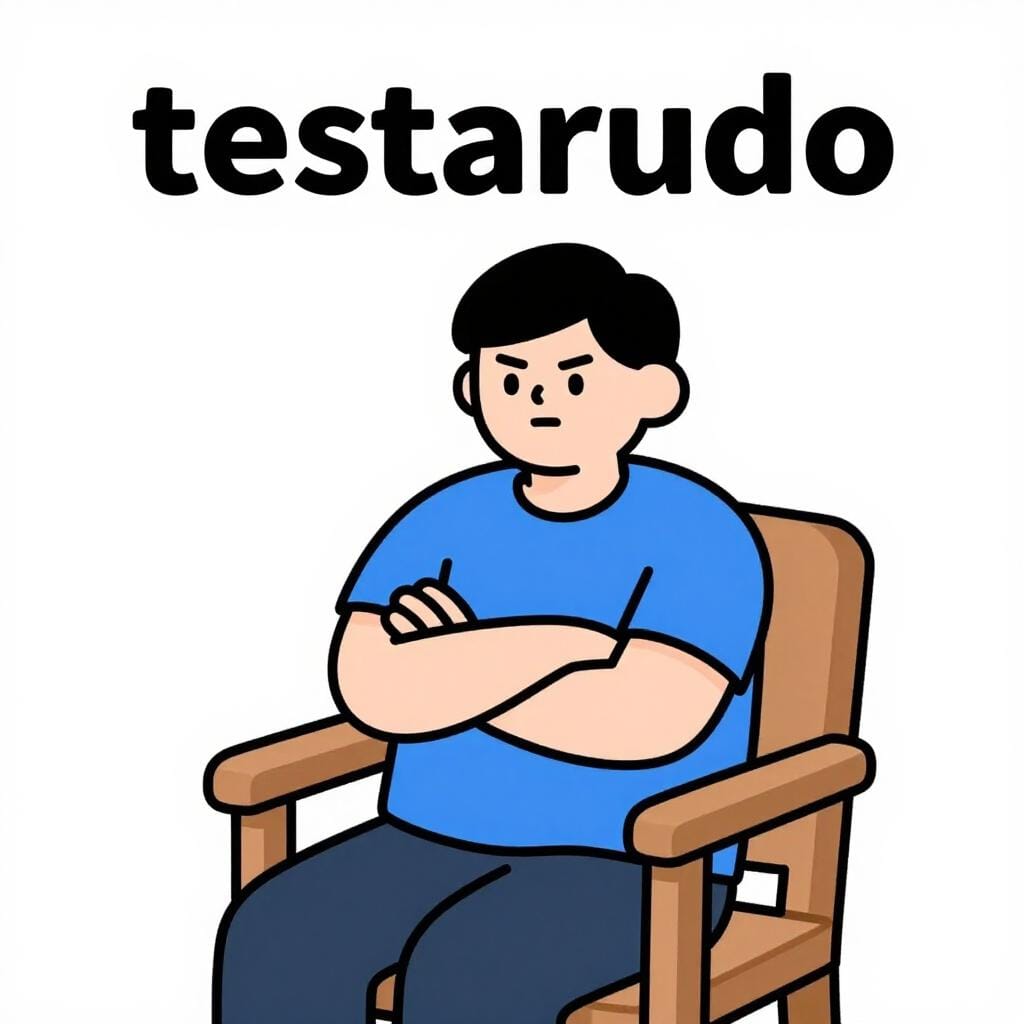
The most common Spanish word for “stubborn person” is “testarudo” — use 'testarudo' when referring to someone who is generally obstinate and resistant to listening to reason or advice, focusing on their trait of being hard-headed.

Use 'testarudo' when referring to someone who is generally obstinate and resistant to listening to reason or advice, focusing on their trait of being hard-headed.
Learn more →
Choose 'terco' when you want to emphasize that a specific person is determinedly unwilling to change their opinion or course of action, often implying a strong personal stance.
Learn more →
Use 'necio' to describe someone who is foolishly stubborn, often to the point of refusing to learn or accept valid arguments, implying a lack of sense.
Learn more →
Use 'mulo' figuratively to describe someone who is stubbornly persistent or hardworking, like a mule, often in a context of carrying burdens or doing difficult tasks.
Learn more →tes-tah-ROO-dohtestaˈɾuðo
Examples
Ese testarudo no quiere escuchar razones.
That stubborn guy doesn't want to listen to reason.
Es una testaruda, siempre quiere tener la razón.
She is a stubborn one; she always wants to be right.
¡No hables con él, es un testarudo!
Don't talk to him, he's a hardhead!
Using Describing Words as Names
In Spanish, you can turn many descriptive words into nouns just by adding 'el', 'la', 'un', or 'una' before them.
TAIR-kohˈteɾ.ko

Examples
Ese terco no va a cambiar de opinión aunque le pagues.
That stubborn guy won't change his mind even if you pay him.
Es inútil discutir con un terco.
It's useless to argue with a stubborn person.
Los tercos suelen aprender por el camino difícil.
Stubborn people usually learn the hard way.
Adjectives as Nouns
In Spanish, you can turn many adjectives into nouns just by adding 'el' or 'un' in front of them.
A vs. The
Mistake: “Eres un terco.”
Correction: Eres muy terco (adjective) OR Eres un terco (noun).
NEH-syohˈnesjo

Examples
No discutas con un necio, te bajará a su nivel.
Don't argue with a fool, he will bring you down to his level.
Ese necio no entiende razones.
That stubborn man doesn't listen to reason.
Making it a Noun
In Spanish, you can turn many adjectives into nouns just by adding 'el' or 'la'. So 'el necio' literally means 'the foolish one' or 'the fool'.
MOO-lohˈmulo

Examples
El mulo cargaba las cestas de café por el sendero.
The mule carried the coffee baskets along the path.
No seas tan mulo y escucha mis razones.
Don't be so stubborn and listen to my reasons.
El mulo es un animal muy resistente y fuerte.
The mule is a very resilient and strong animal.
Gender of the Animal
Spanish uses 'mulo' for the male animal and 'mula' for the female animal. If you don't know the sex, 'mula' is actually more common as a general term for the species.
Using 'Mulo' for People
When calling someone a 'mulo', the word stays masculine even if you are talking to a woman in some regions, though 'mula' is often used for women to match their gender.
Mulo vs. Burro
Mistake: “Using 'mulo' to mean 'donkey'.”
Correction: A 'mulo' is a mule (crossbreed), while a 'burro' is a donkey. They are different animals!
Distinguishing 'Testarudo' and 'Terco'
Learners often confuse 'testarudo' and 'terco' as they both mean stubborn. 'Testarudo' is more general, referring to someone hard-headed, while 'terco' often implies a strong, personal refusal to change one's mind on a specific issue.
Related Translations
Learn Spanish with Inklingo
Interactive stories, personalized learning, and more.