How to Say "suggests" in Spanish
The most common Spanish word for “suggests” is “indica” — use 'indica' when something directly shows or points out information, like a sign or a result.



indica
in-DI-kainˈdika

Examples
La flecha roja indica la salida.
The red arrow indicates the exit.
El doctor indica que debes descansar dos días.
The doctor suggests (or indicates) that you should rest for two days.
Si el mapa indica un desvío, síguelo.
If the map shows a detour, follow it.
The 'c' to 'qu' Spelling Change
Even though 'indicar' is a regular verb, whenever the letter 'c' comes before 'e' (like in the past tense 'yo' form or the special forms used for wishes), it changes to 'qu' (indiqué, indique) to keep the hard 'k' sound.
Using 'indica' for Formal Advice
You often hear 'indica' used when talking about instructions or advice from an authority (a doctor, a sign, a manual). It means 'it requires' or 'it recommends.'
Forgetting the Accent on the Past Tense
Mistake: “Él indica ayer.”
Correction: Él indicó ayer. (Always remember the accent mark on the 'ó' in the past tense 'él/ella/usted' form.)
sugiere
soo-HYEH-rehsuˈxje.ɾe

Examples
El informe sugiere un cambio en la estrategia de ventas.
The report suggests a change in the sales strategy.
Mi doctor sugiere que coma más verduras.
My doctor suggests that I eat more vegetables.
Ella sugiere que vayamos al cine en lugar de al teatro.
She suggests that we go to the cinema instead of the theater.
Using the Special Verb Form (Subjunctive)
When someone suggests that another person do something, the second verb changes form. Example: 'Sugiere que terminemos el trabajo' (He suggests we finish the work).
Stem Change Reminder
In the present tense, the 'e' in the stem changes to 'ie' (sugerir -> sugiere), except for the 'we' (nosotros) and 'you all' (vosotros) forms.
Forgetting the Stem Change
Mistake: “El jefe sugerimos un cambio.”
Correction: El jefe sugiere un cambio. (Remember the 'e' changes to 'ie' in the singular forms.)
apunta
ah-POON-tahaˈpunta

Examples
Todo apunta a que la economía mejorará el próximo año.
Everything suggests that the economy will improve next year.
La investigación apunta a una nueva solución para el problema.
The research points toward a new solution for the problem.
El clima apunta a ser un día soleado.
The weather looks like it will be a sunny day.
huele
WEY-lehˈwe.le
Examples
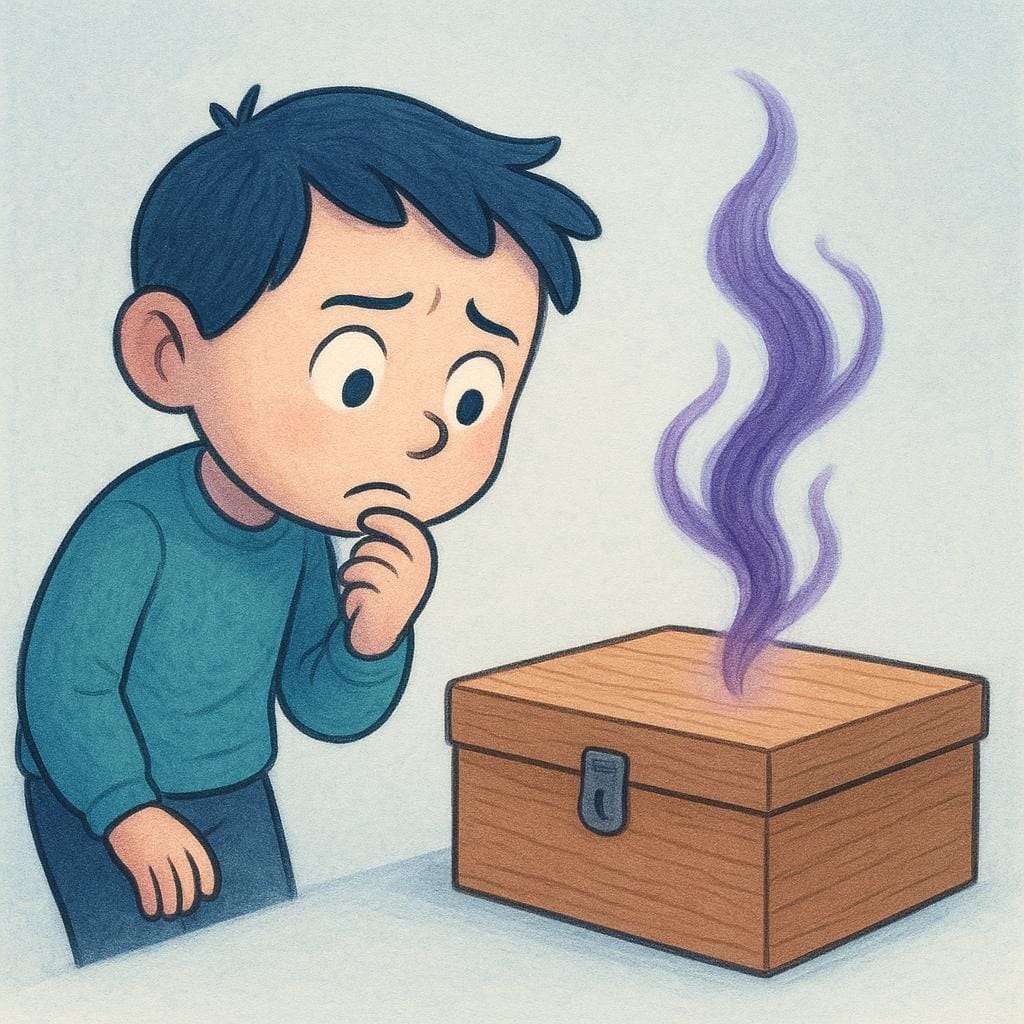
Esa propuesta huele a fraude. No deberíamos confiar.
That proposal smells like fraud. We shouldn't trust it.
Cuando miente, siempre huele a excusa barata.
When he lies, it always smells like a cheap excuse.
Figurative Use
When used figuratively, 'huele' almost always suggests a negative connotation or a problem, similar to how we say 'I smell a rat' in English.
Confusing 'indica' and 'sugiere'
Related Translations
Learn Spanish with Inklingo
Interactive stories, personalized learning, and more.