How to Say "to board" in Spanish
The most common Spanish word for “to board” is “abordar” — use 'abordar' when referring to the general act of getting on any form of transportation, especially planes, trains, or buses, often implying a more formal process.
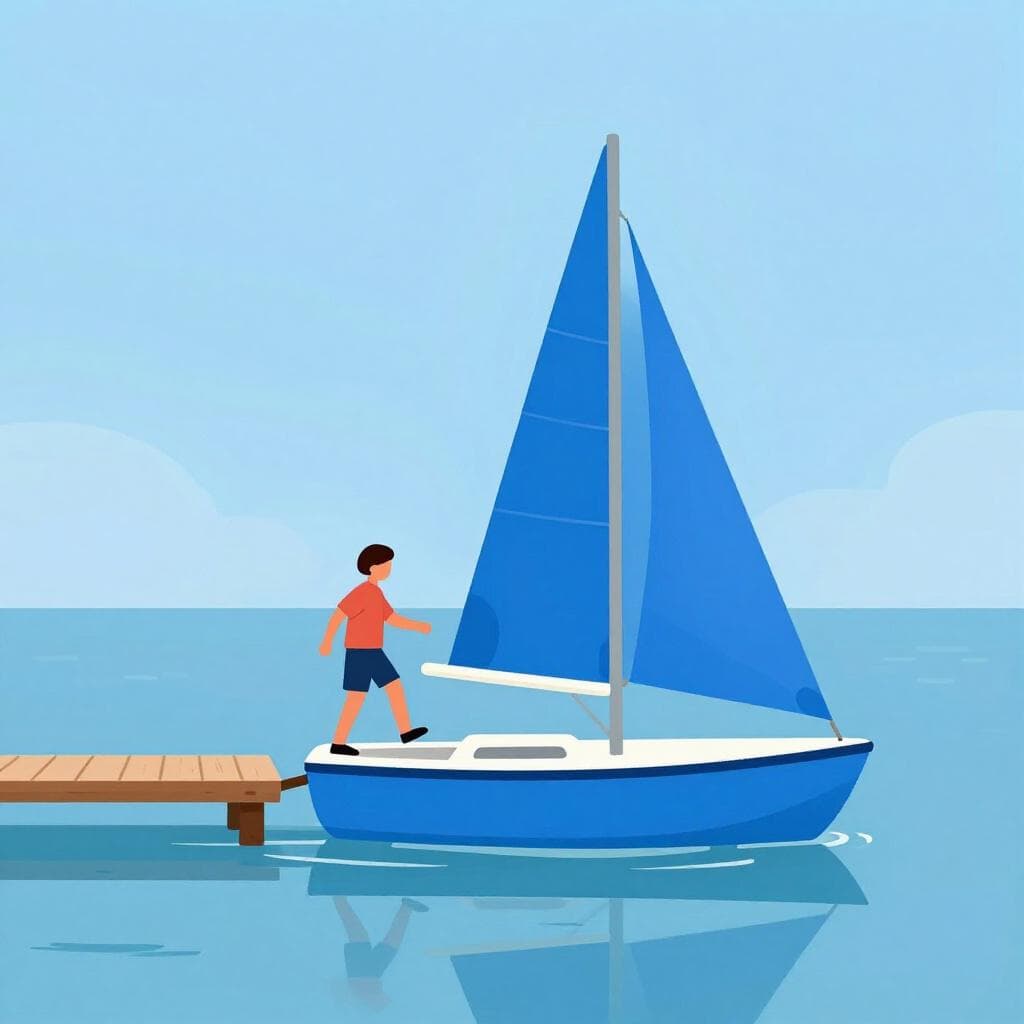
Use 'abordar' when referring to the general act of getting on any form of transportation, especially planes, trains, or buses, often implying a more formal process.
Learn more →
Use 'embarcar' specifically when referring to boarding a ship or a plane, often emphasizing the act of embarking on a journey.
Learn more →ah-bor-daraβoɾˈðaɾ

Examples
Los pasajeros están listos para abordar el avión.
The passengers are ready to board the plane.
Abordamos el barco justo antes de la tormenta.
We boarded the ship just before the storm.
Por favor, diríjase a la puerta para abordar.
Please, head to the gate to board.
No 'on' needed
Unlike English where you 'board ON a plane', in Spanish you just say 'abordar el avión'. Don't add 'en' after the verb.
Using it for cars
Mistake: “Voy a abordar mi coche.”
Correction: Voy a subirme a mi coche.
em-bar-KARembaɾˈkaɾ

Examples
Los pasajeros deben embarcar por la puerta cuatro.
Passengers must board through gate four.
Empezaremos a embarcar el equipaje en diez minutos.
We will start loading the luggage in ten minutes.
El capitán dio la orden de embarcar inmediatamente.
The captain gave the order to board immediately.
The 'C' to 'QU' Spelling Swap
To keep the hard 'K' sound, the 'c' changes to 'qu' whenever the next letter is 'e'. This happens in the 'yo' form of the past tense (embarqué) and all forms of the present wish/command mood (embarque).
Using 'a' with Vehicles
When you say you are boarding a specific vehicle, you usually don't need a preposition directly after the verb, but if you're talking about the action of getting people onto something, you might use 'a' for the people: 'embarcar a los pasajeros'.
Spelling in the Past
Mistake: “Yo embarcé ayer.”
Correction: Yo embarqué ayer. (In Spanish, 'ce' sounds like an 's' or 'th', so we need 'que' to keep the 'K' sound from the original word 'embarcar').
Abordar vs. Embarcar
Learners often confuse 'abordar' and 'embarcar' because both mean 'to board'. While 'abordar' is more general, 'embarcar' is frequently used for ships and planes, sometimes suggesting the start of a voyage.
Related Translations
Learn Spanish with Inklingo
Interactive stories, personalized learning, and more.