How to Say "watch" in Spanish
The most common Spanish word for “watch” is “reloj” — use 'reloj' when referring to the small, portable device worn on the wrist or carried to tell time.




reloj
reh-LOHKHreˈlox

Examples
¿Qué hora marca tu reloj?
What time does your watch show?
Necesitamos un reloj de pared para la sala.
We need a wall clock for the living room.
El reloj del ayuntamiento suena cada hora.
The town hall clock chimes every hour.
Masculine Noun
Even though many Spanish words ending in 'j' might be confusing, 'reloj' is always a masculine noun, meaning you must use 'el' (el reloj) with it.
Confusing Watch/Clock
Mistake: “Using 'vigilar' or 'guardar' to mean 'watch' (the device).”
Correction: 'Reloj' is the device. If you mean the verb 'to watch' (look at), use 'mirar' or 'ver'.
mira
MEE-rahˈmi.ɾa

Examples
Mira este video, es muy gracioso.
Watch this video, it's very funny.
¡Mira por dónde caminas!
Watch where you're going!
Mira a ambos lados antes de cruzar la calle.
Look both ways before crossing the street.
Giving Friendly Commands (Imperative)
This 'mira' is the command form for the familiar 'tú' (you). It's a simple, direct way to tell a friend to look at something. For someone you'd call 'usted' (formal you), you would say 'mire'.
Forgetting 'a'
Mistake: “Mira el perro. Mira mi amigo.”
Correction: When you're looking at a person or a pet, you need to add 'a'. So, it's 'Mira al perro' and 'Mira a mi amigo'. For objects, you don't need 'a': 'Mira la casa'.
mire
MEE-rehˈmi.ɾe

Examples
Mire, señor, se le cayó la cartera.
Look, sir, you dropped your wallet.
Mire a la derecha antes de cruzar la calle.
Look to the right before crossing the street.
Por favor, mire este documento y fírmelo.
Please, look at this document and sign it.
Espero que mire la película esta noche.
I hope that you (formal) watch the movie tonight.
Giving Polite Commands
This is the command form of 'mirar' (to look) that you use when speaking to someone formally ('usted'). Think of it as the polite way to say 'Look!'
The 'Mood' for Wishes and Doubts (Subjunctive)
Spanish has a special verb form for things that aren't facts, like wishes, doubts, or emotions. After a phrase like 'espero que' (I hope that) or 'no creo que' (I don't think that), the verb changes to 'mire'.
Mixing Formal and Informal
Mistake: “Using 'mira' when you should be formal, for example, with an older person: 'Señora, mira esto.'”
Correction: Always use 'mire' when addressing someone as 'usted' or 'señor/señora': 'Señora, mire esto.' It shows respect.
Using the 'Fact' Form by Mistake
Mistake: “Quiero que usted mira la casa.”
Correction: Say 'Quiero que usted mire la casa.' After 'quiero que' (I want that...), you need to use this special 'mire' form, not the regular 'mira'.
observar
ob-ser-VARoβ.seɾˈβaɾ

Examples
El astrónomo observa las estrellas con un telescopio potente.
The astronomer observes the stars with a powerful telescope.
Necesitas observar cómo lo hace el chef antes de intentarlo tú.
You need to watch how the chef does it before you try it.
Observamos un cambio significativo en el clima este mes.
We noticed a significant change in the weather this month.
Regular -AR Verb
Like many common Spanish verbs, 'observar' follows the standard pattern for verbs ending in -AR, making its conjugation very predictable.
Mixing up 'Observar' and 'Ver'
Mistake: “Using 'ver' when a careful, focused action is implied.”
Correction: Use 'observar' when you mean to study or watch something scientifically or carefully, not just to see it quickly ('ver').
guardia
gwar-dyaˈɡwar.ðja
Examples
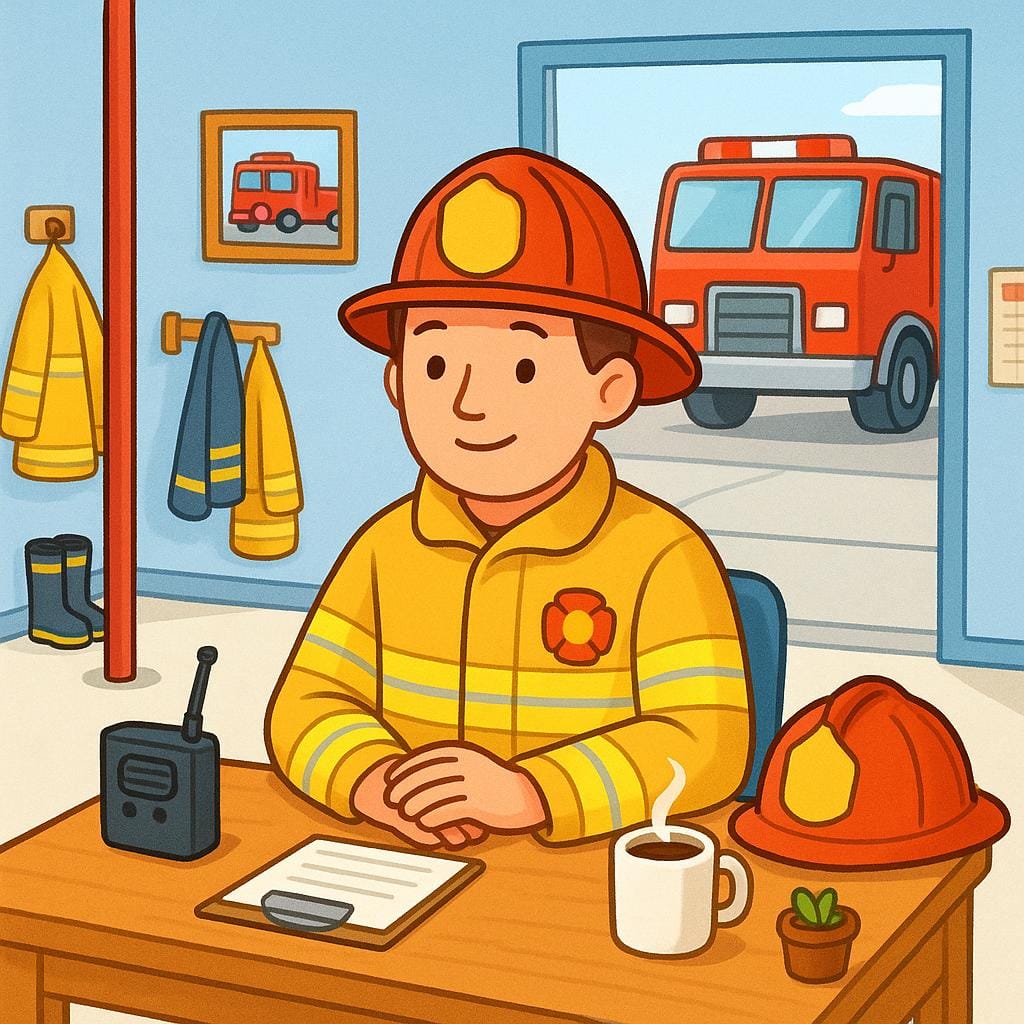
El médico está de guardia esta noche en urgencias.
The doctor is on duty tonight in the emergency room.
Mi próxima guardia es el sábado, así que no puedo ir a la fiesta.
My next shift is Saturday, so I can't go to the party.
Hicieron guardia en la frontera durante seis horas.
They kept watch at the border for six hours.
Using 'De Guardia'
To express that someone is currently working their shift or is available for emergencies, use the structure 'estar de guardia' (to be on duty).
patrulla
pah-TROO-yahpaˈtɾuʝa
Examples
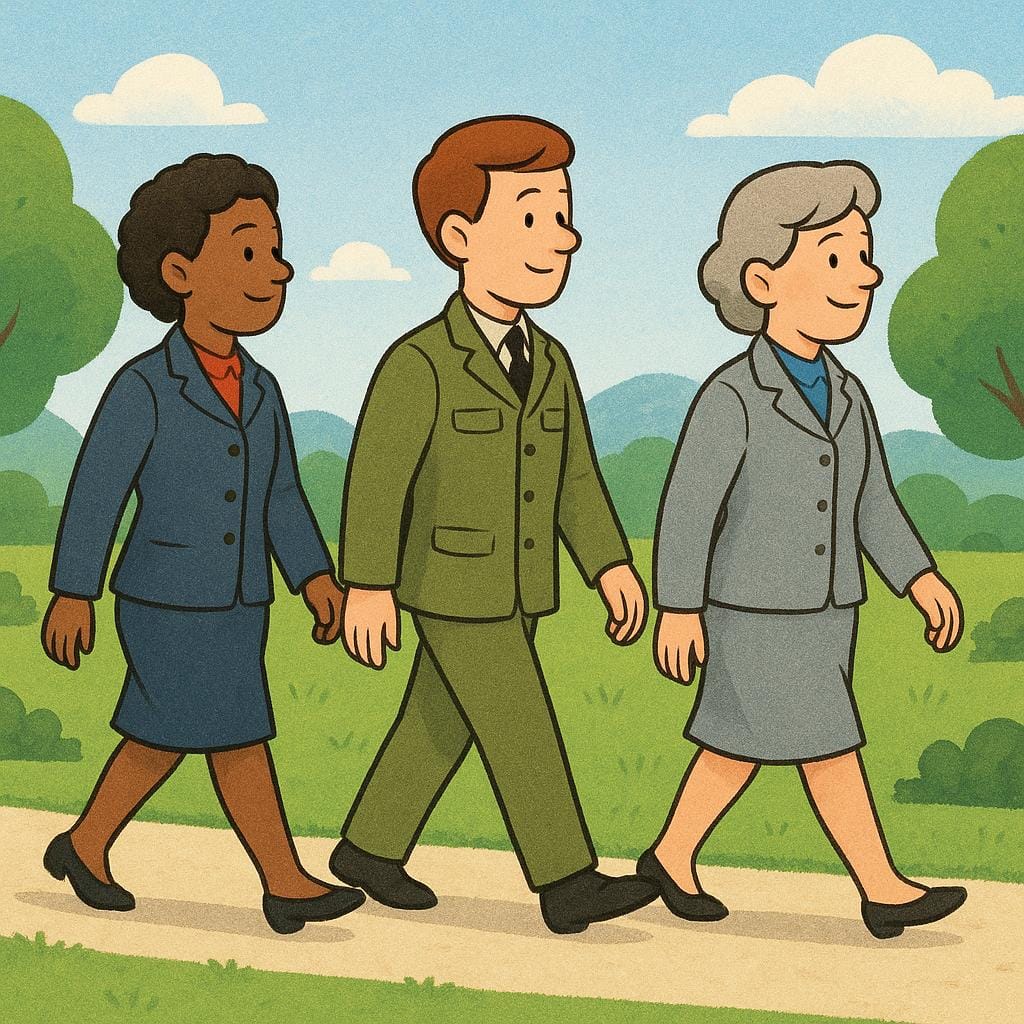
Una patrulla de policía llegó rápidamente al lugar del accidente.
A police patrol arrived quickly at the scene of the accident.
La patrulla de rescate encontró al excursionista perdido.
The rescue squad found the lost hiker.
Gender Reminder
Even though it refers to a group of people, 'patrulla' is always a feminine noun, so use 'la' or 'una' before it.
Confusing Verb Commands vs. Nouns
Related Translations
Learn Spanish with Inklingo
Interactive stories, personalized learning, and more.