Position & Movement in Spanish
Understanding how to talk about where things are and how they move is super useful in Spanish! This set of words will help you describe locations, directions, and actions like pushing or moving objects. Spanish often uses verbs more actively than English, so you'll find many ways to express these concepts.
Quick Reference
| Spanish | English | Example | Level |
|---|---|---|---|
ahí | there | Deja tus llaves ahí, sobre la mesa. | A1 |
cerca | near | El supermercado está cerca. | A1 |
desplazamiento | movement | El desplazamiento de las placas tectónicas causa terremotos. | B1 |
detrás | behind | El gato está detrás del sofá. | A1 |
empujar | to push | Tienes que empujar la puerta para entrar. | A1 |
empujón | push | Alguien me dio un empujón en el autobús y casi me caigo. | A2 |
mover | to move | Tienes que mover la mesa para que quepa. | A1 |
movimiento | movement | Hizo un movimiento brusco y se cayó. | A2 |
posición | position | Por favor, mantén la misma posición para la foto. | A1 |
desplazar | to move | Tienes que desplazar el sofá para limpiar debajo. | A2 |
empuje | drive | Necesitamos a una persona con mucho empuje para liderar este equipo. | B1 |
A1 — Beginner (6 words)

there
“Deja tus llaves ahí, sobre la mesa.”

near
“El supermercado está cerca.”

behind
“El gato está detrás del sofá.”
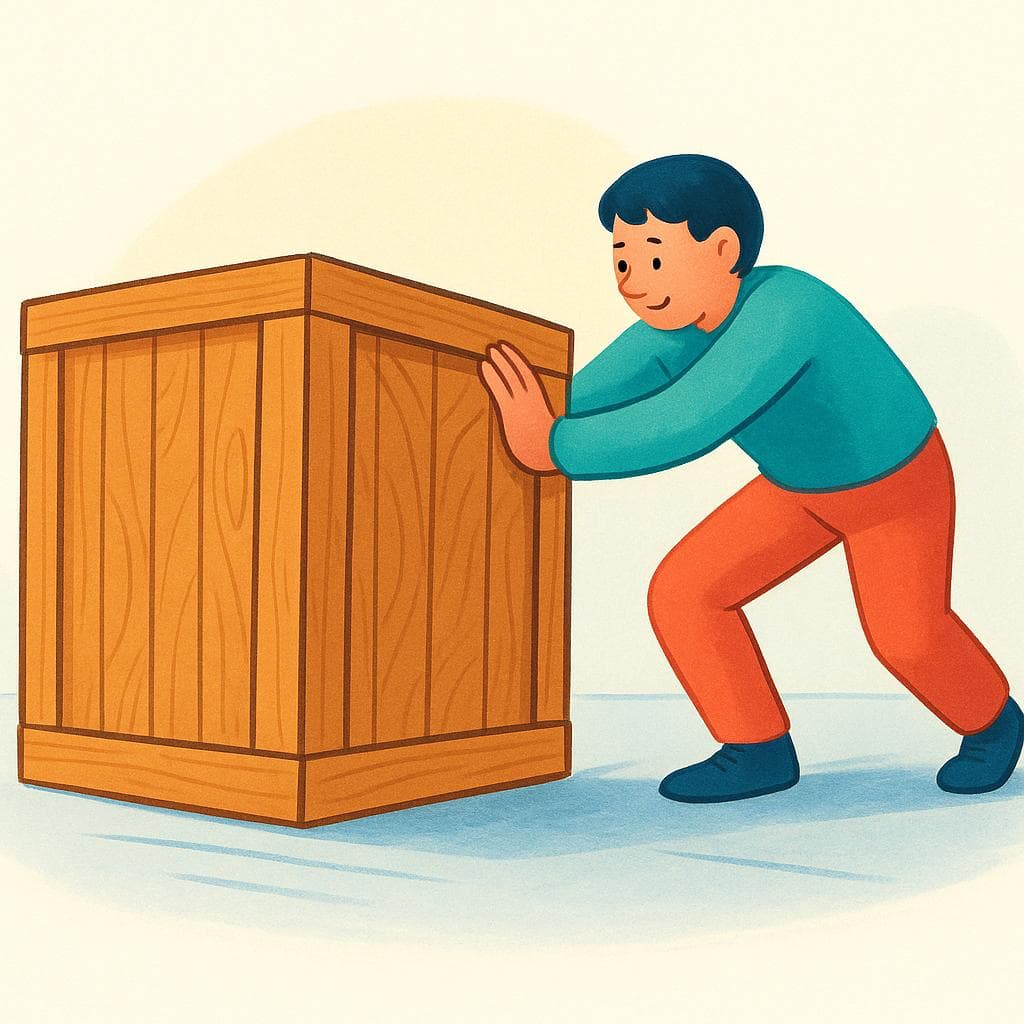
to push
“Tienes que empujar la puerta para entrar.”
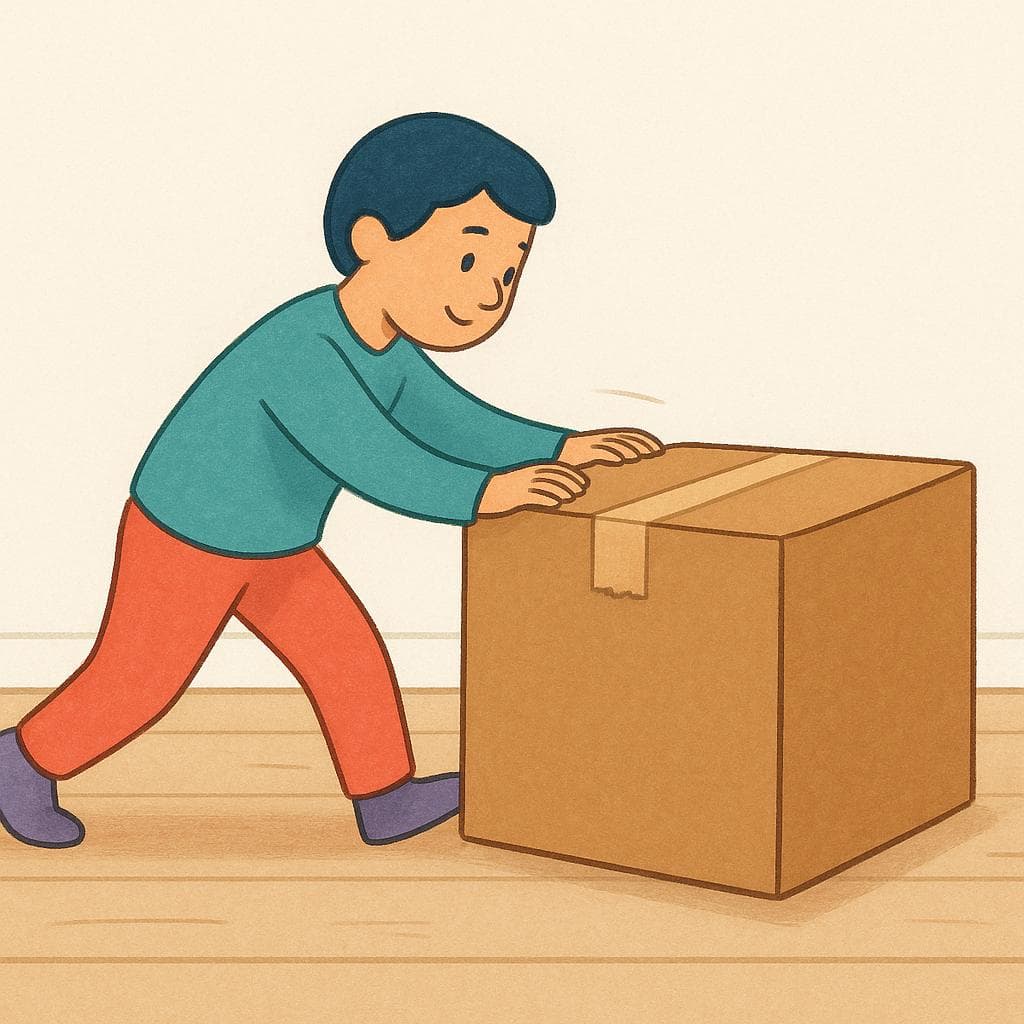
to move
“Tienes que mover la mesa para que quepa.”

position
“Por favor, mantén la misma posición para la foto.”
A2 — Elementary (3 words)

push
“Alguien me dio un empujón en el autobús y casi me caigo.”

movement
“Hizo un movimiento brusco y se cayó.”

to move
“Tienes que desplazar el sofá para limpiar debajo.”
B1 — Intermediate (2 words)

movement
“El desplazamiento de las placas tectónicas causa terremotos.”

drive
“Necesitamos a una persona con mucho empuje para liderar este equipo.”
Grammar Tips
Prepositions of Place
Words like 'cerca' (near) and 'detrás' (behind) are prepositions. They usually come before the noun they modify and are often followed by 'de' (of) when specifying what something is near or behind. For example, 'la casa está cerca de la playa' (the house is near the beach).
Verbs: Mover vs. Desplazar
Both 'mover' and 'desplazar' mean 'to move,' but 'desplazar' can imply a more formal or significant shift, like displacing an object or a population. 'Mover' is more general and common for everyday actions, like 'mover una silla' (to move a chair).
Nouns: Singular and Plural
Remember that nouns in Spanish have gender and number. 'Posición' (position) is feminine singular, while 'posiciones' (positions) is feminine plural. Similarly, 'movimiento' (movement) is masculine singular, and 'movimientos' (movements) is masculine plural. Make sure your articles and adjectives agree!
Common Mistakes
Incorrect Adjective Placement
Mistake: “La allí casa está.”
Correction: La casa está allí. — In Spanish, location adverbs like 'allí' (there) typically follow the verb 'estar' (to be), not precede the noun.
Confusing Similar Verbs
Mistake: “Yo empujo el coche por mi amigo.”
Correction: Yo empujo el coche para mi amigo. — 'Por' often indicates cause or reason, while 'para' can indicate purpose or 'for' in the sense of benefiting someone. Here, you are pushing the car *for the benefit of* your friend.
Oversimplifying 'Move'
Mistake: “Mi hermano mover la mesa.”
Correction: Mi hermano mueve la mesa. — This is a conjugation error. The verb 'mover' needs to be conjugated to match the subject 'mi hermano' (he). The correct present tense form is 'mueve'.
Cultural Notes
Gestures and Space
Spanish speakers, especially in some regions, tend to use more expansive gestures and may stand closer when conversing compared to many English-speaking cultures. This physical expressiveness often accompanies the language when discussing movement or position.
Regional Variations
While 'ahí' generally means 'there,' its exact nuance can vary. In some places, 'ahí' might refer to a closer 'there' than 'allí,' which indicates a more distant 'there.' English often uses just 'there' for both.