
Abajo vs Debajo
Abajo = down (direction/general area). Debajo de = under (a specific thing).
abajo
Down, downstairs, below. Refers to a direction or a general lower area.
ah-BAH-hohdebajo
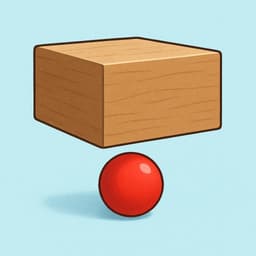
Under, underneath, beneath. Refers to a specific position directly under an object.
deh-BAH-hohQuick Rule
Abajo = down (direction/general area). Debajo de = under (a specific thing).
Think: 'Debajo De' needs a friend (an object). 'Abajo' can go Alone.
- In some regions, 'abajo de' is used informally instead of 'debajo de', but learning 'debajo de' is always the safer, more standard option.
Comparison Table
| Context | abajo | debajo | Why? |
|---|---|---|---|
| Answering 'Where?' | ¿Dónde estás? ¡Estoy abajo! | ¿Dónde está el control? Debajo del sofá. | Abajo gives a general location (downstairs/below). Debajo de gives a precise location relative to an object. |
| Giving a Command | ¡Ven abajo ahora mismo! | Ponlo debajo de la silla. | Abajo indicates a direction of movement. Debajo de indicates a final position. |
| Sentence Structure | El sótano está abajo. | El tesoro está debajo del suelo. | Abajo can end a sentence. Debajo almost always needs 'de' + noun to follow it. |
When to Use "abajo / debajo"
abajo
Down, downstairs, below. Refers to a direction or a general lower area.
ah-BAH-hoh
Direction of movement ('down')
Por favor, mira hacia abajo.
Please, look down.
General lower location ('downstairs', 'below')
Te espero abajo en la entrada.
I'll wait for you downstairs at the entrance.
Can stand alone
¿Dónde está el baño? Está abajo.
Where is the bathroom? It's downstairs.
debajo
Under, underneath, beneath. Refers to a specific position directly under an object.
deh-BAH-hoh
Position directly under an object (almost always 'debajo de')
El gato duerme debajo de la cama.
The cat sleeps under the bed.
Something is covered by something else
Dejé mis llaves debajo del periódico.
I left my keys under the newspaper.
Cannot stand alone
La caja está debajo de la mesa.
The box is under the table.
Contrast Examples
With "abajo":
Mi amigo vive en el piso de abajo.
My friend lives on the floor below.
With "debajo":
Hay una fuga de agua justo debajo de mi apartamento.
There's a water leak right underneath my apartment.
The Difference: Abajo is used as a general adjective here ('the one below'). Debajo de describes the specific physical relationship of being directly underneath.
With "abajo":
Voy a llevar estas cajas abajo.
I'm going to take these boxes downstairs.
With "debajo":
Voy a poner estas cajas debajo de la escalera.
I'm going to put these boxes under the stairs.
The Difference: Abajo tells you the direction of movement (down). Debajo de tells you the final, specific resting place of the boxes.
Common Mistakes
Mis zapatos están debajo.
Mis zapatos están abajo. OR Mis zapatos están debajo de la cama.
Debajo needs to specify what the shoes are under. If you just mean 'down there' or 'downstairs', use abajo.
El sol está debajo de nosotros.
El sol está abajo.
For vast, general concepts like 'the sky' or 'the sun', abajo is used for 'below'. Debajo implies being directly under a specific, tangible object.
Quick Practice
Quick Quiz: Abajo vs Debajo
Question 1 of 2
Completa la frase: 'El perro se escondió ___ de la mesa.'
Related Grammar
Want to understand the grammar behind this pair? Explore these lessons for a deep dive:
Key Words


Tags
Build the instinct, not just the rule
Rules help you get it right; context makes it automatic. Read 200+ illustrated and narrated Spanish stories to see confusing pairs chosen correctly — over and over — until you stop thinking about it.
Frequently Asked Questions
Can I use 'abajo de' instead of 'debajo de'?
In many parts of Latin America, you'll hear people use 'abajo de' informally, and it will be understood. However, 'debajo de' is considered the standard, grammatically correct form everywhere. For learning, it's best to stick with 'debajo de' to mean 'underneath something'.
What are the opposites of 'abajo' and 'debajo'?
Great question! The opposite of 'abajo' (down/downstairs) is 'arriba' (up/upstairs). The opposite of 'debajo de' (under) is 'encima de' (on top of) or 'sobre' (on/over).