
Adentro vs Dentro
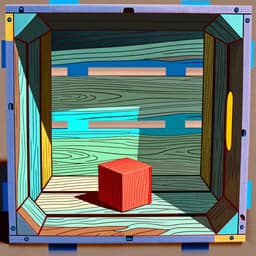
Adentro implies motion *into* a place. Dentro describes location *inside* a place.
adentro
Inward, inside (often implying movement or direction)
ah-DEHN-trohdentro
Inside, within (emphasizing a static location or boundary)
DEHN-trohQuick Rule
Adentro implies motion *into* a place. Dentro describes location *inside* a place.
Think: Adentro = Action (going in). Dentro = Description (being in).
- In many parts of Latin America, they are used interchangeably in casual speech.
- 'Dentro' must be followed by 'de' when specifying a location ('dentro de la casa'). 'Adentro' usually stands alone.
Comparison Table
| Context | adentro | dentro | Why? |
|---|---|---|---|
| Giving a command | ¡Pasa adentro! | Espera dentro de la oficina. | Adentro is a general command to move 'in'. Dentro de specifies the location to be 'in'. |
| Describing location | El gato está adentro. | El gato está dentro de la casa. | Adentro works alone as 'inside'. Dentro almost always needs 'de + noun' to say what it's inside of. |
| Talking about time | (Not used for time) | La película empieza dentro de poco. | Only 'dentro de' can be used to mean 'within' a certain amount of time. |
| Asking a question | ¿Por qué no vienes adentro? | ¿Qué hay dentro de esa caja? | Adentro focuses on the action of coming in. Dentro de focuses on the contents of a specific place. |
When to Use "adentro / dentro"
adentro
Inward, inside (often implying movement or direction)
ah-DEHN-troh
Movement into a space
¡Hace frío! Vamos adentro.
It's cold! Let's go inside.
As a standalone 'inside'
¿Estás afuera o adentro?
Are you outside or inside?
Direction from outside
Miró hacia adentro de la cueva.
He looked towards the inside of the cave.
dentro
Inside, within (emphasizing a static location or boundary)
DEHN-troh
Location inside something specific (with 'de')
Las llaves están dentro del cajón.
The keys are inside the drawer.
Within a time frame (with 'de')
Llego dentro de diez minutos.
I'll arrive within ten minutes.
Figurative 'inside'
Siento una gran alegría por dentro.
I feel a great joy inside.
Contrast Examples
With "adentro":
¡Llueve! ¡Corre adentro!
It's raining! Run inside!
With "dentro":
Corre y escóndete dentro del armario.
Run and hide inside the closet.
The Difference: 'Adentro' is a general direction: get inside, anywhere. 'Dentro de' specifies the exact location: the closet.
With "adentro":
El perro está adentro.
The dog is inside.
With "dentro":
El perro está dentro de su casita.
The dog is inside its little house.
The Difference: 'Adentro' is a simple statement of being indoors. 'Dentro de' provides specific information, answering the question 'Inside of what?'
Common Mistakes
Estoy adentro de la oficina.
Estoy dentro de la oficina.
When you name the place you are inside, the standard and most correct form is 'dentro de'. Using 'adentro de' is very common in speech but is often considered informal or incorrect in writing.
Te llamo adentro de cinco minutos.
Te llamo dentro de cinco minutos.
For time expressions meaning 'within', you must always use 'dentro de'. 'Adentro' is never used to talk about time.
Quick Practice
Quick Quiz: Adentro vs Dentro
Question 1 of 3
Termino el trabajo ___ de una hora.
Related Grammar
Want to understand the grammar behind this pair? Explore these lessons for a deep dive:
Key Words




Tags
Build the instinct, not just the rule
Rules help you get it right; context makes it automatic. Read 200+ illustrated and narrated Spanish stories to see confusing pairs chosen correctly — over and over — until you stop thinking about it.
Frequently Asked Questions
Can I ever use 'adentro de' like 'dentro de'?
You will hear 'adentro de' very often in spoken Spanish, especially in Latin America. While it's widely understood, 'dentro de' is considered more grammatically correct and is always the safe choice, especially in writing or formal situations.
Is the difference between 'afuera' and 'fuera' the same?
Yes, it's almost exactly the same concept! 'Afuera' often implies movement outwards ('Vamos afuera' - Let's go outside), while 'fuera de' describes a static location ('Espera fuera de la tienda' - Wait outside the store). Just like 'adentro/dentro', they are often used interchangeably in casual conversation.