
Claro vs Obvio
Claro means 'clear' (easy to understand). Obvio means 'obvious' (needs no proof).
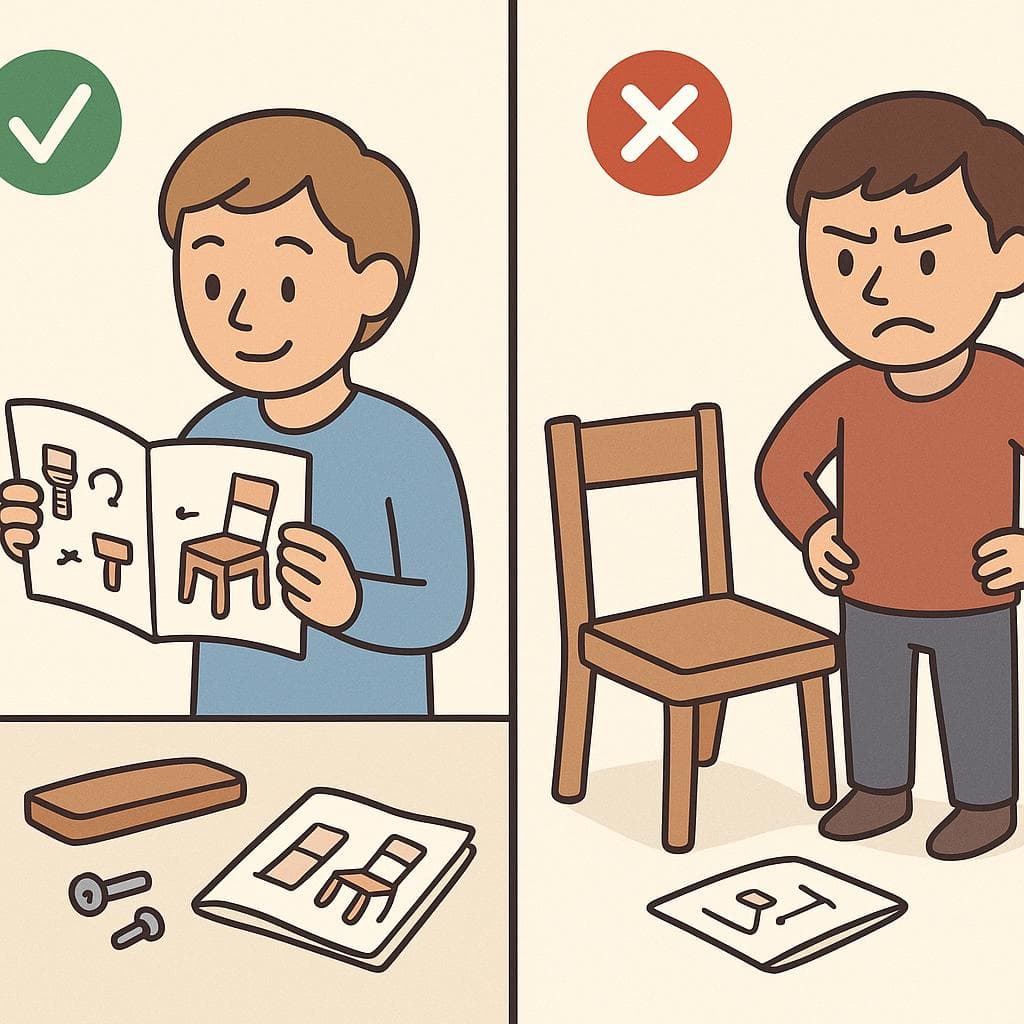
claro
Clear, easy to see or understand; light (in color); of course.
KLAH-rohobvio
Obvious, self-evident, needing no explanation or proof.
OHB-byohQuick Rule
Claro means 'clear' (easy to understand). Obvio means 'obvious' (needs no proof).
Claro is clear like a cloudless sky. Obvio is obvious like 2+2=4.
- In casual speech, '¡Claro!' is a very common and friendly way to say 'Of course!', which can overlap with the meaning of '¡Obvio!'
Comparison Table
| Context | claro | obvio | Why? |
|---|---|---|---|
| Giving Instructions | Sé claro, por favor. | Es obvio lo que tienes que hacer. | Claro asks for information to be easy to understand. Obvio states that the required action is self-evident. |
| Analyzing a Situation | No está claro por qué se fue. | Es obvio que se fue porque estaba enojado. | Claro describes the understandability of the reason. Obvio describes a conclusion drawn from evidence. |
| Expressing Agreement | - ¿Me pasas la sal? - ¡Claro! | - ¿Llegamos tarde? - ¡Obvio! | Claro is a friendly 'sure!' or 'of course!'. Obvio is a stronger 'obviously!', implying the answer was already known. |
When to Use "claro / obvio"
claro
Clear, easy to see or understand; light (in color); of course.
KLAH-roh
Easy to understand
La explicación del profesor fue muy clara.
The teacher's explanation was very clear.
Easy to perceive (see, hear)
El agua del río está clara hoy.
The river water is clear today.
To agree ('Of course!')
- ¿Vienes con nosotros? - ¡Claro!
- Are you coming with us? - Of course!
Light in color
Me gusta la camisa azul claro.
I like the light blue shirt.
obvio
Obvious, self-evident, needing no explanation or proof.
OHB-byoh
Self-evident fact or conclusion
Es obvio que si no estudias, no aprobarás el examen.
It's obvious that if you don't study, you won't pass the exam.
Something easily noticed
Su felicidad era obvia para todos.
Her happiness was obvious to everyone.
To agree strongly ('Obviously!')
- ¿Crees que se enojó? - Obvio.
- Do you think he got mad? - Obviously.
Contrast Examples
With "claro":
El final de la película no fue claro.
The end of the movie wasn't clear.
With "obvio":
Era obvio cómo iba a terminar la película.
It was obvious how the movie was going to end.
The Difference: Claro refers to the plot being confusing or hard to understand. Obvio refers to the plot being predictable and self-evident.
With "claro":
Necesito que seas más claro con lo que quieres.
I need you to be clearer about what you want.
With "obvio":
Es obvio lo que quiere, aunque no lo diga.
It's obvious what he wants, even if he doesn't say it.
The Difference: Claro is something you ask of a person (to communicate better). Obvio is a conclusion you draw about a situation (their intentions are easy to see).
Common Mistakes
El manual de instrucciones no es muy obvio.
El manual de instrucciones no es muy claro.
You want to say the manual is not easy to understand, so 'claro' is the right word. 'Obvio' would mean the manual itself isn't self-evident, which is an odd thing to say.
Es claro que va a llover, mira esas nubes.
Es obvio que va a llover, mira esas nubes.
When you're pointing to evidence to make a logical conclusion, 'obvio' is much more natural. The rain is an obvious outcome based on the dark clouds.
Quick Practice
Quick Quiz: Claro vs Obvio
Question 1 of 2
The instructions were simple and easy to follow. Las instrucciones eran muy ___.
Related Grammar
Want to understand the grammar behind this pair? Explore these lessons for a deep dive:
Key Words



Tags
Build the instinct, not just the rule
Rules help you get it right; context makes it automatic. Read 200+ illustrated and narrated Spanish stories to see confusing pairs chosen correctly — over and over — until you stop thinking about it.
Frequently Asked Questions
Can I use 'claro' and 'obvio' to mean 'of course'?
Yes, but with a difference in tone. '¡Claro!' is a friendly, common way to say 'of course' or 'sure!'. '¡Obvio!' is more like 'obviously!' or 'duh!', and can sometimes sound a bit blunt or sarcastic depending on the context.
Is 'obviamente' the same as 'obvio'?
Almost! 'Obviamente' is the adverb form, meaning 'obviously'. You use it to modify a verb or a whole sentence, like 'Obviamente, no le gustó el regalo' (Obviously, he didn't like the gift). 'Obvio' is an adjective, used with verbs like 'ser', as in 'Es obvio que no le gustó' (It's obvious that he didn't like it).