ancianos
“ancianos” means “elderly people” in Spanish. It has 2 different meanings depending on context:
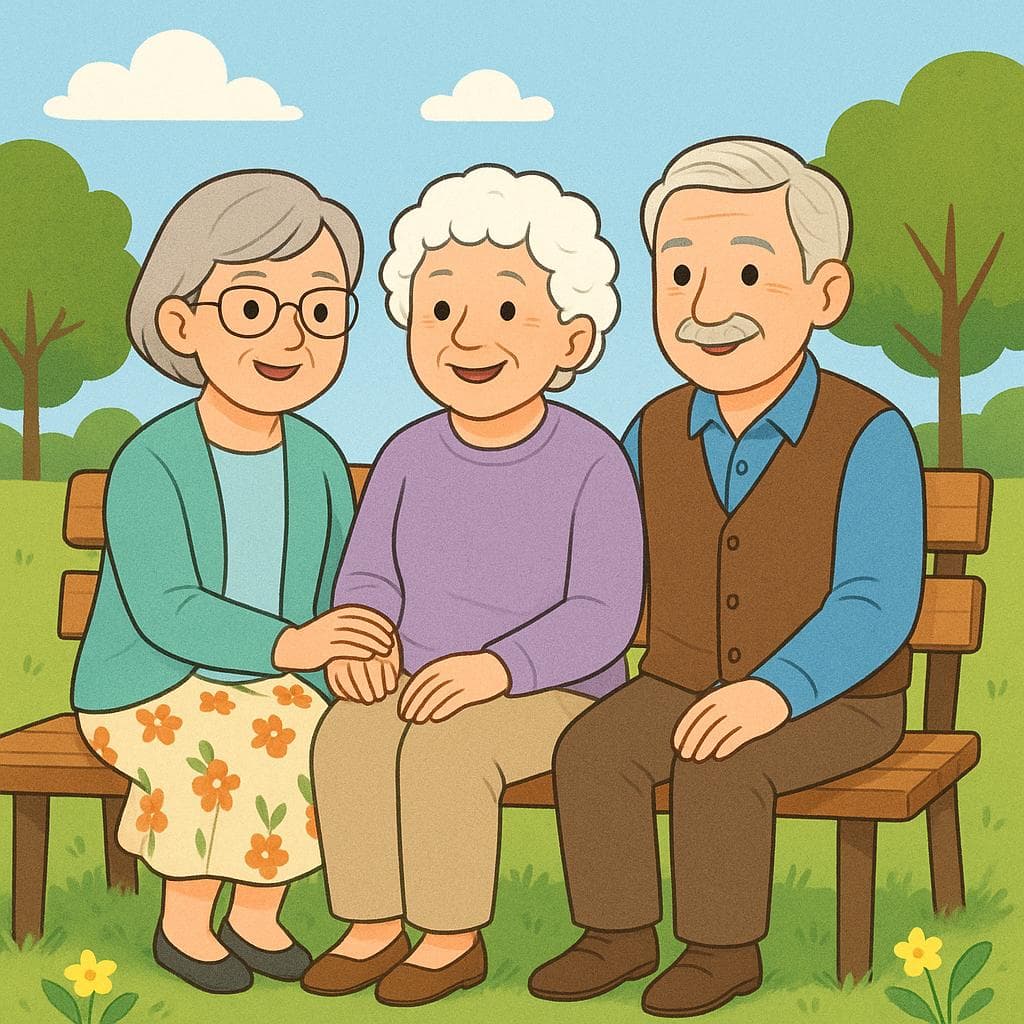

elderly people, elders
Also: old men
📝 In Action
Los ancianos de la comunidad merecen nuestro respeto.
A1The elderly people of the community deserve our respect.
Hay un centro especial para los ancianos en el barrio.
A2There is a special center for elders in the neighborhood.
old, elderly
Also: ancient
📝 In Action
Mis vecinos son ancianos y necesitan ayuda con el jardín.
A2My neighbors are elderly and need help with the garden.
Vimos dos robles ancianos en medio del bosque.
B1We saw two old/ancient oak trees in the middle of the forest.
Translate to Spanish
✏️ Quick Practice
Quick Quiz: ancianos
Question 1 of 1
Which sentence uses 'ancianos' as a descriptive word (adjective)?
📚 More Resources
👥 Word Family▼
📚 Etymology▼
This word comes from the Latin word *antianus*, which meant 'prior' or 'ancient.' It is built on the root *ante*, meaning 'before.' In Spanish, it evolved to specifically mean someone who has lived a long time and is now 'old.'
First recorded: 13th century
Cognates (Related words)
💡 Master Spanish
Take your Spanish to the next level. Read 200+ illustrated and narrated Spanish stories tailored to your level with the Inklingo app!
Frequently Asked Questions
Is 'ancianos' the only way to say 'old people'?
No, you can also use 'mayores' (seniors/older ones), which is very respectful and common. 'Ancianos' is professional and widely accepted, but avoid using 'viejos' (old ones) as it can sometimes be considered offensive or harsh.
How do I say 'old women'?
If you are referring specifically to women, you would use the feminine plural form: 'ancianas'. If you are referring to a mixed group, the masculine plural 'ancianos' is traditionally used.