corteza
“corteza” means “bark” in Spanish. It has 2 different meanings depending on context:
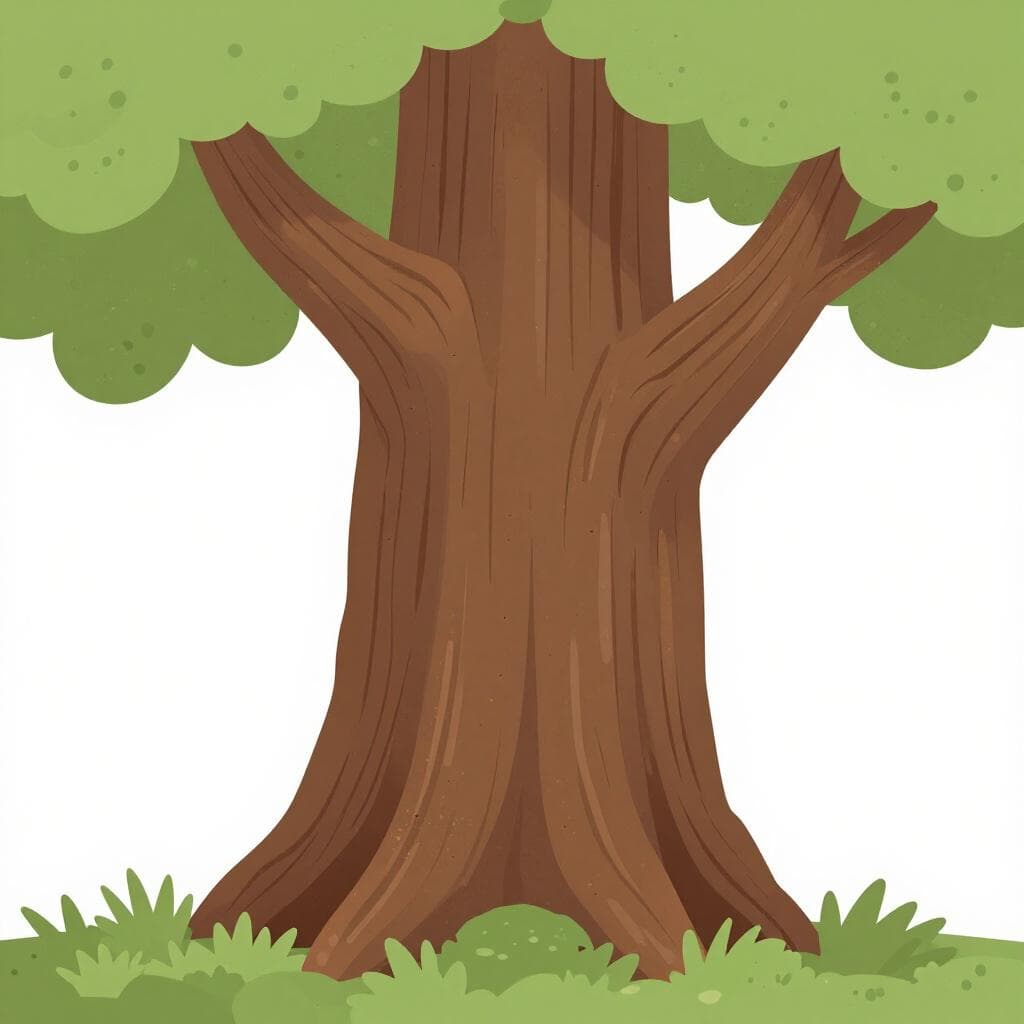

bark, crust
Also: rind, pork rind
📝 In Action
No me gusta la corteza del pan, prefiero solo la miga.
A1I don't like the bread crust; I prefer only the soft part.
Los elefantes usan sus colmillos para quitar la corteza de los árboles.
A2Elephants use their tusks to strip the bark from the trees.
Hay que quitarle la corteza al queso antes de comerlo.
B1You have to remove the rind from the cheese before eating it.
crust, cortex

📝 In Action
La corteza terrestre es la capa más externa de nuestro planeta.
B2The Earth's crust is the outermost layer of our planet.
La corteza cerebral es responsable del pensamiento complejo.
C1The cerebral cortex is responsible for complex thought.
Vocabulary Collections
Translate to Spanish
✏️ Quick Practice
Quick Quiz: corteza
Question 1 of 3
If you are eating a sandwich and don't like the hard outer edge, what are you removing?
📚 More Resources
👥 Word Family▼
📚 Etymology▼
From the Latin word 'cortex', which also meant the bark of a tree or the outer shell of something.
First recorded: 13th century
Cognates (Related words)
💡 Master Spanish
Take your Spanish to the next level. Read 200+ illustrated and narrated Spanish stories tailored to your level with the Inklingo app!
Frequently Asked Questions
Can I use 'corteza' for an orange or lemon?
Usually, we use 'cáscara' for fruit skins. However, in cooking, recipes might use 'corteza' to refer specifically to the very outer zest of citrus fruits.
What is the difference between 'corteza' and 'piel'?
'Piel' is soft and flexible (like human skin or an apple skin). 'Corteza' is usually hard, thick, or protective (like tree bark or bread crust).
How do I say 'pork rinds' in a Mexican restaurant?
In Mexico and many parts of Latin America, pork rinds are more commonly called 'chicharrones' rather than 'cortezas'.