dió
“dió” means “he/she/it gave” in Spanish. It has 3 different meanings depending on context:
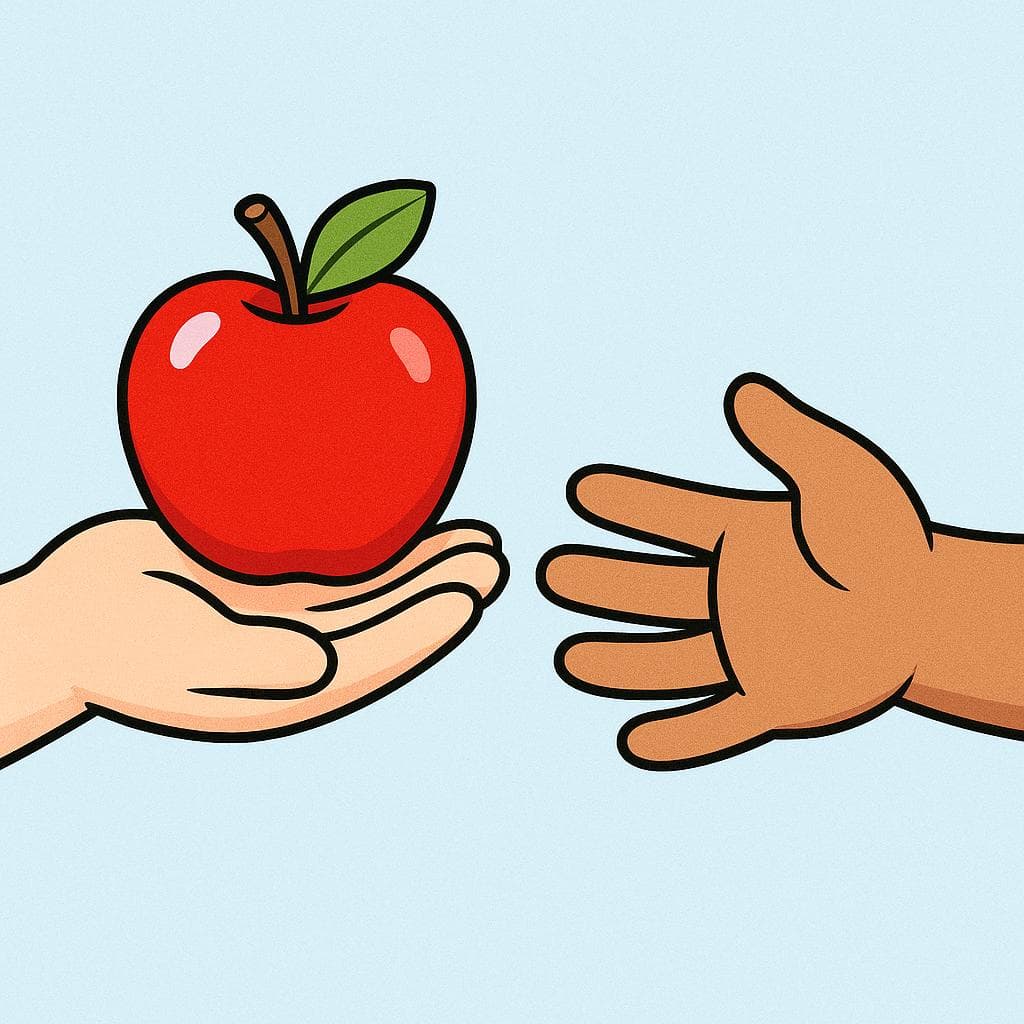


he/she/it gave, you gave
Also: he/she/it handed over
📝 In Action
Mi jefe me dió el día libre ayer.
A1My boss gave me the day off yesterday.
Ella le dió su chaqueta porque hacía frío.
A1She gave him her jacket because it was cold.
Usted dió la respuesta correcta en el examen.
A2You (formal) gave the correct answer on the exam.
he/she/it resulted in, he/she/it caused
Also: he/she/it produced
📝 In Action
La investigación dió resultados muy prometedores.
B1The investigation yielded very promising results.
El accidente dió un susto enorme a los vecinos.
B1The accident caused a huge scare for the neighbors.
La crisis económica dió origen a nuevas protestas.
B2The economic crisis gave rise to new protests.
he/she/it struck, he/she/it hit/kicked
Also: he/she/it faced/looked onto
📝 In Action
El reloj de la torre dió las tres en punto.
B2The tower clock struck three o'clock.
El niño le dió una patada al balón.
B2The child gave (or delivered) a kick to the ball.
La ventana dió al jardín, no a la calle.
C1The window faced the garden, not the street. (Past tense of 'dar a')
Indicative
Present
Imperfect
Preterite
Subjunctive
Present Subjunctive
Imperfect Subjunctive
✏️ Quick Practice
Quick Quiz: dió
Question 1 of 2
Which sentence correctly uses 'dió' to mean 'caused' or 'resulted in'?
📚 More Resources
👥 Word Family▼
🎵 Rhymes▼
📚 Etymology▼
Comes from the Latin verb *dare*, meaning 'to give' or 'to offer'. It is one of the oldest and most irregular verbs in Spanish, maintaining a short, essential form across centuries.
First recorded: Before the 10th century (in Old Spanish forms)
Cognates (Related words)
💡 Master Spanish
Take your Spanish to the next level. Read 200+ illustrated and narrated Spanish stories tailored to your level with the Inklingo app!
Frequently Asked Questions
Is 'dió' the same as 'di'?
No. Both are simple past forms of 'dar,' but they refer to different people. 'Dió' means 'he/she/it gave' or 'you (formal) gave.' 'Di' means 'I gave.'
Can I use 'dió' to talk about something happening over a long period?
Generally, no. 'Dió' is the simple past, used for actions completed at a specific point (e.g., 'yesterday'). For actions that were ongoing or habitual in the past, you should use the imperfect form, 'daba' (he/she/it was giving/used to give).