golpeé
“golpeé” means “I hit” in Spanish (physical contact).
I hit, I knocked
Also: I struck, I banged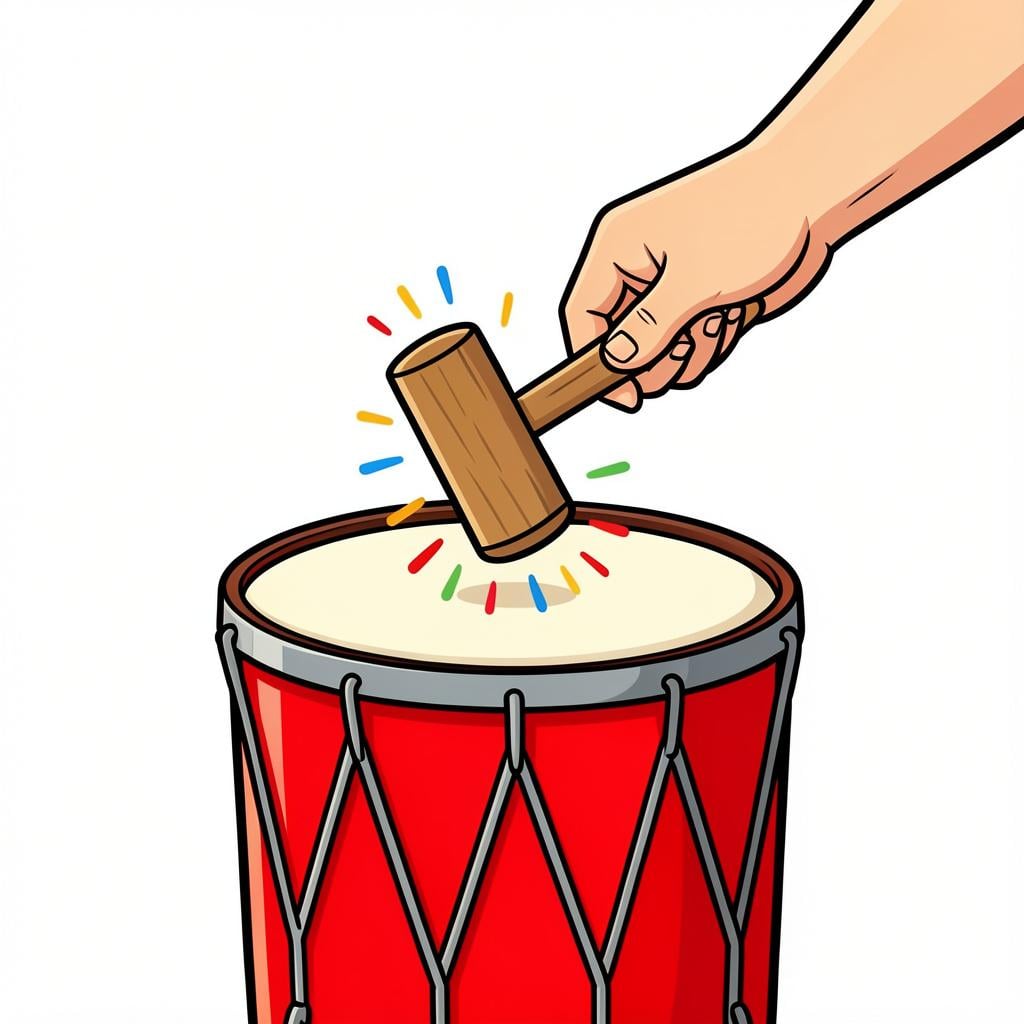
📝 In Action
Golpeé la puerta tres veces pero no abrió nadie.
A2I knocked on the door three times but nobody opened.
Me golpeé el dedo del pie con la mesa.
A2I stubbed (hit) my toe on the table.
Ayer golpeé la pelota con mucha fuerza.
B1Yesterday I hit the ball with a lot of force.
Subjunctive
Imperfect Subjunctive
Present Subjunctive
Indicative
Preterite
Imperfect
Present
Translate to Spanish
✏️ Quick Practice
Quick Quiz: golpeé
Question 1 of 1
If you want to say 'I knocked on the door' in the past, which word do you use?
📚 More Resources
👥 Word Family▼
📚 Etymology▼
From the Spanish noun 'golpe', which traces back to the Vulgar Latin 'colaphus', originally from Greek 'kolaphos' meaning a blow with the fist.
First recorded: 12th century (root form)
Cognates (Related words)
💡 Master Spanish
Take your Spanish to the next level. Read 200+ illustrated and narrated Spanish stories tailored to your level with the Inklingo app!
Frequently Asked Questions
What is the difference between 'golpeé' and 'pegué'?
'Golpeé' is often more neutral for hitting or knocking. 'Pegué' can also mean 'I hit,' but it can also mean 'I stuck/glued something.'