justa
“justa” means “fair” in Spanish. It has 2 different meanings depending on context:
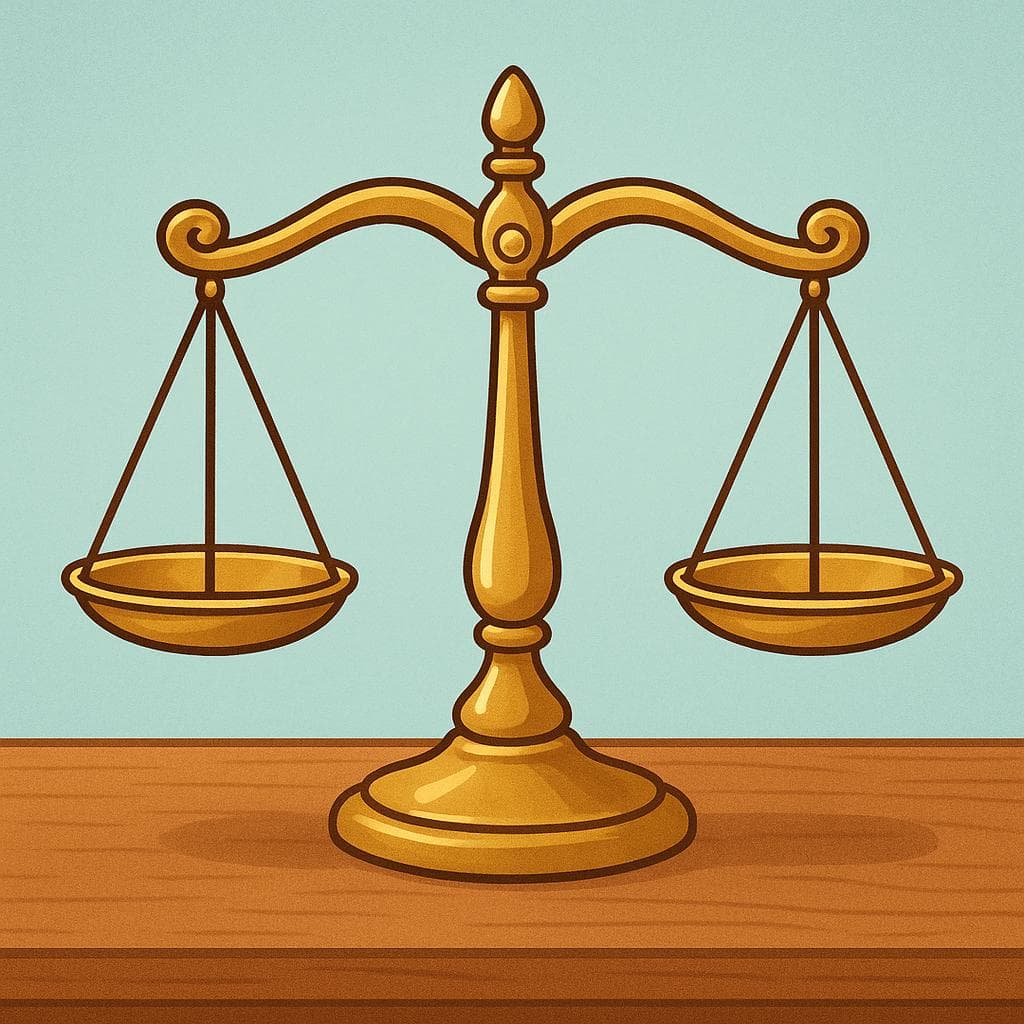

fair, just
Also: right, accurate
📝 In Action
La decisión del juez fue muy justa.
A1The judge's decision was very fair.
Ella recibió una recompensa justa por su trabajo.
A2She received a just reward for her work.
Necesitamos una medida justa para dividir el pastel.
B1We need an accurate measure to divide the cake.
joust
Also: tournament
📝 In Action
El rey organizó una gran justa para celebrar la victoria.
B2The king organized a great joust to celebrate the victory.
La justa entre los dos caballeros fue épica.
C1The tournament between the two knights was epic.
Translate to Spanish
✏️ Quick Practice
Quick Quiz: justa
Question 1 of 1
Which sentence uses 'justa' to mean 'fair'?
📚 More Resources
👥 Word Family▼
📚 Etymology▼
The word 'justa' comes from the Latin word *iustus*, meaning 'just' or 'lawful.' The noun meaning (joust) is related because these contests were originally seen as a way to settle disputes fairly or to demonstrate 'just' prowess.
First recorded: 13th century
Cognates (Related words)
💡 Master Spanish
Take your Spanish to the next level. Read 200+ illustrated and narrated Spanish stories tailored to your level with the Inklingo app!
Frequently Asked Questions
Is 'justa' always used for the feminine form of 'justo'?
Yes, 'justa' is the feminine version of the adjective 'justo' (just/fair). It must be used when describing a feminine noun, like 'una ley justa' (a just law).
How common is the noun 'justa' (joust)?
The noun 'justa' is quite rare in modern conversation. You will mostly encounter it when reading historical books, literature about knights, or in formal settings discussing medieval history.