How to Say "ancestry" in Spanish
The most common Spanish word for “ancestry” is “costado” — use 'costado' when referring to the specific side of the family (maternal or paternal) from which someone or something originates or is inherited.


costado
kos-TAH-dohkosˈtaðo
Examples
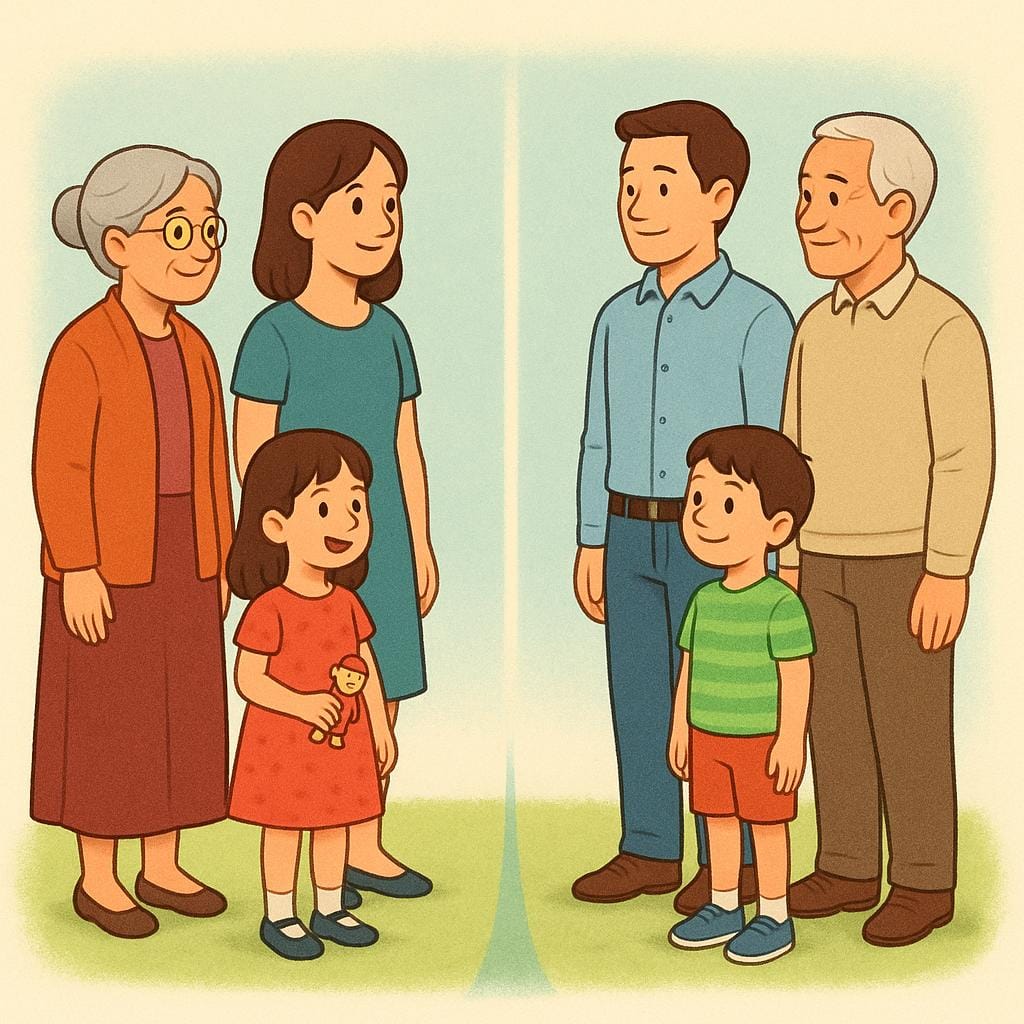
Ella heredó su talento artístico por el costado materno.
She inherited her artistic talent through her mother's side (maternal side).
Por el costado paterno, la familia es de origen italiano.
On the paternal side, the family is of Italian origin.
Using 'Por'
When talking about family lineage, use the preposition 'por' (by/through) to indicate which side of the family the trait or origin comes from: 'por el costado materno'.
linaje
lee-NAH-hehliˈnaxe

Examples
El rey estaba muy orgulloso de su linaje.
The king was very proud of his lineage.
Es difícil rastrear el linaje de una familia humilde de hace siglos.
It is difficult to trace the ancestry of a humble family from centuries ago.
Su linaje se remonta a los fundadores de la ciudad.
Her lineage goes back to the founders of the city.
The '-aje' Gender Rule
In Spanish, words that end in '-aje' (like linaje, viaje, or mensaje) are almost always masculine. You should always use 'el' or 'un' with them.
Nouns for 'Line'
Even though 'linaje' comes from the word for 'line', it only refers to family history. For a physical line on paper or a line of people waiting, use 'línea' or 'fila'.
The 'La' Mistake
Mistake: “La linaje es importante.”
Correction: El linaje es importante. (Since it ends in -aje, it must be masculine).
Using it for animals incorrectly
Mistake: “El linaje de este perro.”
Correction: While understandable, 'pedigrí' or 'raza' is much more common for animals unless you are being very poetic.
sangre
SAHN-grehˈsanɡɾe

Examples
Lleva la música en la sangre; toda su familia es de artistas.
He has music in his blood; his whole family are artists.
Es un caballo de pura sangre.
It's a pure-blood / thoroughbred horse.
Aunque nació en Canadá, tiene sangre colombiana.
Even though he was born in Canada, he has Colombian blood (heritage).
Confusing 'costado' and 'linaje'
Related Translations
Learn Spanish with Inklingo
Interactive stories, personalized learning, and more.