How to Say "appendage" in Spanish
The most common Spanish word for “appendage” is “miembro” — use 'miembro' when referring to a limb of the body, such as arms, legs, or wings, in a general anatomical or descriptive sense.
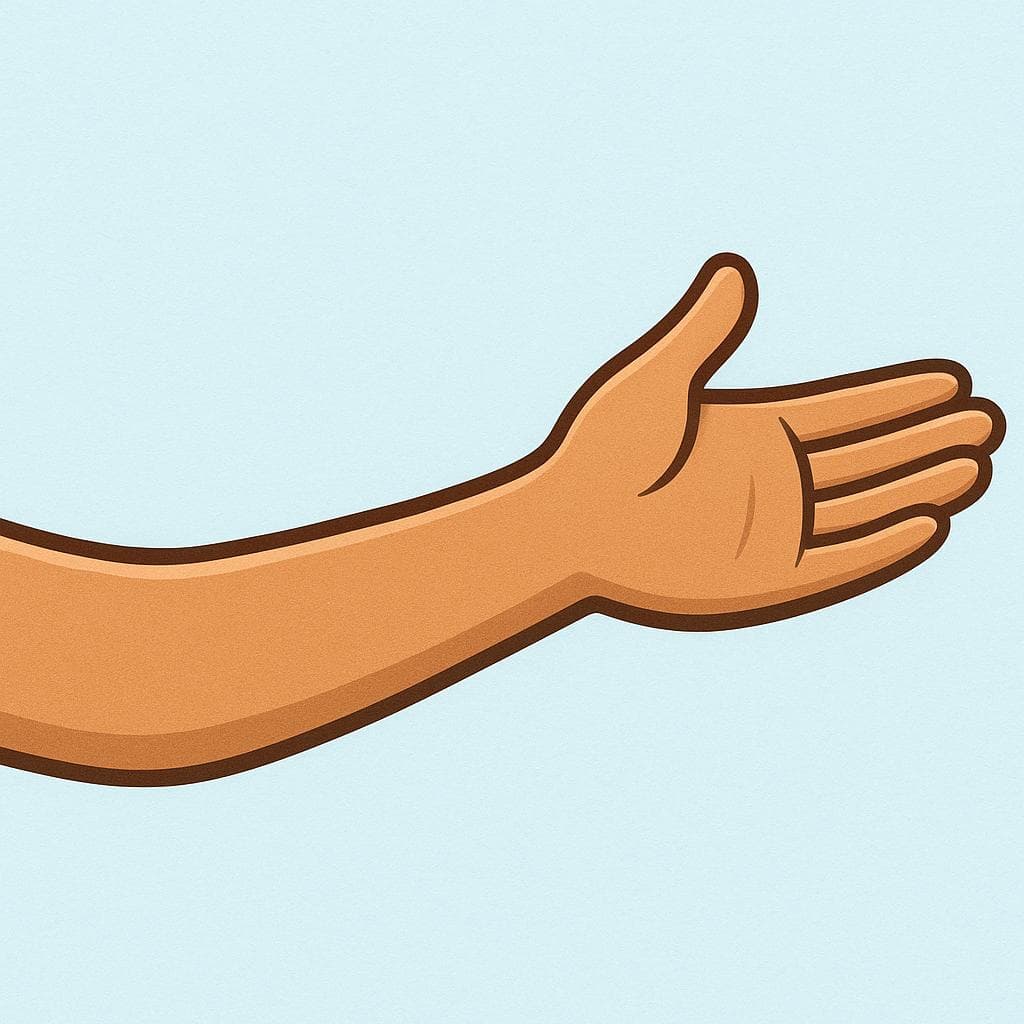

miembro
myehm-brohˈmjem.bɾo

Examples
Los pájaros usan sus miembros para volar.
Birds use their limbs to fly.
Los brazos son los miembros superiores del cuerpo humano.
The arms are the upper limbs of the human body.
Perdió la sensibilidad en uno de sus miembros inferiores.
He lost feeling in one of his lower limbs (legs).
extremidad
eks-treh-mee-DAHDekstɾemiˈdad

Examples
La pérdida de sangre en la extremidad herida fue considerable.
The blood loss in the injured limb was considerable.
Después del ejercicio, siento cansancio en las extremidades.
After the exercise, I feel tiredness in my limbs.
El médico revisó las extremidades superiores del paciente.
The doctor checked the patient's upper limbs (arms).
Muchos insectos tienen extremidades muy largas para saltar.
Many insects have very long limbs for jumping.
Use 'the' instead of 'my'
In Spanish, when talking about your own limbs, use 'the' (las) instead of 'my' (mis). For example: 'Me duelen las extremidades' (The limbs hurt me) instead of 'Mis extremidades duelen'.
Feminine Noun Pattern
Words ending in '-dad' are almost always feminine. You will always say 'la extremidad' or 'las extremidades'.
Confusing with 'Extreme'
Mistake: “Using 'extremidad' to mean a very intense situation.”
Correction: Use 'extremo' for the adjective. 'Extremidad' refers physically to a body part or the very end of an object.
Miembro vs. Extremidad
Related Translations
Learn Spanish with Inklingo
Interactive stories, personalized learning, and more.