How to Say "bed" in Spanish
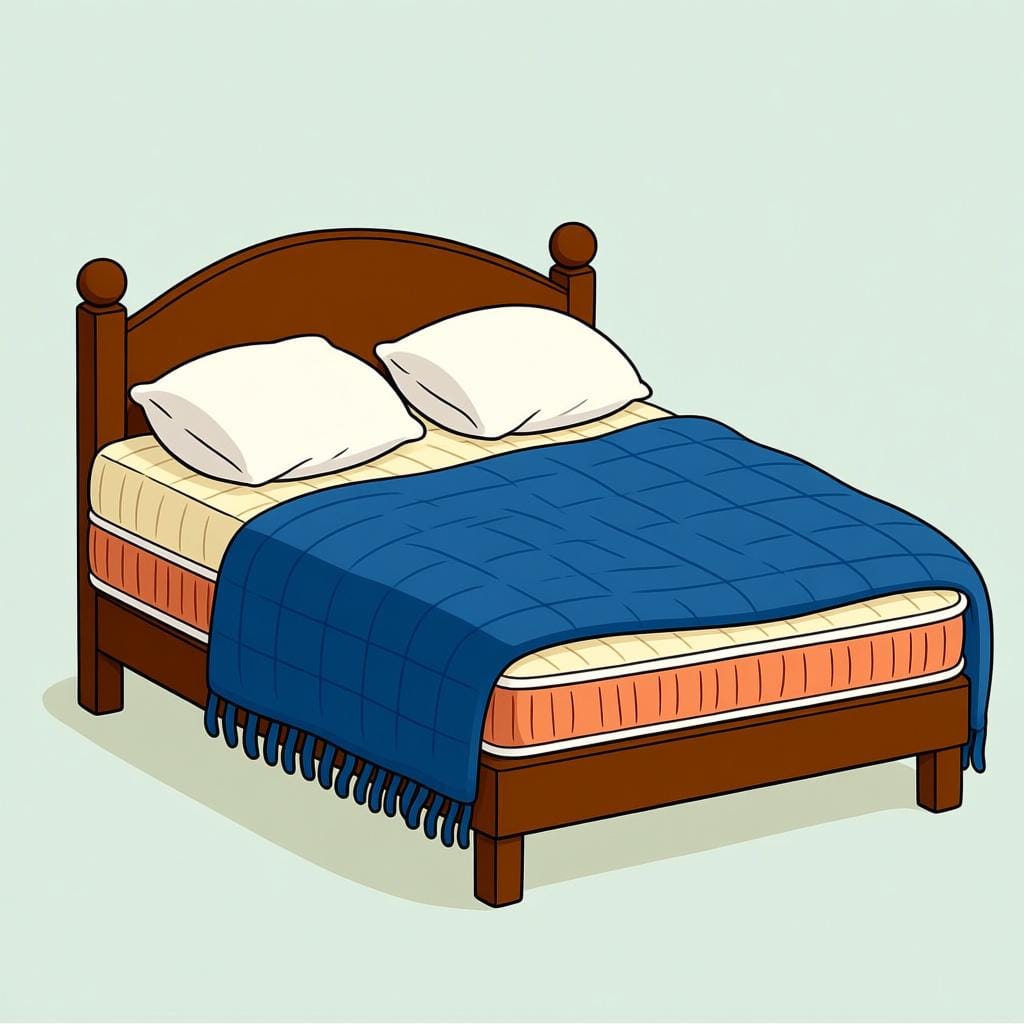
The most common Spanish word for “bed” is “cama” — use 'cama' for the piece of furniture you sleep on, or a metaphorical layer on a vehicle like a truck.
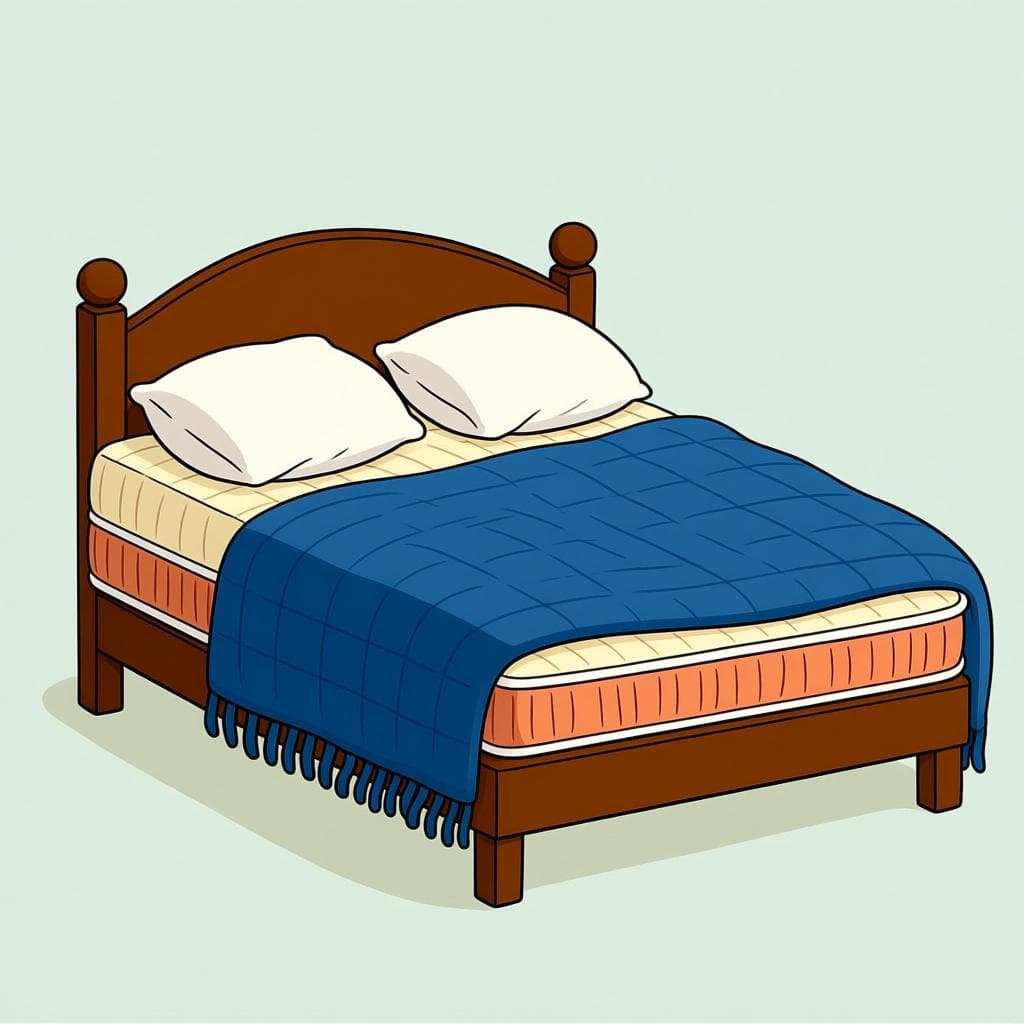


cama
kah-mahˈka.ma
Examples
Todas las mañanas hago la cama.
Every morning I make the bed.
El niño ya está en la cama.
The child is already in bed.
Compramos una cama nueva para el dormitorio.
We bought a new bed for the bedroom.
Pusimos las herramientas en la cama de la camioneta.
We put the tools in the bed of the truck.
Always Feminine
Even though 'cama' doesn't end in '-o' or '-a' in a way that clearly signals gender, it's always a feminine word. So, you'll always say 'la cama' (the bed) or 'una cama' (a bed).
Making vs. Building
Mistake: “Quiero construir la cama antes de salir.”
Correction: Quiero hacer la cama antes de salir. Use 'hacer la cama' for the daily task of tidying your sheets. Use 'construir' or 'montar' only if you are physically building the bed frame from parts.
lecho
LE-choˈletʃo

Examples
El lecho del río estaba cubierto de piedras lisas.
The riverbed was covered with smooth stones.
El guerrero descansaba en su lecho de piedra.
The warrior rested on his stone bed.
El anciano se despidió de su familia en su lecho de muerte.
The old man said goodbye to his family on his deathbed.
Muchos tesoros se esconden en el lecho marino.
Many treasures are hidden on the seabed.
When to use 'Lecho' vs 'Cama'
Use 'cama' for the physical piece of furniture in your house. Use 'lecho' when you want to sound poetic, very formal, or when talking about historical or tragic contexts.
Avoid using 'lecho' for daily chores
Mistake: “Voy a hacer el lecho.”
Correction: Voy a hacer la cama.
yacimiento
ya-see-myehn-tohʝaθiˈmjento

Examples
Han descubierto un nuevo yacimiento de petróleo en el océano.
They have discovered a new oil field in the ocean.
El yacimiento arqueológico contiene ruinas de la época romana.
The archaeological site contains ruins from the Roman era.
Este yacimiento de litio es uno de los más grandes del mundo.
This lithium deposit is one of the largest in the world.
Always Masculine
Even though it ends in '-miento,' which is a common noun ending, it is always masculine ('el yacimiento').
Using 'de' for Contents
To say what is in the deposit, always use the word 'de' followed by the material (e.g., 'yacimiento de oro').
Yacimiento vs. Mina
Mistake: “Using 'yacimiento' to describe the actual building or tunnels where miners work.”
Correction: Use 'mina' for the human-made structure. 'Yacimiento' is the natural spot where the minerals are found before humans touch them.
Furniture vs. Layers
Learn Spanish with Inklingo
Interactive stories, personalized learning, and more.