How to Say "can" in Spanish
The most common Spanish word for “can” is “poder” — use 'poder' for general ability, capacity, or to ask for permission in a direct way.








poder
poh-DEHRpoˈðeɾ

Examples
Yo puedo nadar muy bien.
I can swim very well.
Yo puedo hablar español.
I can speak Spanish.
Ella no pudo venir a la fiesta.
She wasn't able to come to the party.
Nosotros podemos levantar la mesa juntos.
We can lift the table together.
The Magic Formula: poder + verb
To say you 'can do' something, just use the right form of 'poder' followed by the basic '-ar', '-er', or '-ir' form of the action verb. For example, 'puedo' (I can) + 'correr' (to run) = 'Puedo correr' (I can run). Easy!
Finished Action vs. Ongoing Ability in the Past
Mistake: “Using 'podía' when you mean you succeeded at something once.”
Correction: Use 'pude' for 'I managed to/succeeded' at a specific moment. Use 'podía' for 'I was able to/could' as a general ability in the past. 'No pude abrir la puerta' (I couldn't get the door open), vs. 'Cuando era niño, no podía nadar' (When I was a kid, I couldn't swim).
puede
PWEH-dehˈpwe.ðe

Examples
¿Puede usted decirme la hora?
Can you tell me the time?
Mi hermano puede correr muy rápido.
My brother can run very fast.
Ella no puede venir a la fiesta esta noche.
She can't come to the party tonight.
Este ascensor puede llevar a seis personas.
This elevator can carry six people.
The 'o' to 'ue' Switch
The verb 'poder' is a 'stem-changing' verb. Notice how the 'o' changes to 'ue' for most 'present' forms (yo puedo, tú puedes, él puede), but not for 'nosotros' (podemos). This is a very common pattern in Spanish!
Formal vs. Informal 'You'
'Puede' is used for the formal 'you' (usted). If you are talking to a friend, you would use the informal version: 'puedes'. For example, '¿Puedes ayudarme?'
Forgetting the 'ue' Switch
Mistake: “Yo podo abrir la ventana.”
Correction: Yo puedo abrir la ventana. Remember that the 'o' needs to change to 'ue' for the 'yo' form.
sabe
SAH-behˈsa.βe

Examples
Ella sabe la respuesta.
She knows the answer.
Él sabe la capital de Francia.
He knows the capital of France.
Mi hermana sabe hablar tres idiomas.
My sister knows how to speak three languages.
¿Usted sabe dónde está la estación?
Do you (formal) know where the station is?
Saber vs. Conocer
'Saber' is for facts, information, and skills (like how to swim). Use 'conocer' when you're talking about being familiar with a person, place, or thing.
Using 'saber' for people
Mistake: “Yo sabo a María.”
Correction: Yo conozco a María. 'Conocer' is used for people, while 'saber' is for facts.
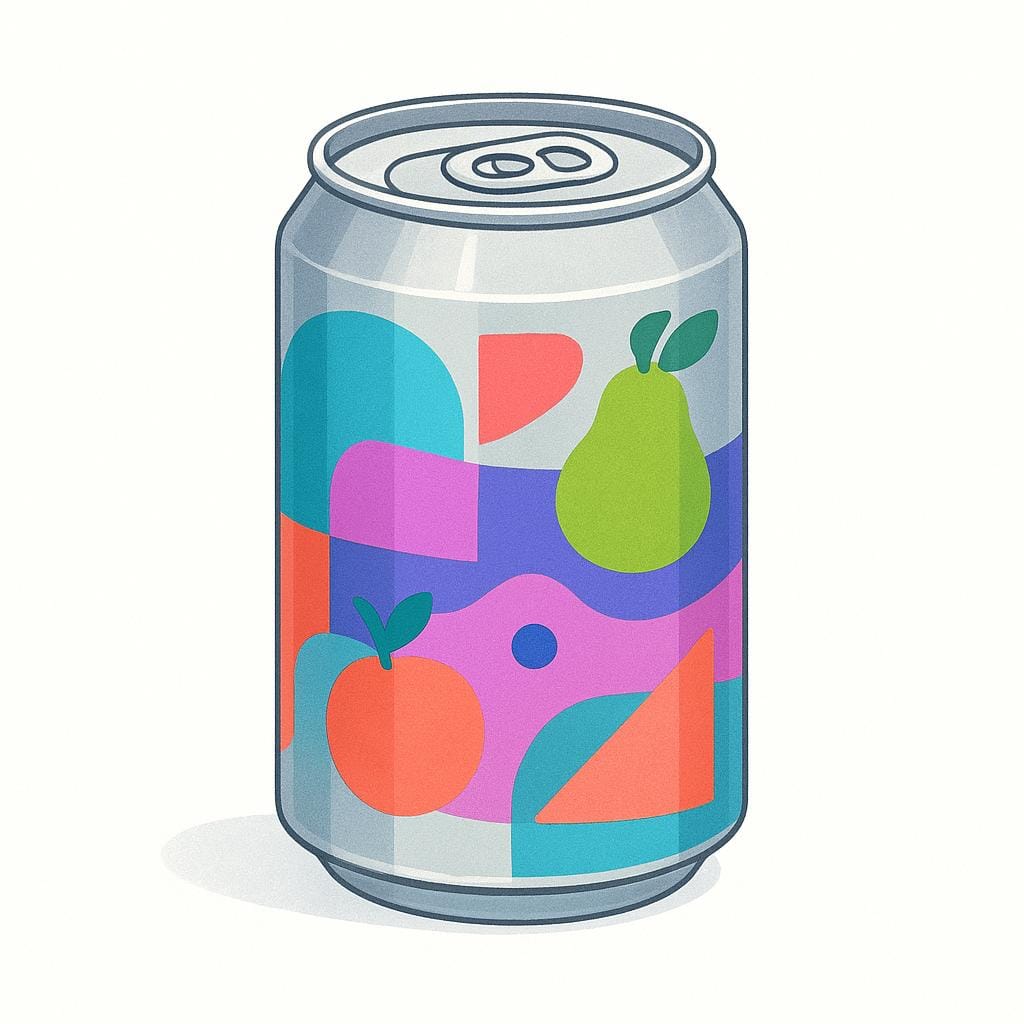
lata
LAH-tahˈlata
Examples
Necesito abrir esta lata de sopa.
I need to open this can of soup.
Compré una lata de atún para la cena.
I bought a can of tuna for dinner.
Por favor, recicla las latas vacías.
Please recycle the empty cans.
Necesitas un abrelatas para esto.
You need a can opener for this.
Gender Rule
Like many Spanish nouns ending in -a, 'lata' is feminine, so you use 'la' or 'una' before it.
bote
BOH-tayˈbo.te

Examples
Guarda las galletas en un bote.
She keeps the cookies in a jar.
Necesito un bote de miel para hacer el postre.
I need a jar of honey to make the dessert.
Tira ese bote de plástico a la basura.
Throw that plastic container in the trash.
Masculine Noun
Remember that 'bote' is always masculine, so use 'el bote' or 'un bote'.
saber
sa-bersaˈβeɾ

Examples
Aprendí a tocar la guitarra y ahora sé hacerlo.
I learned to play the guitar and now I know how to do it.
Mi abuela sabe tejer muy bien.
My grandmother knows how to knit very well.
¿Sabes hablar francés?
Do you know how to speak French?
Él no sabe nadar.
He can't swim (doesn't know how).
Saber + Action
To say you know how to do something, it's simple: just put 'saber' in front of the basic form of the action verb (the infinitive). For example, 'saber' + 'cocinar' = to know how to cook.
Adding 'Cómo'
Mistake: “English speakers often translate 'how to' directly and say: *Yo sé cómo nadar.*”
Correction: In Spanish, 'saber' already includes the idea of 'how to'. Just say: 'Yo sé nadar.' You don't need 'cómo' (how).
pueda
PWEH-dahˈpwe.ða

Examples
Espero que ella pueda venir a la fiesta.
I hope that she can come to the party.
Ojalá que yo pueda ir al concierto.
I hope that I can go to the concert.
Espero que usted pueda ayudarme.
I hope that you can help me.
No creo que él pueda terminar a tiempo.
I don't think he can finish on time.
The 'Maybe' Verb Form (Subjunctive)
'Pueda' is a special form of the verb 'poder' (to be able to). We use it to talk about things that aren't certain facts, like wishes, doubts, or possibilities. Think of it as the 'maybe' or 'what if' form of the verb.
Who Uses 'Pueda'?
This single word 'pueda' works for three different people: 'yo' (I), 'él/ella' (he/she), and 'usted' (you, formal). The rest of the sentence tells you who is being talked about. For example: 'Espero que yo pueda' (I hope I can) vs. 'Espero que él pueda' (I hope he can).
Using 'Puede' Instead of 'Pueda'
Mistake: “Incorrect: 'Quiero que él *puede* venir.'”
Correction: Correct: 'Quiero que él *pueda* venir.' Why? Words that express wants, wishes, or doubts (like 'quiero que' or 'espero que') trigger this special verb form in Spanish.
podrá
poh-DRAHpoˈðɾa

Examples
Mañana el doctor podrá verte.
Tomorrow the doctor will be able to see you.
Ella no podrá asistir a la cena de mañana.
She will not be able to attend tomorrow's dinner.
El director podrá tomar una decisión la próxima semana.
The director will be able to make a decision next week.
Si no nos apuramos, no se podrá encontrar un buen asiento.
If we don't hurry, it won't be possible (one won't be able) to find a good seat.
Irregular Future Stem
The verb poder (to be able to) is one of a handful of verbs that changes its stem when forming the future tense. Instead of poderá, it uses the special, shorter stem podr- (poh-drr) before adding the future endings.
Who Does the Action?
This form, podrá, is used only when the subject is a single person you call él (he), ella (she), or usted (you formal), or a single object or concept.
Using the wrong stem for the future
Mistake: “Using 'él/ella/usted *poderá*'”
Correction: Use 'él/ella/usted *podrá*'. Remember that the future tense forms of 'poder' are irregular and must have the 'r' before the ending.
puedan
PWEH-dahnˈpweðan

Examples
Quiero que mis amigos puedan asistir.
I want my friends to be able to attend.
Espero que los estudiantes puedan resolver el problema.
I hope that the students can solve the problem.
No creo que ellas puedan llegar a tiempo.
I don't believe that they can arrive on time.
Quizás no puedan terminar el proyecto hoy.
Perhaps they cannot finish the project today.
Subjunctive Function
"Puedan" is the special verb form (subjunctive) used when expressing wishes, necessity, doubt, or subjective feelings about the ability of a group (ellos/ellas/ustedes) to do something.
Triggering the Subjunctive
Look for phrases that express uncertainty or influence, like Espero que... (I hope that...) or Dudo que... (I doubt that...), followed by que and a different person/group.
Using the Indicative
Mistake: “No creo que ellos *pueden* terminarlo.”
Correction: No creo que ellos *puedan* terminarlo. (When expressing doubt or disbelief, Spanish requires the subjunctive form.)
Ability vs. Container
Learn Spanish with Inklingo
Interactive stories, personalized learning, and more.