How to Say "file" in Spanish
The most common Spanish word for “file” is “archivo” — use 'archivo' when referring to a digital document, a computer file, or a collection of physical records or documents.


archivo
ar-CHEE-vohaɾˈtʃi.βo

Examples
Guarda el archivo en la nube, por favor.
Save the file in the cloud, please.
El archivo de la universidad tiene documentos de hace cien años.
The university archive has documents from a hundred years ago.
Este archivo PDF está dañado.
This PDF file is damaged.
Gender Reminder
Remember that 'archivo' is always masculine, so you use 'el' or 'un' before it: 'el archivo' (the file).
Confusing 'Archivo' and 'Carpeta'
Mistake: “Using 'carpeta' when you mean a single digital document.”
Correction: 'Carpeta' is the container (folder); 'archivo' is the item inside (file).
carpeta
kar-PEH-tahkaɾˈpeta
Examples
Tengo todos mis dibujos en una carpeta azul.
I have all my drawings in a blue folder.
Haz clic derecho para crear una carpeta nueva en el escritorio.
Right-click to create a new folder on the desktop.
La secretaria organizó la carpeta con los documentos del contrato.
The secretary organized the folder with the contract documents.
Always Feminine
Even though it ends in 'a', it's helpful to remember it always takes 'la' or 'una'. For example, 'la carpeta' or 'esta carpeta'.
The 'Carpet' Trap
Mistake: “Using 'carpeta' to mean the rug on the floor.”
Correction: Use 'alfombra' for the rug on the floor. 'Carpeta' is only for holding papers or computer files!
ficha
FEE-chahˈfitʃa

Examples
Rellena esta ficha con tus datos personales.
Fill out this form with your personal details.
Mira la ficha técnica del coche antes de comprarlo.
Look at the spec sheet of the car before buying it.
El bibliotecario buscó la ficha del libro.
The librarian looked for the book's index card.
Fixed Phrases
When talking about specs or facts, we almost always use 'ficha técnica'. It behaves like a single word for 'fact sheet'.
Ficha vs. Archivo
Mistake: “Saying 'ficha' for a computer file.”
Correction: Use 'archivo' for a digital document on your computer. Use 'ficha' for the specific data profile or card within a system.
historial
ee-stoh-ree-AHLis.toˈɾjal

Examples
Borré mi historial de navegación antes de prestar mi computadora.
I deleted my browsing history before lending my computer.
Necesitas enviar tu historial crediticio para solicitar el préstamo.
You need to submit your credit history/record to apply for the loan.
El historial médico de la paciente está en el sistema.
The patient's medical record is in the system.
Always Masculine
Even though 'historia' (history/story) is feminine, 'historial' is always masculine, so you must use 'el historial' or 'un historial'.
Historial vs. Historia
Mistake: “Using 'historia' when referring to a log or record of actions (e.g., *la historia de navegación*).”
Correction: Use 'historial' for lists of past data or activity (e.g., *el historial de navegación*). Use 'historia' for the academic subject, storytelling, or the general past of a country.
columna
koh-LOOM-nahkoˈlumna
Examples
Suma los números de la tercera columna del informe.
Add up the numbers in the third column of the report.
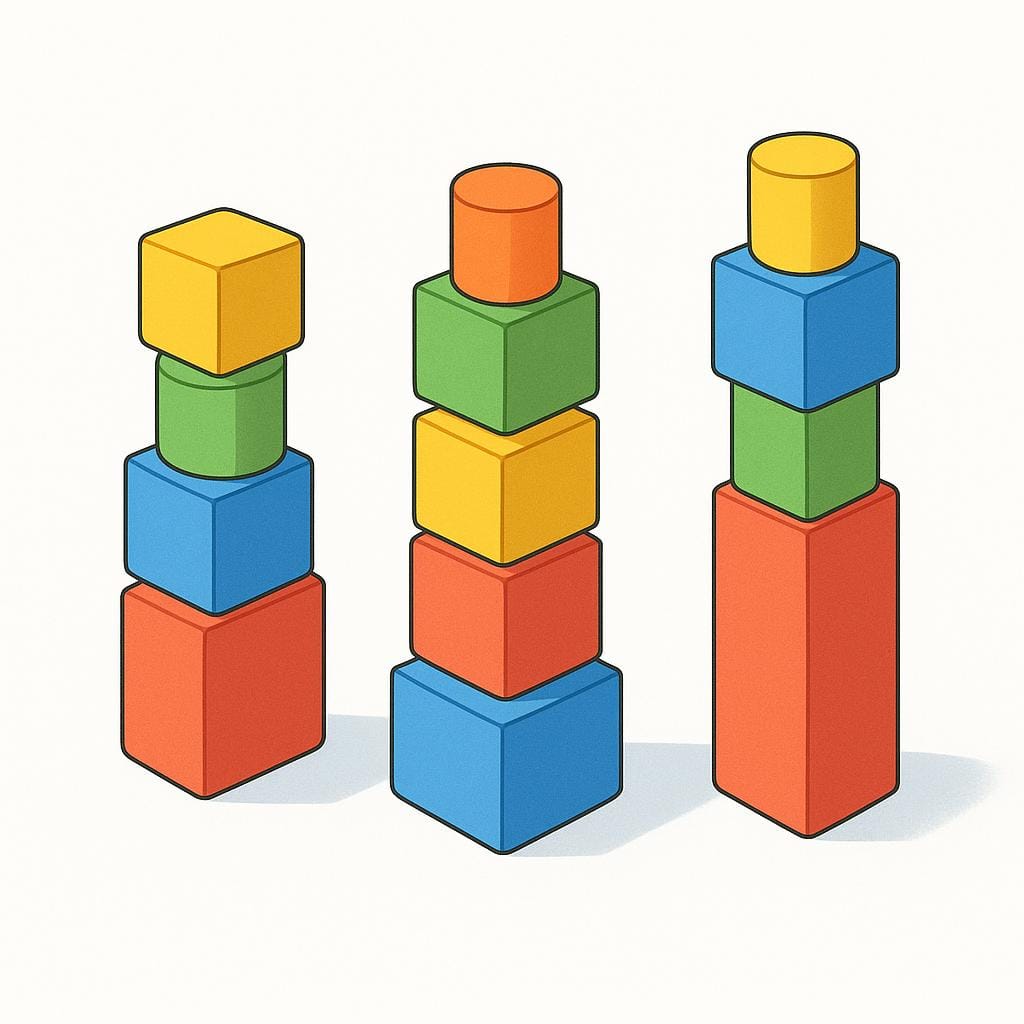
Los soldados marchaban en una columna perfecta.
The soldiers were marching in a perfect column (file).
Column vs. Row
In data and spreadsheets, 'columna' is the vertical arrangement, while 'fila' is the horizontal arrangement (the row). Always remember: columns go up and down!
Archivo vs. Carpeta
Learn Spanish with Inklingo
Interactive stories, personalized learning, and more.