archivo
“archivo” means “file” in Spanish. It has 2 different meanings depending on context:

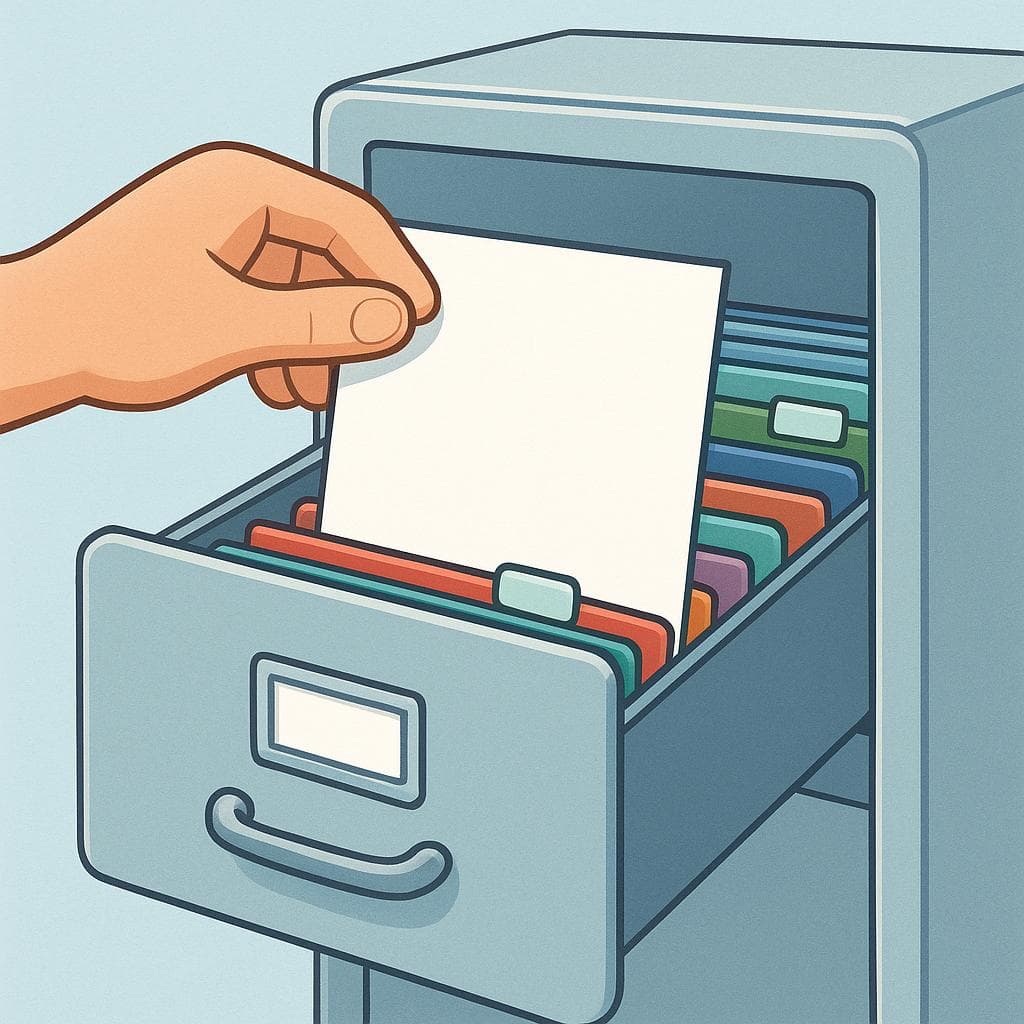
file, archiveAlso: folder, record office

📝 In Action
Guarda el archivo en la nube, por favor.
A1Save the file in the cloud, please.
El archivo de la universidad tiene documentos de hace cien años.
B1The university archive has documents from a hundred years ago.
Este archivo PDF está dañado.
A2This PDF file is damaged.
Word Connections
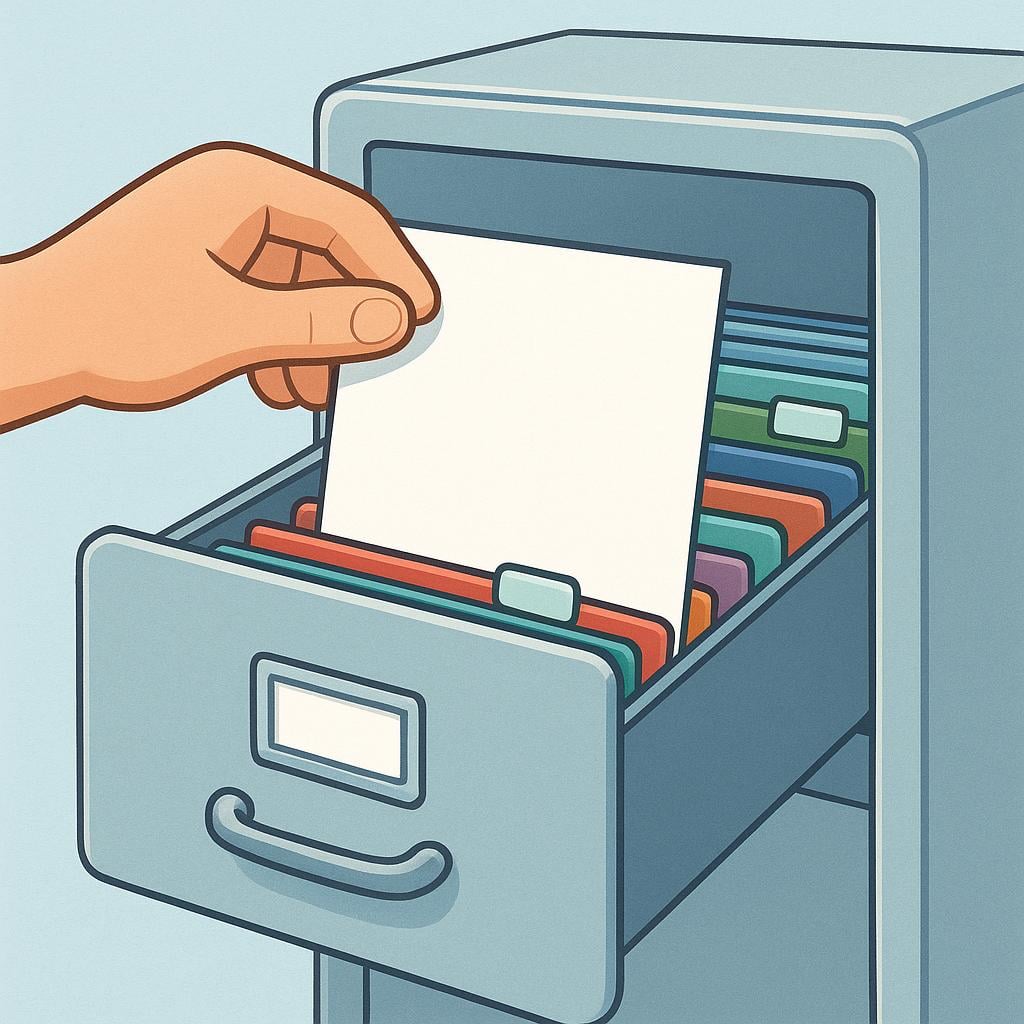
to file, to archiveAlso: to shelve
📝 In Action
Yo archivo todos los documentos al final del día.
B1I file all the documents at the end of the day.
Decidieron archivar el caso por falta de pruebas.
C1They decided to shelve (or close) the case due to lack of evidence.
Word Connections
Indicative
Present
Imperfect
Preterite
Subjunctive
Present Subjunctive
Imperfect Subjunctive
Translate to Spanish
Words that translate to "archivo" in Spanish:
✏️ Quick Practice
Quick Quiz: archivo
Question 1 of 2
Which sentence correctly uses 'archivo' as a verb?
📚 More Resources
👥 Word Family
📚 Etymology
The word comes from the Latin 'archivum,' which itself came from the ancient Greek word 'arkheion,' referring to a public building where official records were kept. It has always been about storing important documents.
First recorded: 15th century (in Spanish)
Cognates (Related words)
💡 Master Spanish
Take your Spanish to the next level. Read 200+ illustrated and narrated Spanish stories tailored to your level with the Inklingo app!
Frequently Asked Questions
How do I know if 'archivo' means 'file' (noun) or 'I file' (verb)?
Context is key! If 'archivo' is preceded by 'el,' 'un,' or 'este' (like 'el archivo'), it's the noun. If it's preceded by 'Yo' (I) or is the main action in the sentence, it's the verb form.
Is 'archivo' used for digital files or just physical ones?
It is used for both equally! It is the standard Spanish term for any digital file (PDF, Word document, photo, etc.) as well as physical collections of records.