How to Say "to archive" in Spanish
The most common Spanish word for “to archive” is “archivar” — use 'archivar' when you are filing or storing documents, papers, or data for long-term keeping, often in a physical or digital system. It implies a more formal or organized storage process.

Use 'archivar' when you are filing or storing documents, papers, or data for long-term keeping, often in a physical or digital system. It implies a more formal or organized storage process.
Learn more →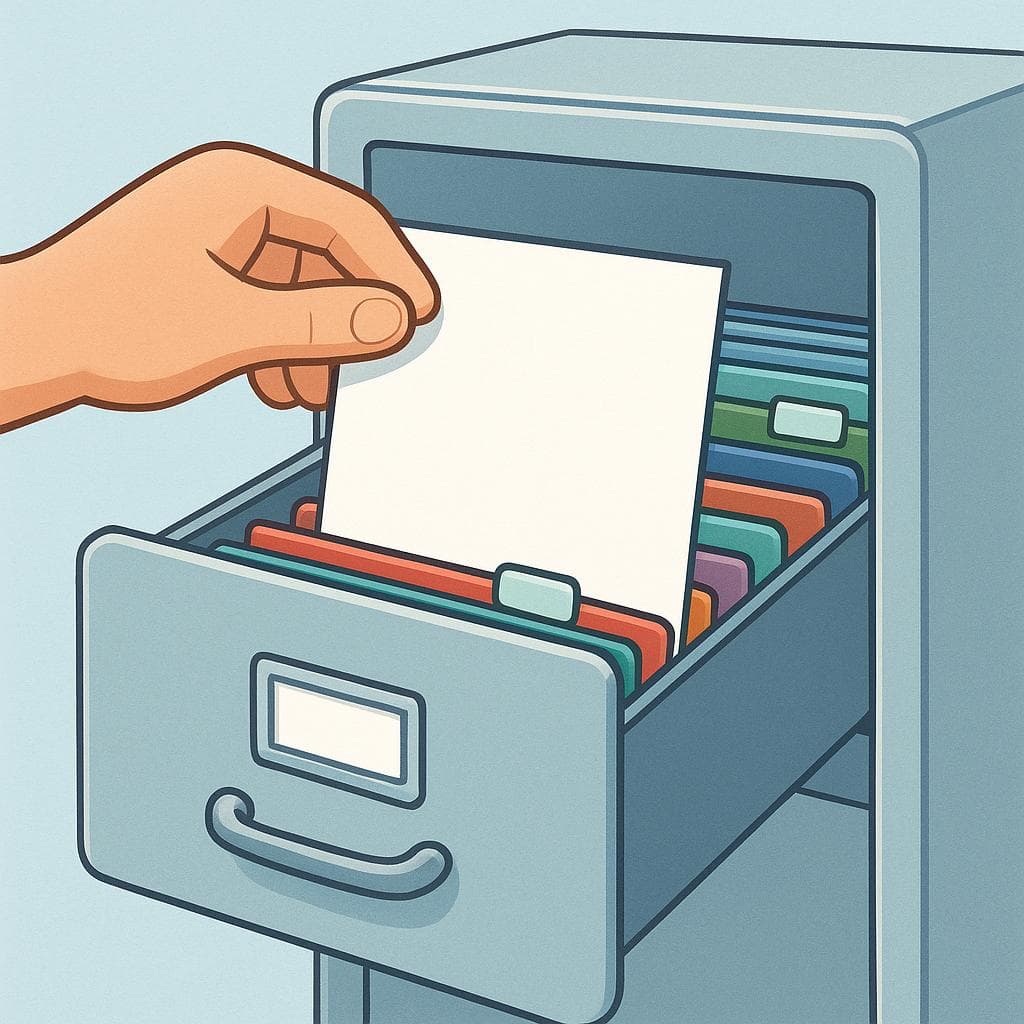
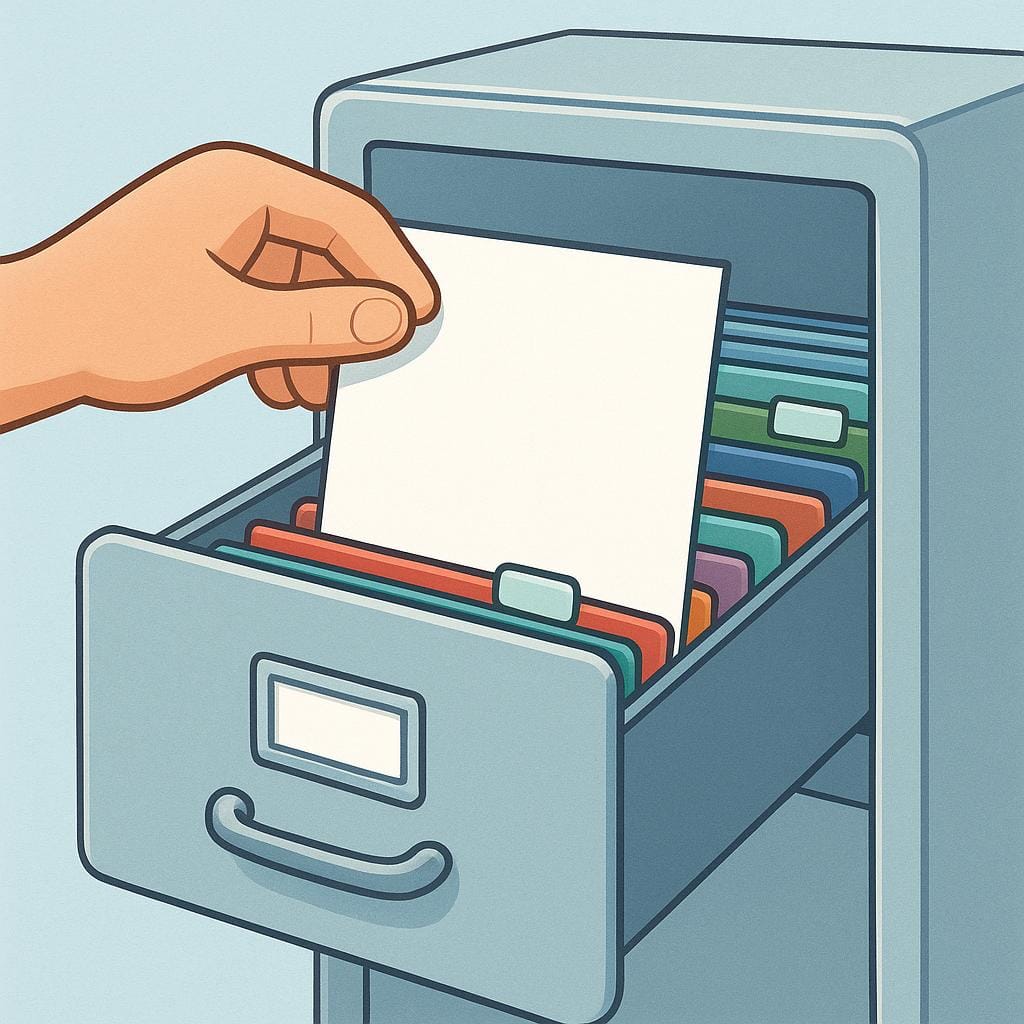
Use 'archivo' when referring to the act of storing items, especially documents or files, for later use or reference, often as a routine daily or weekly task. It's a more general term for putting things away.
Learn more →ar-chee-BARaɾtʃiˈβaɾ

Examples
Por favor, archiva estas facturas en la carpeta azul.
Please file these invoices in the blue folder.
He decidido archivar mis fotos antiguas en la nube.
I have decided to archive my old photos in the cloud.
El juez tuvo que archivar el caso por falta de pruebas.
The judge had to dismiss the case due to lack of evidence.
It's a regular -ar verb
Good news! This word follows the standard pattern for all -ar verbs. If you know how to conjugate 'hablar', you know how to conjugate 'archivar'.
Direct Object usage
You usually need to say WHAT you are filing immediately after the verb. For example: 'Lo archivo' (I file it).
Confusing file storage with file creation
Mistake: “Voy a archivar un nuevo informe (when you mean you are writing it).”
Correction: Use 'redactar' or 'crear' to make it; use 'archivar' only when you are finished and putting it away.
ar-CHEE-vohaɾˈtʃi.βo
Examples
Yo archivo todos los documentos al final del día.
I file all the documents at the end of the day.
Decidieron archivar el caso por falta de pruebas.
They decided to shelve (or close) the case due to lack of evidence.
Regular -AR Verb
'Archivar' follows the simplest conjugation pattern for Spanish verbs. Once you know how to conjugate 'hablar' (to talk), you know 'archivar'!
Archivar vs. Archivo for Filing
Learners often confuse 'archivar' and 'archivo' because both relate to storing. Remember that 'archivar' is typically for more permanent, organized storage (like putting old tax returns in a dedicated archive box), while 'archivo' is more about the daily act of filing things away so they aren't lost.
Related Translations
Learn Spanish with Inklingo
Interactive stories, personalized learning, and more.