How to Say "found out" in Spanish
The most common Spanish word for “found out” is “supo” — use 'supo' when someone simply gained knowledge or became aware of a piece of information, often passively.



supo
SOO-pohˈsu.po

Examples
Ella supo la noticia por la radio esta mañana.
She found out the news on the radio this morning.
Él supo manejar la situación con mucha calma.
He managed to handle the situation very calmly.
Usted supo la respuesta correcta después de pensarlo un rato.
You (formal) figured out the correct answer after thinking about it for a while.
The 'Snapshot' Past Tense
This form, 'supo,' uses the past tense for completed actions (the preterite). It describes a single moment when the knowledge arrived, like taking a snapshot of a discovery.
Irregularity Alert
'Supo' comes from the verb 'saber,' but it completely changes its stem (the beginning part) to 'sup-' in this tense. You just have to memorize this pattern!
Preterite vs. Imperfect Meaning
Mistake: “Using 'supo' when you mean 'Ella ya tenía ese conocimiento' (She already had that knowledge).”
Correction: Use 'sabía' (imperfect) for existing knowledge: 'Ella sabía dónde estaba la llave' (She knew where the key was). Use 'supo' for the moment she found it out: 'Ella supo dónde estaba la llave' (She found out where the key was).
Examples
Mi hermano se enteró de la noticia por internet.
My brother found out the news online.
descubrió
Examples
Ella descubrió que su novio le mintió sobre el viaje.
She found out that her boyfriend lied to her about the trip.
averiguado
ah-beh-ree-GWAH-dohaβeɾiˈɣwaðo

Examples
Él ha averiguado la verdad sobre el problema.
He has found out the truth about the problem.
He averiguado la verdad sobre el problema.
I have found out the truth about the problem.
Una vez averiguado el precio, decidimos no comprarlo.
Once the price was found out, we decided not to buy it.
Using the 'Done' form
Averiguado is the past participle. Use it after the verb 'haber' (he, has, ha...) to say you 'have found out' something.
The Spelling Change
Notice that in some forms of the main verb, like 'averigüé', we add two dots over the 'u'. This is just to make sure the 'u' is still pronounced.
Confusing with 'found'
Mistake: “Using 'averiguado' to mean finding a physical object.”
Correction: Use 'encontrado' for physical objects (like keys). Use 'averiguado' for information or facts.
supiera
soo-PYEH-rahsuˈpjeɾa

Examples
Si yo supiera la respuesta, te la diría.
If I knew the answer, I would tell you.
Esperaba que ella supiera la verdad.
I hoped that she knew the truth.
No había nadie que supiera manejar ese sistema antiguo.
There was no one who knew how to operate that old system.
The Imperfect Subjunctive Mood
This form ('supiera') is used to express wishes, feelings, or doubts about a past event, or to set up hypothetical 'if' statements about the present or future.
The 'If...Then' Structure
When talking about unreal or hypothetical situations, you use 'si' (if) plus the Imperfect Subjunctive ('supiera'), followed by the Conditional tense ('diría').
Confusing 'saber' and 'conocer'
Mistake: “Using 'saber' when talking about knowing a person or place (e.g., 'Si supiera a Juan...').”
Correction: Use 'conociera' for people and places: 'Si conociera a Juan...' ('If I knew Juan...'). Use 'supiera' for facts or skills: 'Si supiera la dirección...' ('If I knew the address...').
Using the Indicative for Hypotheticals
Mistake: “Saying 'Si yo sé la respuesta, te la diría.'”
Correction: The structure requires the special Subjunctive form for the 'if' part: 'Si yo supiera la respuesta, te la diría.' (If I knew, I would tell you.)
pillado
pee-YAH-dohpiˈʎa.ðo

Examples
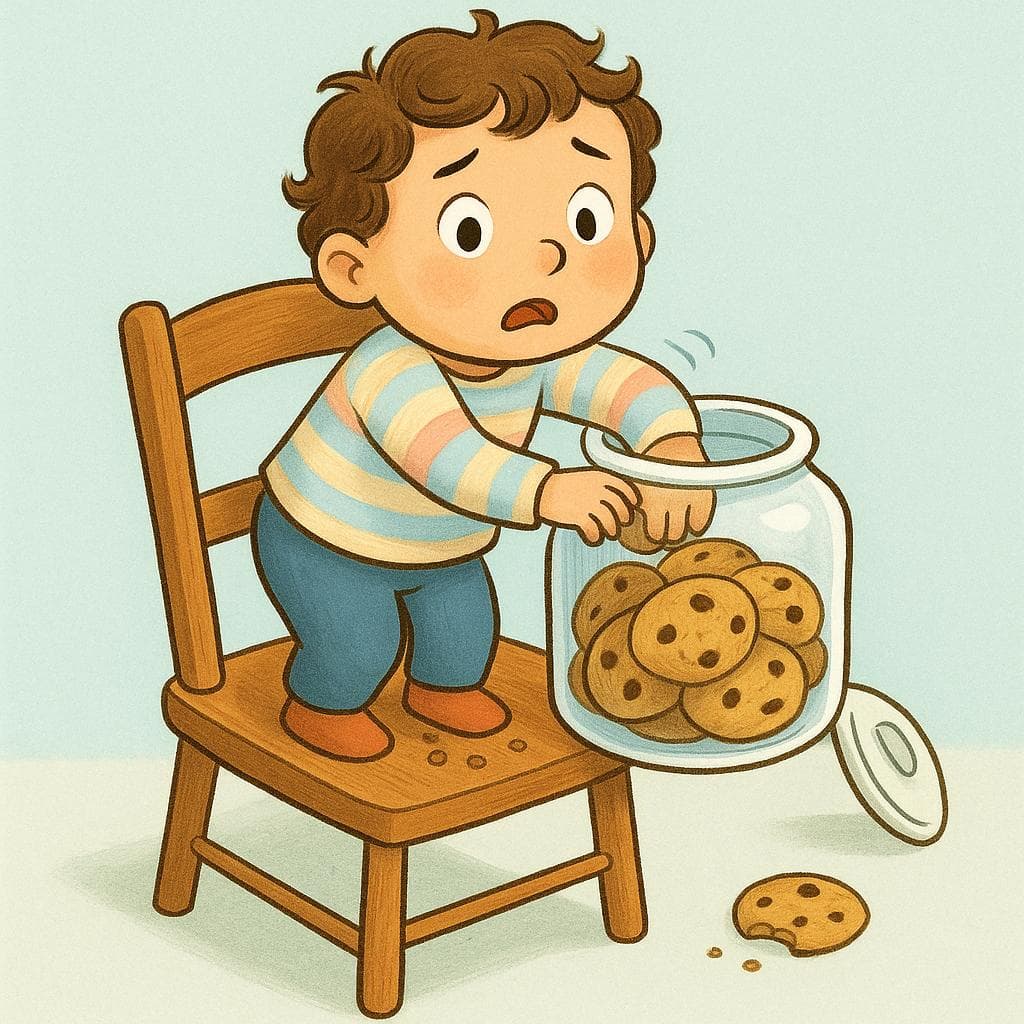
¡Te he pillado comiendo chocolate a escondidas!
I busted you eating chocolate secretly!
Estaba totalmente pillado cuando supo que su secreto había sido revelado.
He was totally caught out/shocked when he found out his secret had been revealed.
Focus on the Result
When someone is 'pillado' in this sense, they are usually feeling the immediate result of being discovered: shame, shock, or surprise.
Verb vs. Adjective: Caught vs. Learned
Related Translations
Learn Spanish with Inklingo
Interactive stories, personalized learning, and more.