How to Say "guard" in Spanish
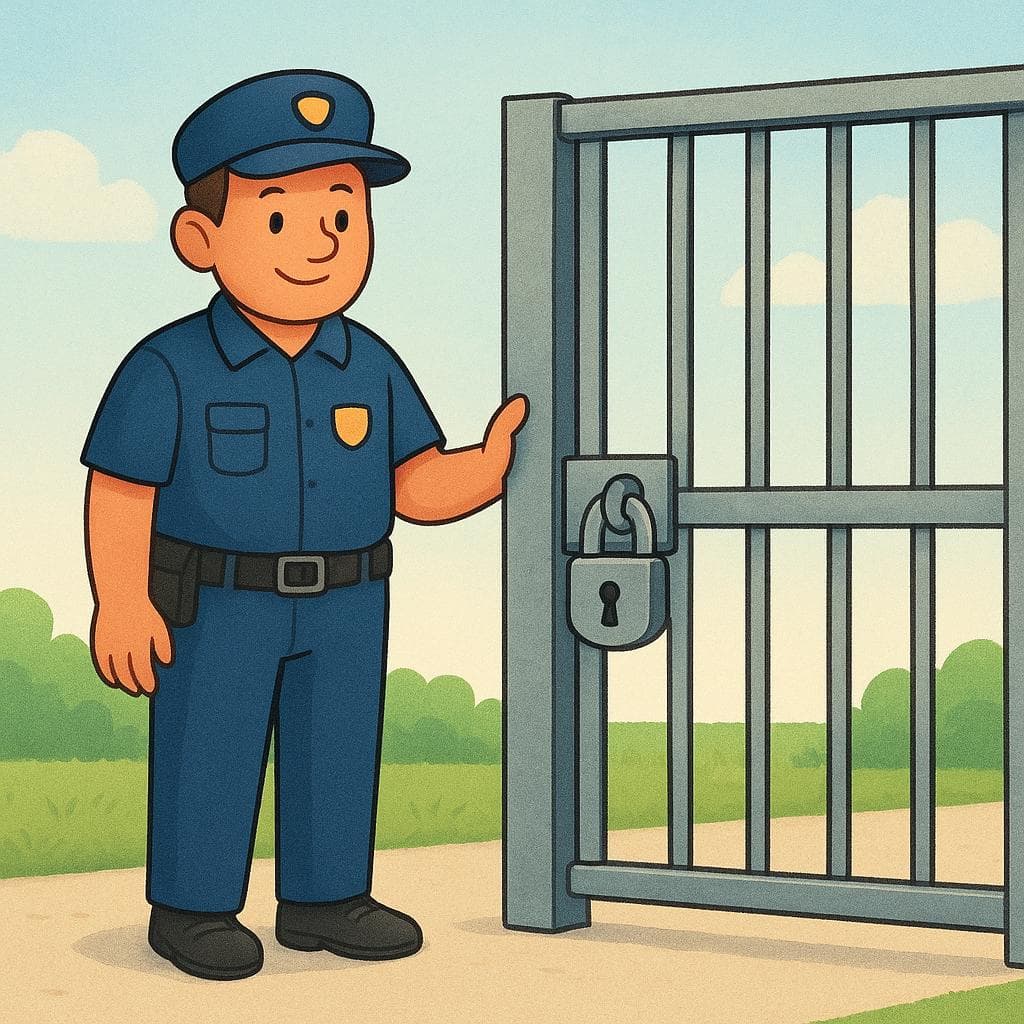
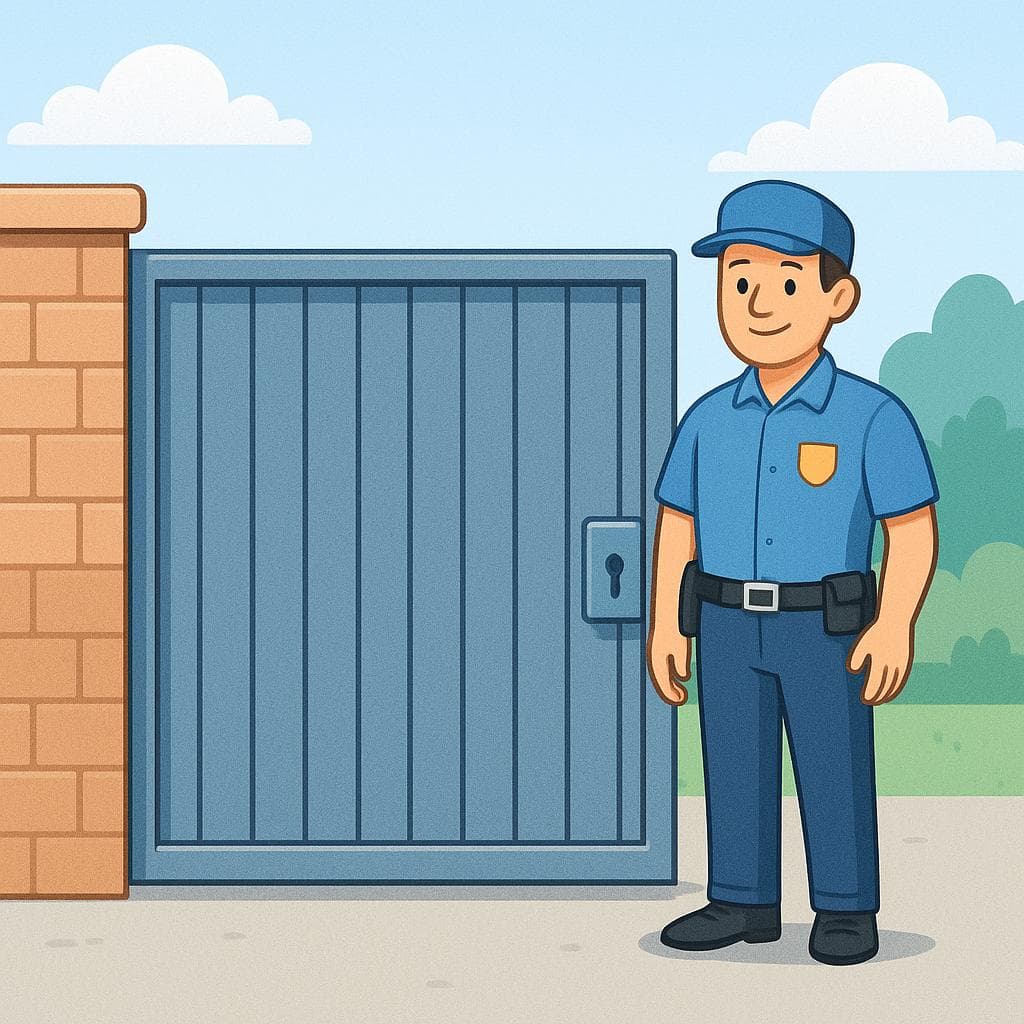
The most common Spanish word for “guard” is “guardia” — use 'guardia' for a person working in security, like a security guard at a building or event.







guardia
gwar-dyaˈɡwar.ðja
Examples
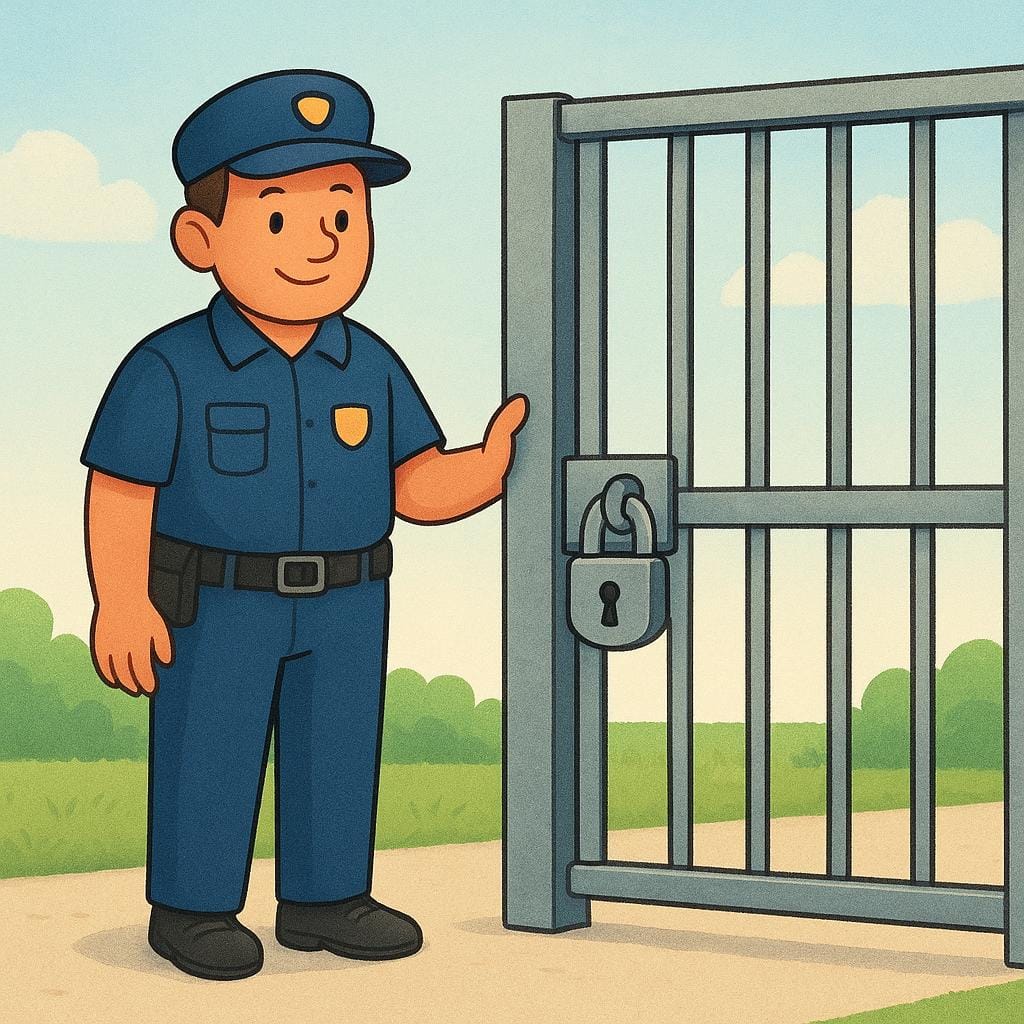
El guardia de seguridad revisó mi mochila antes de entrar al museo.
The security guard checked my backpack before entering the museum.
Si hay un problema, llama al guardia que está en la entrada.
If there is a problem, call the guard who is at the entrance.
La guardia del palacio estaba inamovible.
The guard (female officer) of the palace was standing still.
Gender and Person
When referring to the person who guards, 'guardia' is a noun that stays the same for both men and women (common gender). You use 'el guardia' for a man and 'la guardia' for a woman.
Using the wrong article
Mistake: “La guardia es un hombre muy alto.”
Correction: El guardia es un hombre muy alto. (Remember to match 'el' or 'la' to the person's actual gender.)
guarda
GWAR-dahˈɡwaɾða

Examples
El guarda del museo nos pidió que no tocáramos las obras.
The museum guard asked us not to touch the works.
Ella guarda sus joyas en una caja fuerte.
She keeps her jewelry in a safe box.
Guarda este secreto, por favor.
Keep this secret, please (informal command).
¿Dónde guarda el documento?
Where does he save the document?
Dual Role
The form 'guarda' is used both when talking about what a third person (he/she/it/you formal) 'does' now, and when you are giving an informal command to 'tú'.
Gender Invariant
When referring to the person, the word 'guarda' itself doesn't change based on gender, but the article (el or la) and any accompanying adjectives must match the person's gender.
Confusing Gender
Mistake: “Using 'guarda' with the incorrect article for the person's gender (e.g., calling a woman 'el guarda').”
Correction: Use 'el guarda' for a man and 'la guarda' for a woman. The word 'guarda' stays the same.
guarde
GWAHR-dehˈɡwaɾðe

Examples
Por favor, guarde estos documentos en la caja fuerte.
Please, save/keep these documents in the safe.
Guarde silencio, por favor.
Keep quiet, please.
Espero que él guarde mi secreto.
I hope that he keeps my secret.
The 'Polite' Command
Use 'guarde' when you want to tell someone politely (using 'usted') to put something away or save it. It sounds much more respectful than 'guarda'.
Expressing Wishes
This form is used after words like 'quiero que' (I want that) or 'espero que' (I hope that) to talk about what you want someone else to do.
The 'Usted' Mix-up
Mistake: “Saying 'Guarda el dinero' to a boss or stranger.”
Correction: Say 'Guarde el dinero'. 'Guarda' is only for friends and family; 'guarde' is the polite version.
protector
pro-tek-TORpɾoteɣˈtoɾ

Examples
No olvides ponerte protector antes de salir al sol.
Don't forget to put on sunscreen before going out in the sun.
Se me rompió el protector de la pantalla del teléfono.
The screen protector on my phone broke.
Confusing Sun Products
Mistake: “Using *bloqueador* universally.”
Correction: While *bloqueador* is common in parts of Latin America, *protector solar* is the most widely understood term for sunscreen across the Spanish-speaking world.
defender
deh-fehn-DEHRde.fenˈdeɾ

Examples
El perro defiende la casa de los ladrones.
The dog defends the house from thieves.
Los soldados defienden la frontera con valentía.
The soldiers defend the border bravely.
The E > IE Change
In the present tense, the 'e' in the stem changes to 'ie' in all forms except for 'nosotros' and 'vosotros'. This is common for many Spanish verbs!
Forgetting the Stem Change
Mistake: “Yo defendo la verdad.”
Correction: Yo defiendo la verdad. Remember to change the 'e' to 'ie' when the stress falls on that syllable.
custodia
koos-TOH-dee-ahkusˈto.ðja

Examples
La policía puso el cargamento bajo custodia hasta que llegara el camión blindado.
The police placed the shipment under safekeeping until the armored truck arrived.
El presidente viaja siempre con un equipo de custodia personal.
The president always travels with a personal security detail (guard).
The Preposition 'Bajo'
When talking about an item being protected, you almost always use the preposition 'bajo' (under): 'bajo custodia' means 'under protection/guard' or 'in safekeeping'.
Confusing 'Custodia' and 'Cuidado'
Mistake: “Using 'cuidado' when referring to police guard or legal safekeeping.”
Correction: Use 'custodia' for official or security protection, and 'cuidado' for general care or attention.
guardián
gwar-dee-AHNɡwaɾˈðjan
Examples
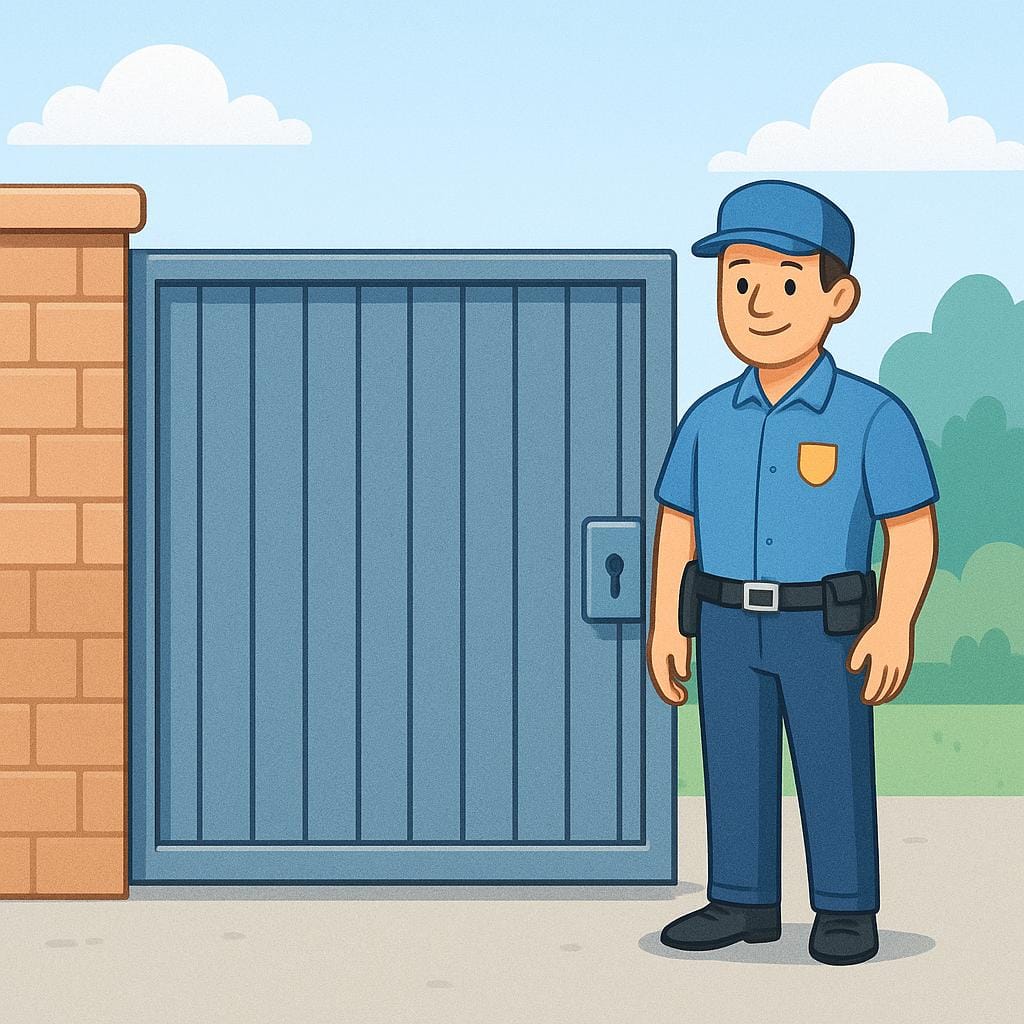
El guardián de seguridad revisó mi bolso antes de entrar al museo.
The security guard checked my bag before entering the museum.
El zoológico tiene un guardián especial para los tigres.
The zoo has a special keeper for the tigers.
Los guardianes de la prisión están en huelga.
The prison guards are on strike.
Gender Match
Since 'guardián' is a masculine noun, any descriptive words (adjectives) you use with it must also be masculine: 'el viejo guardián' (the old guard).
Confusing the Job and the Action
Mistake: “Muchos guardianes guardan la puerta. (Many guards guard the door.)”
Correction: This is grammatically correct but sounds repetitive. Try: 'Muchos guardianes protegen la puerta.' (Many guards protect the door.)
centinela
sen-tee-NEH-lahsentiˈnela

Examples
El centinela se mantuvo alerta toda la noche.
The sentry remained alert all night long.
Pusieron a una centinela en la puerta principal del palacio.
They placed a guard at the main door of the palace.
Los viejos robles parecen centinelas del bosque.
The old oaks look like sentinels of the forest.
One word for both genders
The word 'centinela' always ends in 'a' regardless of whether the person is a man or a woman. You only change the 'el' or 'la' in front.
Describing the person vs. the job
When you use 'el centinela', you are usually talking about the specific person. If you talk about the act of guarding, you might use 'la guardia'.
Avoiding 'Centinelo'
Mistake: “El centinelo está cansado.”
Correction: El centinela está cansado. Even though the guard is a man, the word never changes its ending to 'o'.
cuide
KWEE-dehˈkwiðe

Examples
Espero que yo cuide bien mi jardín este verano.
I hope that I take good care of my garden this summer.
Le pedí a María que cuide a mi gato mientras viajo.
I asked Maria to look after my cat while I travel. (Uses 'ella' present subjunctive)
Cuide su dinero, señora, es peligroso aquí.
Take care of your money, ma'am, it's dangerous here. (Uses 'Usted' affirmative command)
Using 'Cuide' for Wishes and Doubt
When you want to express a desire, a request, or uncertainty about taking care of something, you must use the special verb form 'cuide'. This is called the 'subjunctive' mood. Example: 'Dudo que él cuide bien el coche.' (I doubt that he takes good care of the car.)
Formal Commands (Usted)
'Cuide' is the standard way to give a polite, formal command (using Usted) to a single person. This is the same form used in the subjunctive. Example: 'Cuide la puerta.' (Guard the door, please.)
Mixing Indicative and Subjunctive
Mistake: “Using the normal present tense form: 'Espero que usted cuida mi perro.'”
Correction: You must use the subjunctive form 'cuide' after verbs of emotion or desire: 'Espero que usted cuide mi perro.' (I hope you take care of my dog.)
Guardia vs. Guarda vs. Guardar
Related Translations
Learn Spanish with Inklingo
Interactive stories, personalized learning, and more.