How to Say "hard" in Spanish
The most common Spanish word for “hard” is “difícil” — use this when referring to something that requires a lot of mental effort or is challenging to understand or do.






difícil
dee-FEE-seel (Remember the stress is on the second 'i'!)diˈfi.sil

Examples
Aprender español no es difícil, pero requiere práctica.
Learning Spanish is not difficult, but it requires practice.
Resolver este problema de matemáticas fue muy difícil.
Solving this math problem was very hard.
Tuvieron un viaje difícil debido a la tormenta.
They had a difficult trip because of the storm.
Agreement in Number
Since 'difícil' is an adjective, it must match the thing it describes. For a plural noun, add '-es': 'las cosas difíciles' (the difficult things).
Forgetting Plural Agreement
Mistake: “Los exámenes es difícil.”
Correction: Los exámenes son difíciles. (The exams are difficult.) Remember to add -es for plural nouns.
duro
DOO-rohˈdu.ɾo

Examples
Esta piedra es muy dura.
This stone is very hard.
El pan de ayer está duro.
Yesterday's bread is stale.
Ha sido un año muy duro para nosotros.
It has been a very difficult year for us.
Tenemos que trabajar duro para terminar a tiempo.
We have to work hard to finish on time.
Matching the Noun
As an adjective, 'duro' changes to match the thing it describes. Use 'dura' for feminine things ('la cama dura'), 'duros' for plural masculine ('los panes duros'), and 'duras' for plural feminine ('las pruebas duras').
Always Stays the Same
When 'duro' describes how an action is done (like in 'trabajar duro'), it's an adverb. This means it NEVER changes. It's always 'duro', never 'dura' or 'duros'.
Confusing with 'Difícil'
Mistake: “'Duro' can mean 'difficult', but 'difícil' is often a better choice for abstract challenges like exams or problems.”
Correction: Use 'un examen difícil' (a difficult exam) instead of 'un examen duro'. 'Duro' implies more of a struggle or hardship.
Making it Match
Mistake: “Mi hermana trabaja dura.”
Correction: Say 'Mi hermana trabaja duro.' Because 'duro' here describes *how* she works, not her as a person, it doesn't change.
duro
Examples
Tenemos que trabajar duro para terminar a tiempo.
We have to work hard to finish on time.
difíciles
Examples
Los exámenes de historia siempre son muy difíciles.
History exams are always very difficult.
fuerte
Examples
¡Habla más fuerte, que no te oigo!
Speak louder, I can't hear you!
fuertemente
fwer-te-MEN-tefweɾteˈmente

Examples
Tienes que presionar el botón fuertemente.
You have to press the button hard.
Anoche sopló el viento fuertemente.
The wind blew strongly last night.
Esa noticia me afectó fuertemente.
That news affected me deeply.
Creating '-ly' words
In Spanish, adding '-mente' to the end of an adjective is just like adding '-ly' in English to describe how something is done.
The Accent Secret
Even though 'fuertemente' doesn't have a written accent mark, you pronounce it as if it has two 'stress' points: one on 'fuer' and the main one on 'men'.
Using it for people's traits
Mistake: “Él es fuertemente.”
Correction: Say 'Él es fuerte.' Use 'fuertemente' only to describe an action, not a person's character or appearance.
duramente
doo-RAH-mehn-tehdu.ɾaˈmen.te
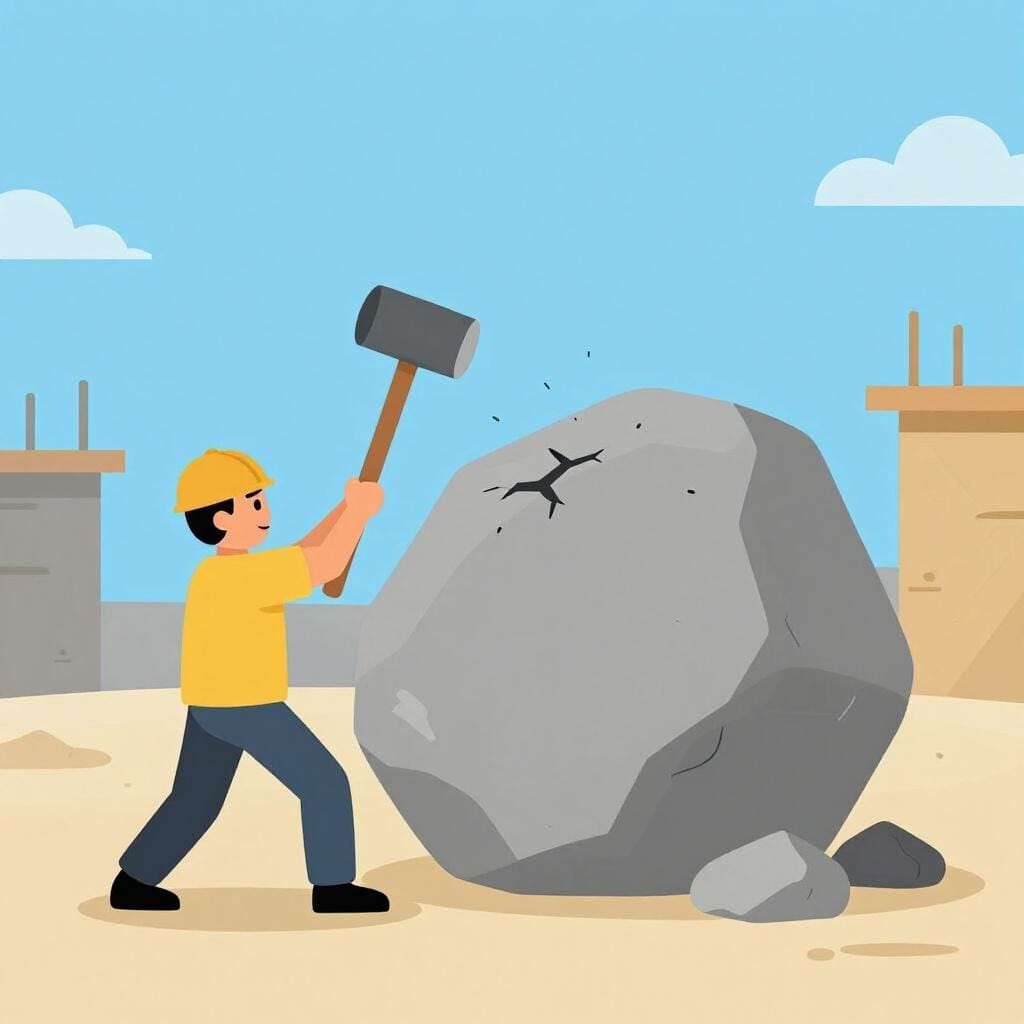
Examples
Ella trabajó duramente toda la semana para terminar el proyecto.
She worked hard all week to finish the project.
El profesor criticó duramente mi ensayo frente a la clase.
The teacher harshly criticized my essay in front of the class.
La tormenta golpeó duramente la costa norte del país.
The storm hit the northern coast of the country hard.
Adverbs Stay the Same
In Spanish, words ending in '-mente' are always the same. You don't need to change them to match masculine or feminine nouns because they describe the action (the verb), not the person.
The '-ly' Connection
The ending '-mente' is the Spanish equivalent of the English '-ly'. You can turn many adjectives into adverbs by taking the feminine form (dura) and adding '-mente'.
Using 'duro' vs. 'duramente'
Mistake: “Él trabaja duramente.”
Correction: Both 'Él trabaja duro' and 'Él trabaja duramente' are correct, but 'duro' is more common in casual conversation, while 'duramente' sounds a bit more formal or dramatic.
sólido
Examples
El hielo es agua en estado sólido.
Ice is water in a solid state.
rígido
Examples
El plástico se vuelve rígido cuando se enfría.
The plastic becomes rigid when it cools down.
rudo
ROO-dohˈru.ðo

Examples
El boxeador es conocido por su estilo rudo y agresivo.
The boxer is known for his tough and aggressive style.
Fue un camino rudo, pero finalmente llegamos a la cima.
It was a rugged path, but we finally reached the top.
Mi abuelo era un hombre rudo de campo, acostumbrado al trabajo pesado.
My grandfather was a tough country man, accustomed to heavy labor.
Describing Difficulty
When describing a task or situation, 'rudo' means that it is very difficult or physically demanding, similar to 'duro'.
intensamente
een-ten-sah-MEN-tehintenˈsamente

Examples
Ella ama intensamente a sus hijos.
She loves her children intensely.
El equipo trabajó intensamente para ganar el campeonato.
The team worked hard to win the championship.
La luz del sol brilla intensamente sobre el mar.
The sunlight shines intensely over the sea.
The '-mente' ending
This ending is just like the English '-ly.' It turns a descriptive word (intenso) into a word that explains how an action is done.
Placement in a sentence
You usually place this word right after the action it is describing, such as 'Llovió intensamente' (It rained intensely).
Using the wrong word for 'very'
Mistake: “Es intensamente frío.”
Correction: Say 'Hace mucho frío' or 'Está muy frío.' Use 'intensamente' to describe an action or a feeling, not usually as a replacement for 'very' before an adjective.
Duro vs. Difícil
Related Translations
Learn Spanish with Inklingo
Interactive stories, personalized learning, and more.