How to Say "loudspeaker" in Spanish
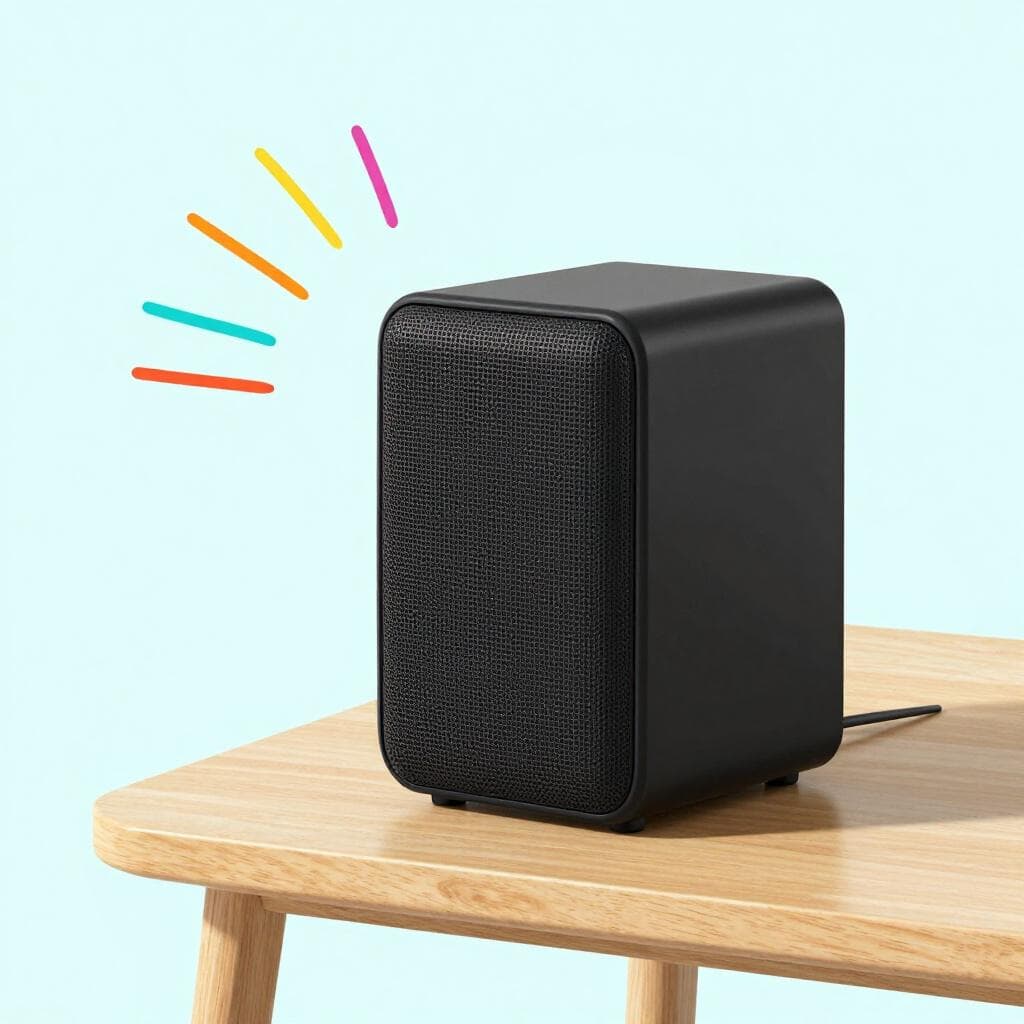
The most common Spanish word for “loudspeaker” is “altavoz” — use 'altavoz' for general audio output devices, like the speaker on a phone, computer, or a standalone speaker for music.

altavoz
al-tah-bohsaltaˈβos
Examples
El altavoz de mi teléfono no funciona.
My phone's speaker doesn't work.
He comprado un altavoz inteligente para la cocina.
I bought a smart speaker for the kitchen.
No te escucho bien, por favor pon el móvil en altavoz.
I can't hear you well, please put the phone on speakerphone.
Making it plural
When you want to talk about more than one speaker, the 'z' at the end changes to a 'c' before adding 'es'. So, one is 'altavoz' and two are 'altavoces'.
Don't be fooled by 'voz'
In Spanish, 'la voz' (the voice) is feminine, but 'el altavoz' is always masculine, even though it has the word 'voz' inside it.
People vs. Machines
Mistake: “Calling a guest speaker at an event 'el altavoz'.”
Correction: Use 'el orador' or 'la oradora' for a person who speaks. 'Altavoz' is only for the electronic device.
bocina
bo-SEE-nahboˈθina
Examples
Compré una bocina Bluetooth para mis fiestas.
I bought a Bluetooth speaker for my parties.
La música suena muy bien en estas bocinas.
The music sounds very good on these speakers.
Se rompió la bocina derecha de mi computadora.
The right speaker of my computer broke.
Plural Form
To talk about more than one, simply add an 's' to make it 'bocinas'.
Spanglish Warning
Mistake: “Me gusta tu speaker.”
Correction: Me gusta tu bocina. While many people understand 'speaker,' using 'bocina' is much better Spanish.
Altavoz vs. Bocina
Related Translations
Learn Spanish with Inklingo
Interactive stories, personalized learning, and more.