How to Say "pavement" in Spanish
The most common Spanish word for “pavement” is “acera” — use 'acera' specifically for the raised walkway beside a street where pedestrians walk.
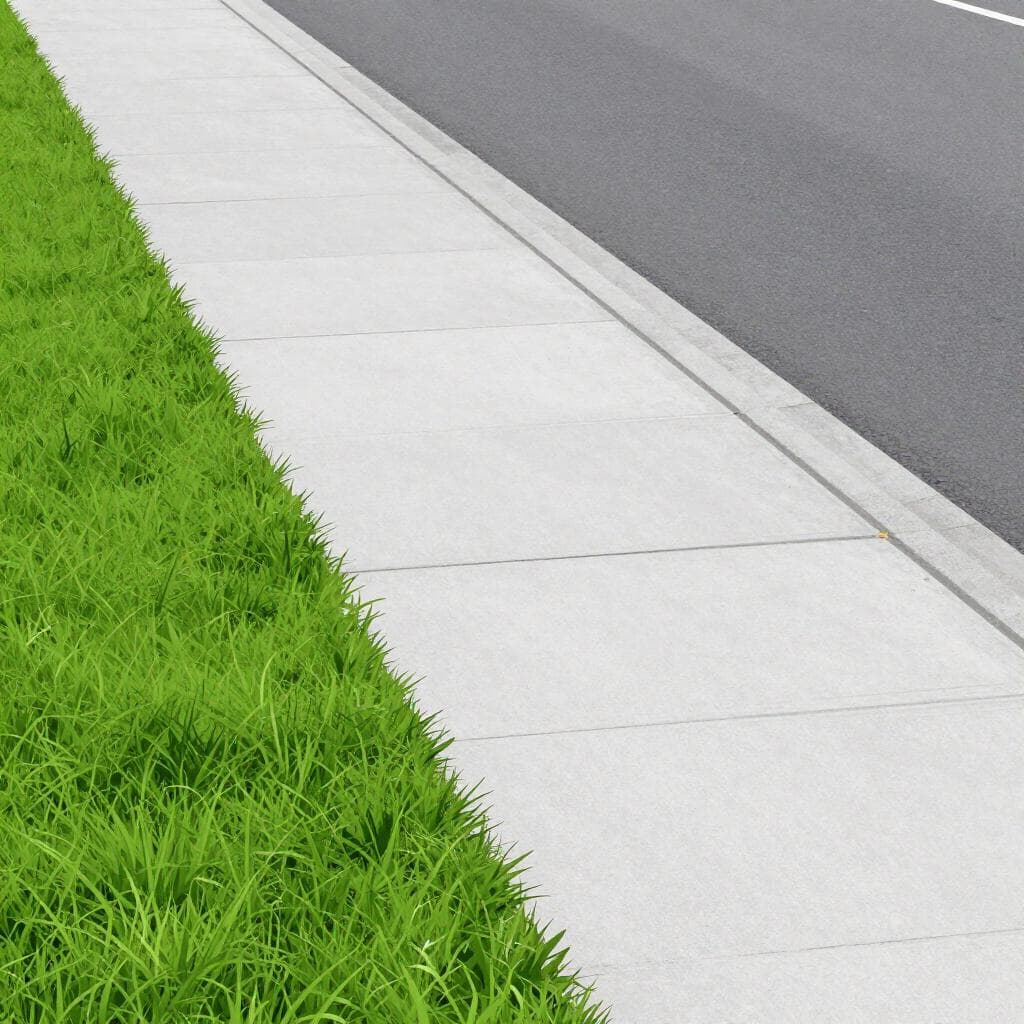
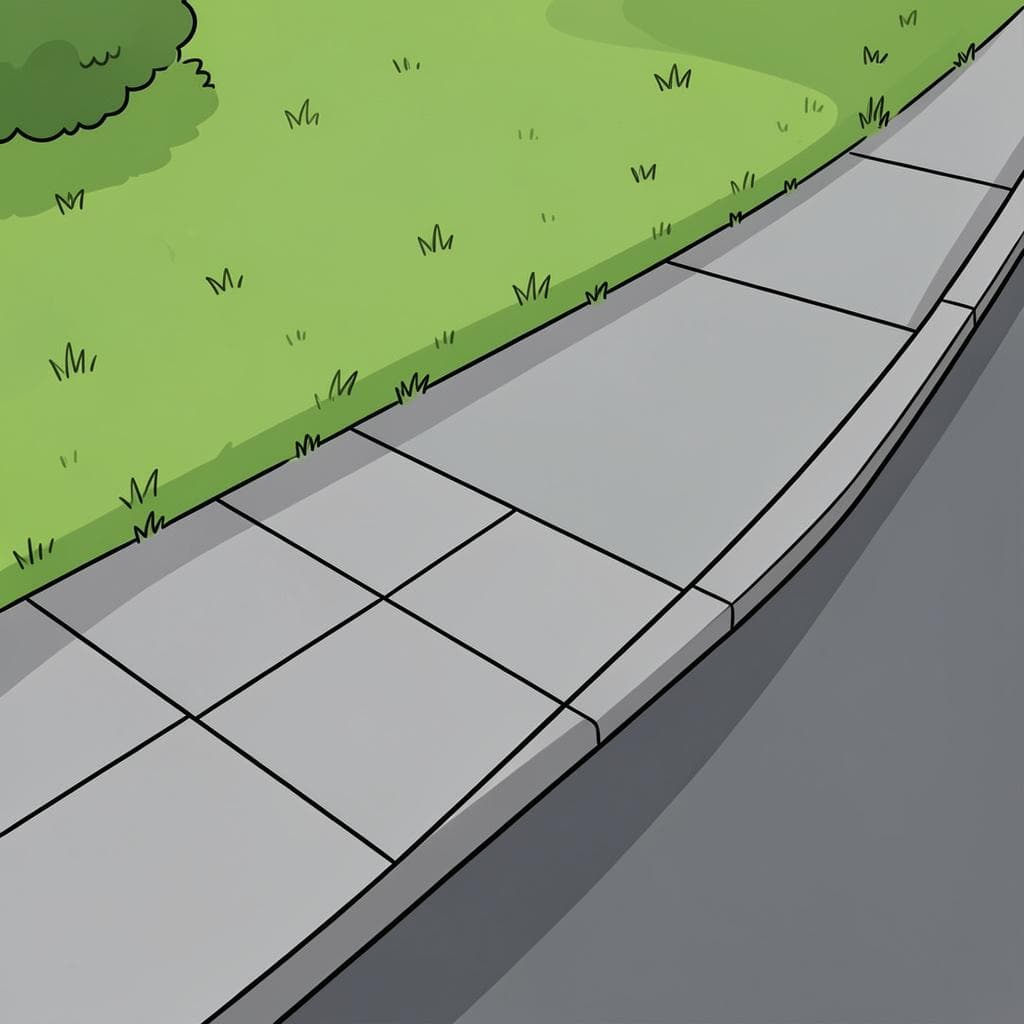
acera
ah-SEH-rahaˈseɾa

Examples
Los peatones deben usar la acera.
Pedestrians must use the sidewalk.
Camina por la acera para estar seguro.
Walk on the sidewalk to stay safe.
Las tiendas de esta acera son muy caras.
The shops on this side of the street are very expensive.
El ayuntamiento va a ensanchar las aceras del centro.
The city council is going to widen the sidewalks downtown.
Gender Identification
Like most Spanish words ending in '-a', 'acera' is feminine. You should always use 'la' or 'una' with it.
Talking about Movement
Use the word 'por' when you want to say you are walking 'along' or 'down' the sidewalk (e.g., 'Caminar por la acera').
Don't confuse with 'cerca'
Mistake: “Estoy caminando en la cerca.”
Correction: Estoy caminando por la acera.
cera
seh-rahˈseɾa

Examples
Deja la bicicleta en la cera, no en la calle.
Leave the bicycle on the sidewalk, not in the street.
No camines por la calle, ve por la cera.
Don't walk in the street, use the sidewalk.
Shortened forms
In some dialects, words starting with 'a' often lose that first letter in casual speech. 'Acera' becomes 'cera'.
Standard vs. Regional
Mistake: “Using 'cera' for sidewalk in formal writing.”
Correction: In essays or formal documents, always use 'acera'. Use 'cera' only when speaking casually in regions where it's common.
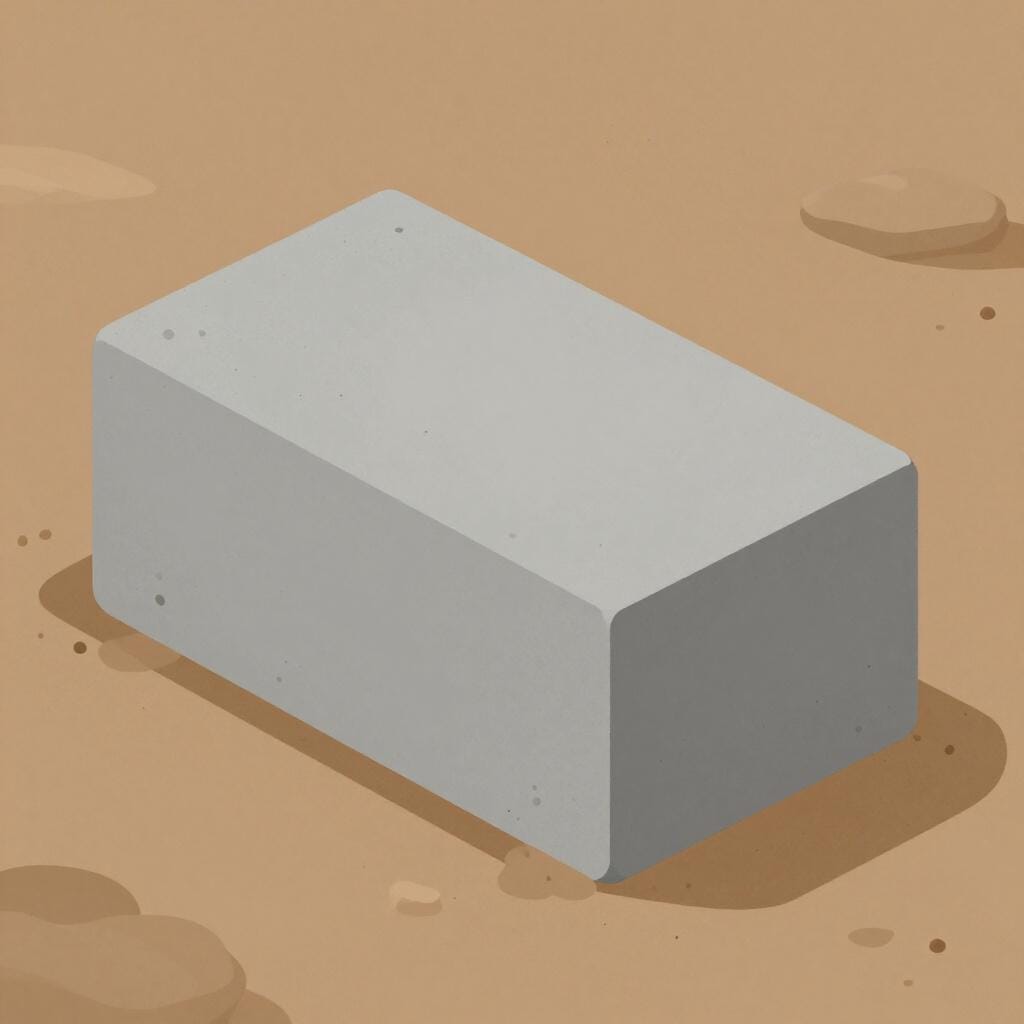
concreto
kon-KREH-tohkoŋˈkɾeto
Examples
El camino está hecho de concreto pulido.
The path is made of polished concrete.
La casa tiene paredes de concreto.
The house has concrete walls.
El concreto se seca muy rápido bajo el sol.
The concrete dries very quickly under the sun.
Vaciaron el concreto para la nueva banqueta.
They poured the concrete for the new sidewalk.
Singular vs. Plural
When talking about the material in general, keep it singular. You only use the plural 'concretos' if you are referring to different types of concrete mixtures.
Concrete vs. Cement
Mistake: “Using 'concreto' and 'cemento' as the exact same thing.”
Correction: Just like in English, 'cemento' is the powder, and 'concreto' is the finished hard material.
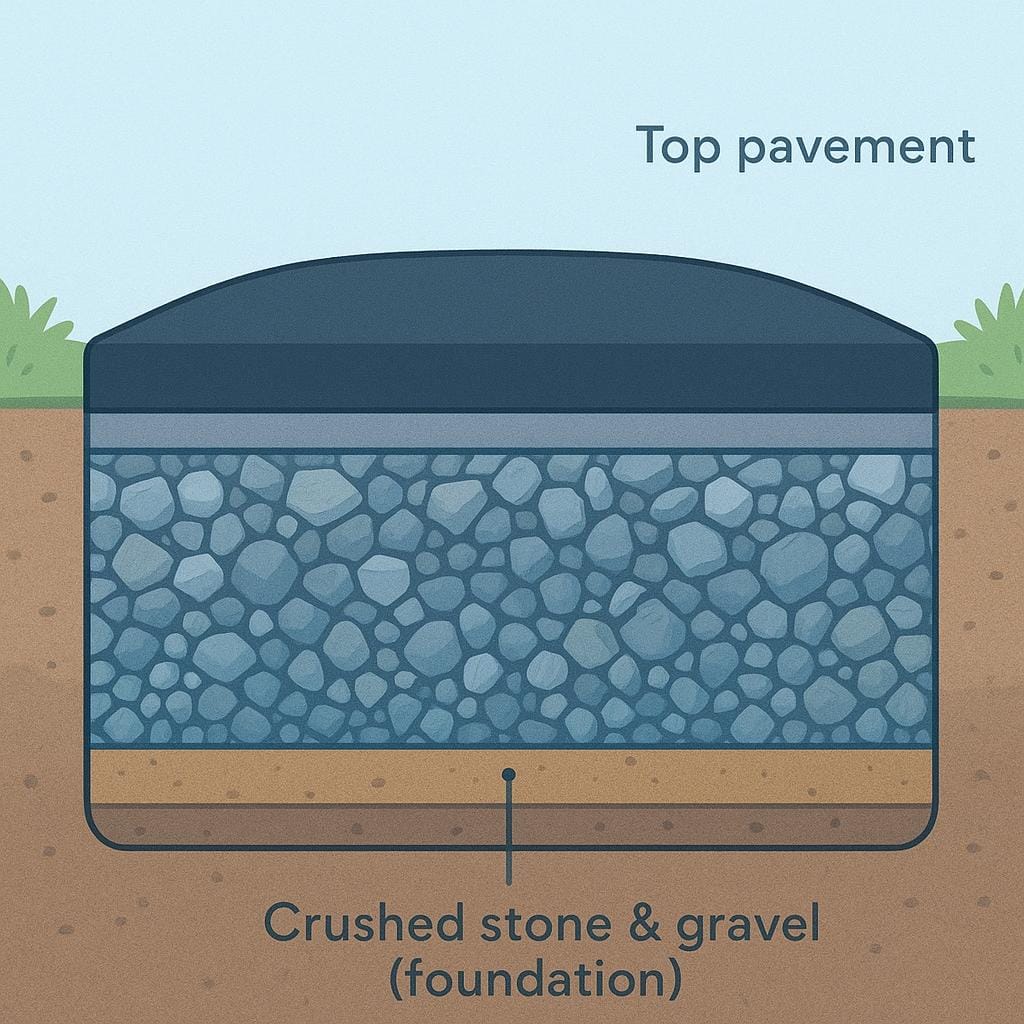
firme
FEER-mehˈfiɾme
Examples
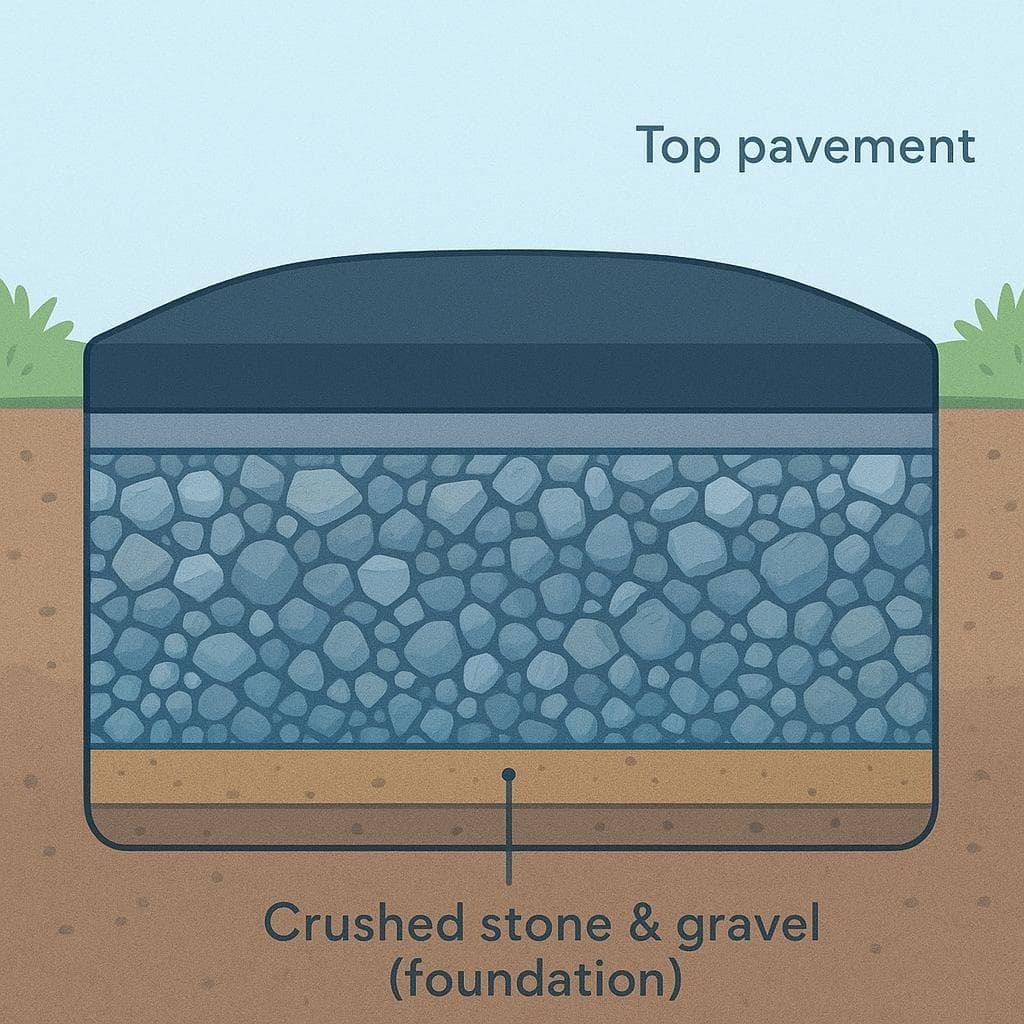
El firme de la carretera necesita reparaciones urgentes.
The road pavement needs urgent repairs.
Las obras de reparación del firme de la autopista durarán dos semanas.
The repair works on the highway pavement will last two weeks.
Gender Note
As a noun meaning 'road surface', 'firme' is always masculine: 'el firme'.
Sidewalk vs. Road Surface
Learn Spanish with Inklingo
Interactive stories, personalized learning, and more.