How to Say "rubbish" in Spanish
The most common Spanish word for “rubbish” is “basura” — use 'basura' for literal trash or garbage that needs to be thrown away, or colloquially for something of very poor quality.
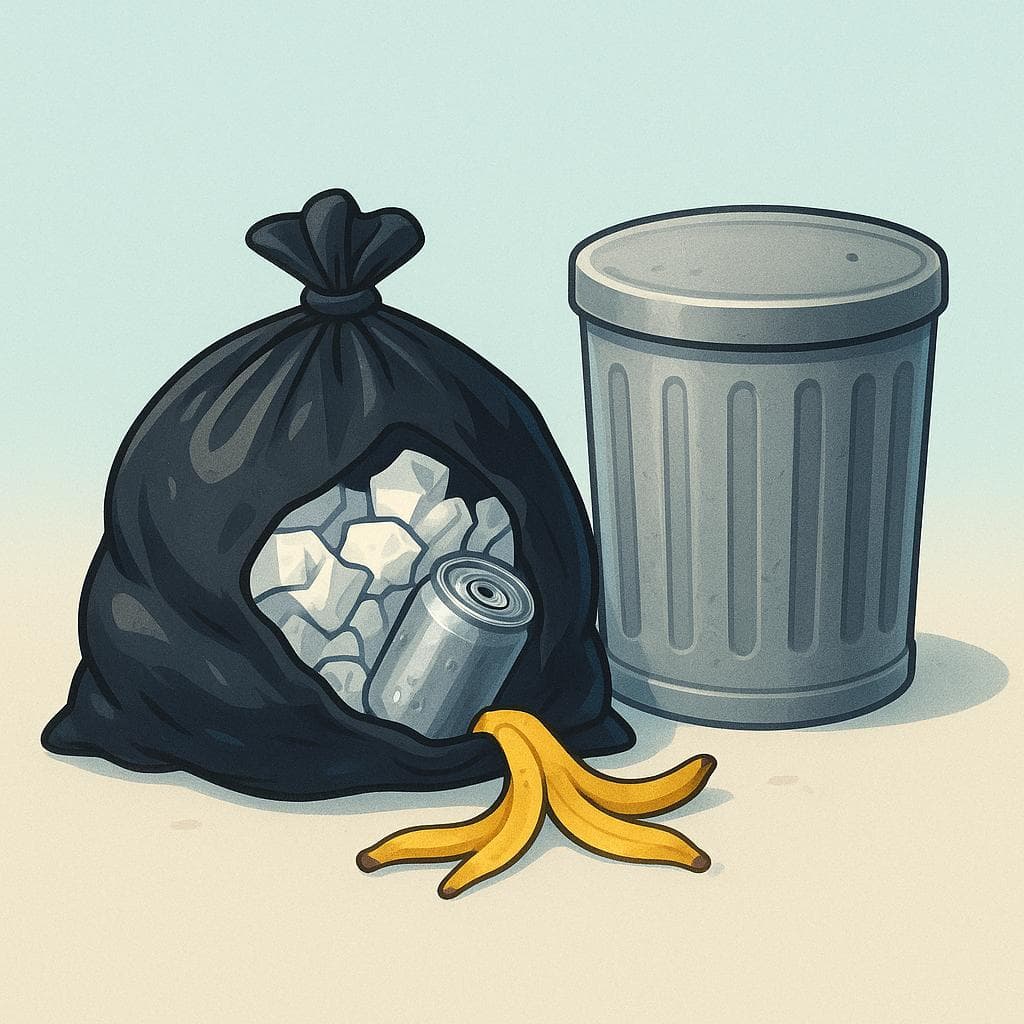
Use 'basura' for literal trash or garbage that needs to be thrown away, or colloquially for something of very poor quality.
Learn more →Use 'tonterías' to dismiss something as silly or nonsensical, often when someone is speaking foolishly.
Learn more →
Use 'estupideces' to refer to foolish or nonsensical actions or talk, similar to 'tonterías' but can sometimes be stronger.
Learn more →
Use 'desecho' for general waste or discarded items, often in a more formal or technical context than 'basura'.
Learn more →Use 'porquería' to describe an object that is of very low quality or poorly made, often implying it's junk.
Learn more →
Use 'mierda' very informally and vulgarly to describe something of extremely poor quality or as an expletive.
Learn more →ba-SOO-rabaˈsuɾa
Examples
Por favor, saca la basura.
Please, take out the trash.
El camión de la basura pasa los martes por la mañana.
The garbage truck comes on Tuesday mornings.
No tires basura en el parque.
Don't throw litter in the park.
Esta película es basura, no pierdas tu tiempo.
This movie is rubbish, don't waste your time.
Always Feminine
Remember that 'basura' is a feminine word, so you'll always use 'la basura' or 'una basura', never 'el' or 'un'.
Describing People and Things
To say something or someone 'is trash', you use the structure 'ser una basura'. For example, 'El programa es una basura' (The show is trash).
Using 'Estar' instead of 'Ser'
Mistake: “Él está una basura.”
Correction: Él es una basura. Use 'ser' because you're describing someone's character or the essential quality of a thing, not a temporary state.
ba-SOO-rabaˈsuɾa
Examples
Esta película es basura, no pierdas tu tiempo.
This movie is rubbish, don't waste your time.
Por favor, saca la basura.
Please, take out the trash.
El camión de la basura pasa los martes por la mañana.
The garbage truck comes on Tuesday mornings.
No tires basura en el parque.
Don't throw litter in the park.
Always Feminine
Remember that 'basura' is a feminine word, so you'll always use 'la basura' or 'una basura', never 'el' or 'un'.
Describing People and Things
To say something or someone 'is trash', you use the structure 'ser una basura'. For example, 'El programa es una basura' (The show is trash).
Using 'Estar' instead of 'Ser'
Mistake: “Él está una basura.”
Correction: Él es una basura. Use 'ser' because you're describing someone's character or the essential quality of a thing, not a temporary state.
tonterías
Examples
Por favor, deja de decir tonterías y habla en serio.
Please stop talking nonsense and speak seriously.
es-too-pee-DEH-sesestupiˈðeθes

Examples
No digas más estupideces y escucha.
Stop saying more nonsense and listen.
Perdí mucho dinero haciendo estupideces.
I lost a lot of money doing stupid things.
¡Qué cantidad de estupideces dice ese hombre!
That man says so much rubbish!
Making it plural
This word is the plural of 'estupidez'. In Spanish, words that end in 'z' change the 'z' to a 'c' before adding 'es' to make them plural.
The 'idad' trap
Mistake: “Saying 'estupidades'.”
Correction: The correct word is 'estupideces'. English speakers often try to use '-idad' (like 'stupidity'), but Spanish uses '-ez' for this specific word.
deh-SEH-chohdeˈsetʃo
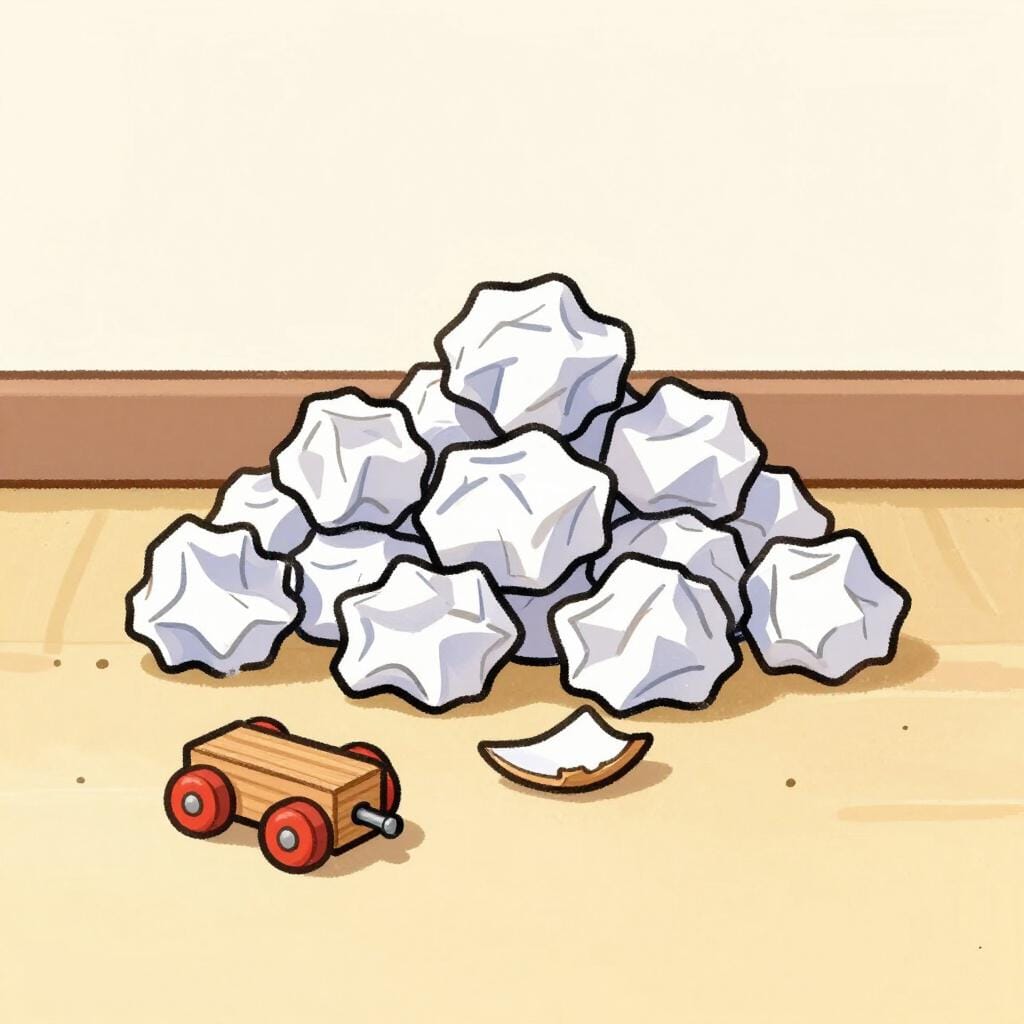
Examples
No tires desechos al suelo.
Don't throw waste on the ground.
Muchos desechos plásticos terminan en el mar.
Many plastic wastes end up in the sea.
La fábrica produce muchos desechos químicos.
The factory produces a lot of chemical waste.
Usually Plural
While you can say 'un desecho', it is much more common to use the plural form 'desechos' when referring to trash or waste in general.
A Step Above 'Basura'
While 'basura' is used for everyday kitchen trash, 'desecho' is often used for specific types of waste, like industrial, medical, or chemical byproducts.
The 'H' Trap
Mistake: “Using 'deshecho' to mean waste.”
Correction: Use 'desecho' (no H) for waste. 'Deshecho' (with an H) means 'undone' or 'melted' and comes from a different word entirely!
porquería
Examples
No compres ese teléfono, es una porquería.
Don't buy that phone, it's a piece of junk.
MYER-dahˈmjeɾ.ða

Examples
Ten cuidado, hay una mierda de perro en el suelo.
Be careful, there is some dog poop on the floor.
Este coche es una mierda; siempre se rompe.
This car is a piece of junk; it always breaks down.
No entiendo una mierda de lo que dice el profesor.
I don't understand a single damn thing the teacher is saying.
Using 'Una mierda de' as a Describing Phrase
When you put 'una mierda de' before another word, it acts like a very strong negative adjective to say that thing is terrible (e.g., 'una mierda de película' = a crappy movie).
Double Negatives with 'Mierda'
When used to mean 'nothing,' it follows the Spanish double-negative rule. You must say 'No sé una mierda' (I don't know a shit) to mean 'I don't know anything at all.'
Thinking it's 'Gender Neutral'
Mistake: “Using 'el mierda' to talk about a situation.”
Correction: Always use 'la mierda' because it is a feminine noun, regardless of what you are complaining about.
Literal Trash vs. Poor Quality
Learners often confuse 'basura' and 'porquería' when describing something of poor quality. While 'basura' can be used this way informally, 'porquería' specifically refers to a low-quality item or object, whereas 'basura' is more general trash.
Related Translations
Learn Spanish with Inklingo
Interactive stories, personalized learning, and more.