How to Say "to dig" in Spanish
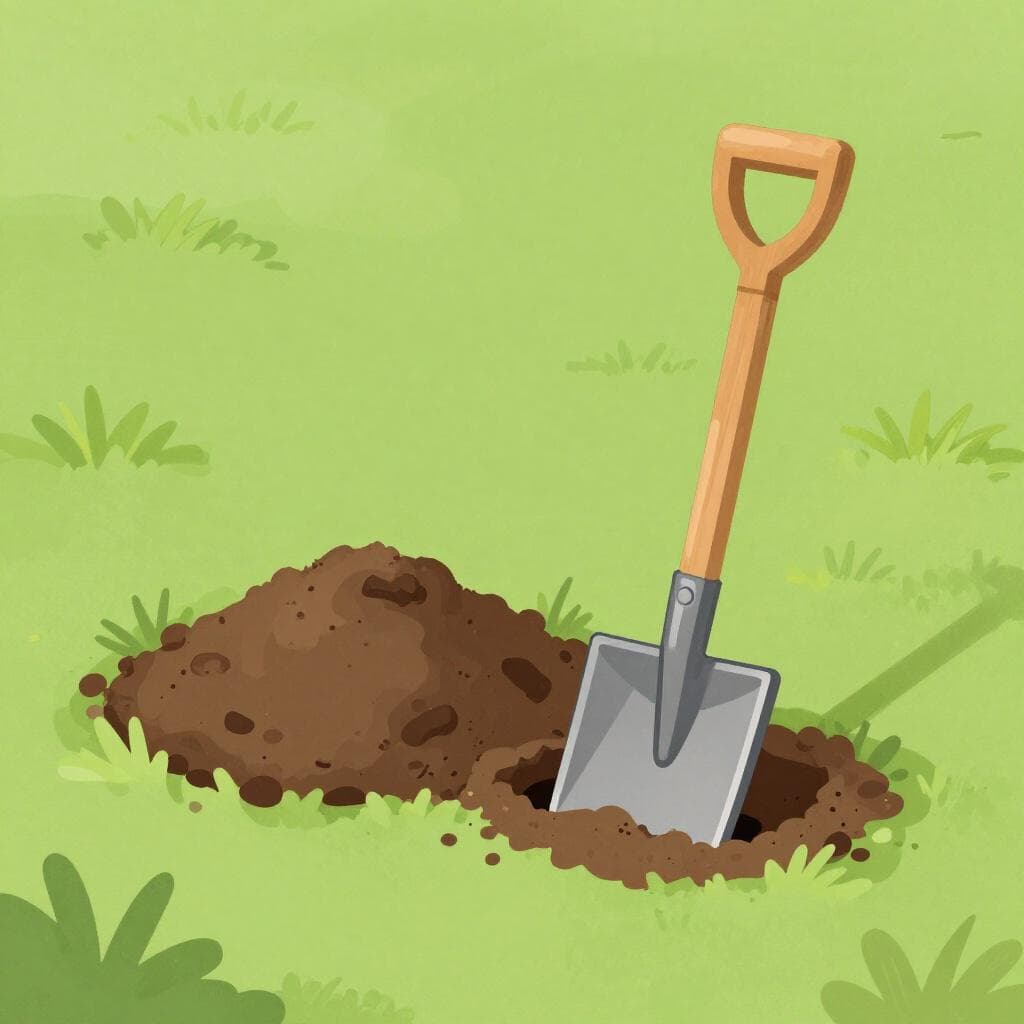
The most common Spanish word for “to dig” is “cavar” — use 'cavar' when talking about the general act of digging a hole in the ground, often for everyday purposes like gardening or a dog burying something.

cavar
kah-BAHRkaˈβaɾ

Examples
El jardinero va a cavar un hoyo para plantar el árbol.
The gardener is going to dig a hole to plant the tree.
El perro empezó a cavar un hoyo para esconder su hueso.
The dog started to dig a hole to hide his bone.
Tuvimos que cavar mucho para encontrar la tubería.
We had to dig a lot to find the pipe.
A Friendly Regular Verb
Cavar is a regular -ar verb. It follows the exact same pattern as 'hablar' or 'cantar', so if you know those, you already know how to use this one!
Cavar vs. Clavar
Mistake: “Using 'clavar' when you mean to dig.”
Correction: Use 'cavar' for the ground/holes and 'clavar' for hitting a nail with a hammer.
excavar
ex-ka-BARekskaˈβaɾ
Examples
Los arqueólogos van a excavar el sitio antiguo con cuidado.
The archaeologists are going to excavate the ancient site carefully.
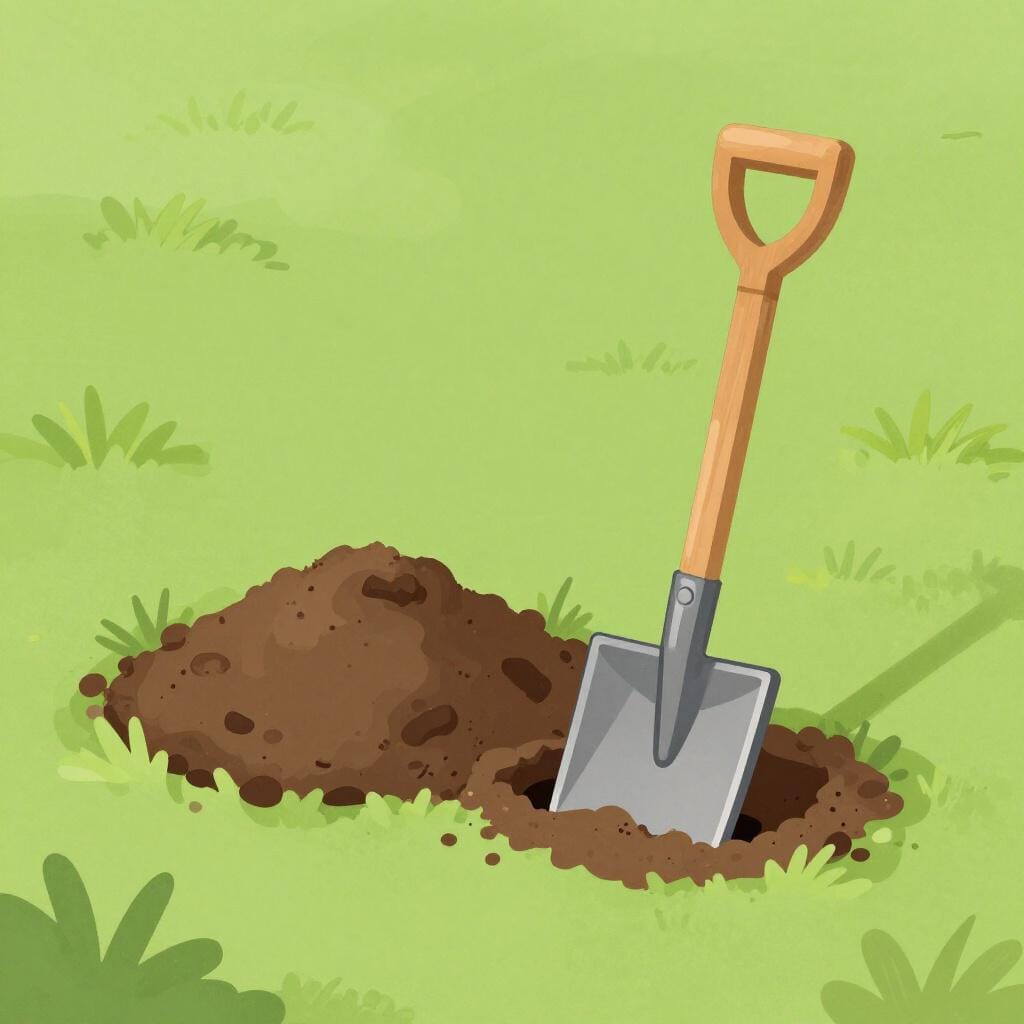
Los niños quieren excavar un hoyo en la arena de la playa.
The children want to dig a hole in the sand at the beach.
Tienes que excavar hondo para plantar este árbol correctamente.
You have to dig deep to plant this tree correctly.
La máquina está excavando los cimientos para el nuevo edificio.
The machine is digging the foundations for the new building.
A Regular Pattern
Excavar follows the standard pattern for verbs ending in -ar. This means once you know how to conjugate 'hablar', you can conjugate 'excavar' perfectly.
Naming the Object
This verb is usually used with a direct object. You tell people what you are digging (a hole, a tunnel, etc.) immediately after the verb.
Excavar vs. Cavar
Mistake: “Using 'excavar' for small garden tasks.”
Correction: Use 'cavar' for simple garden work; use 'excavar' for more intense, formal, or machine-assisted digging.
General vs. Specific Digging
Related Translations
Learn Spanish with Inklingo
Interactive stories, personalized learning, and more.