How to Say "to swing" in Spanish
The most common Spanish word for “to swing” is “balancear” — use 'balancear' when referring to gently rocking or swaying something, like a baby in a cradle or a hammock.

Use 'balancear' when referring to gently rocking or swaying something, like a baby in a cradle or a hammock.
Learn more →
Use 'menear' to describe a wagging or swaying motion, typically of body parts like a tail, hips, or shoulders, often conveying happiness or rhythm.
Learn more →
Use 'oscilar' for a more formal or technical back-and-forth movement, often used for abstract concepts like prices, or physical pendulums.
Learn more →bah-lahn-seh-ahrbalanseˈaɾ
Examples
El marinero balancea el barco para calmar a los pasajeros.
The sailor rocks the boat to calm the passengers.
La madre balancea la cuna para que el bebé se duerma.
The mother rocks the cradle so the baby falls asleep.
El viento balanceaba las ramas de los árboles con suavidad.
The wind was gently swinging the branches of the trees.
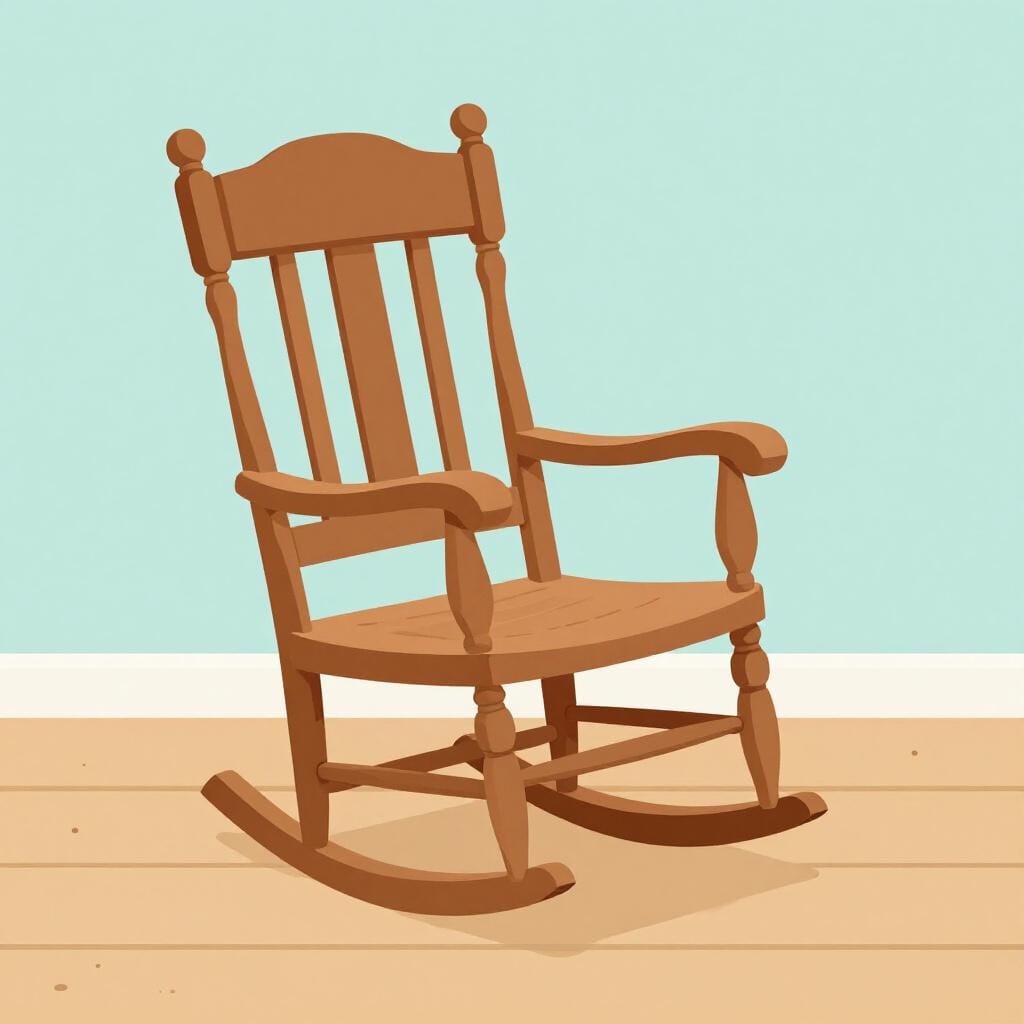
No te balancees en la silla, te vas a caer.
Don't rock back and forth in your chair, you're going to fall.
Using the 'se' ending
When you are the one swaying or rocking (like in a rocking chair), add 'se' to the end: 'balancearse'. For example, 'Me balanceo' means 'I am swaying'.
A Regular Pattern
This verb follows the standard rules for verbs ending in -ar. If you know how to use 'hablar', you can use 'balancear'!
Balancear vs. Equilibrar
Mistake: “Using 'balancear' to mean finding a state of peace or steady balance.”
Correction: Use 'equilibrar' for physical stability or emotional balance. Use 'balancear' specifically for the back-and-forth movement.
meh-neh-AHRme.neˈaɾ

Examples
El perro menea la cola cuando está feliz.
The dog wags its tail when it is happy.
Ella menea las caderas al caminar.
She swings her hips as she walks.
No menees la cabeza así, que me mareas.
Don't shake your head like that, you're making me dizzy.
Use 'the' for Body Parts
In Spanish, we say 'the head' instead of 'my head' when using this verb. For example: 'menea la cabeza' instead of 'menea su cabeza'.
Mover vs. Menear
Mistake: “Using 'mover' when a repetitive, rhythmic movement is intended.”
Correction: Use 'menear' for things like tails wagging or hips swinging. 'Mover' is for general movement from point A to B.
oh-see-LARosiˈlaɾ

Examples
Los precios de la fruta oscilan según la temporada.
Fruit prices fluctuate depending on the season.
La temperatura oscilará entre los 15 y 20 grados.
The temperature will range between 15 and 20 degrees.
El péndulo del reloj dejó de oscilar.
The clock's pendulum stopped swinging.
Using 'Entre' for Ranges
When talking about numbers or limits, always use 'oscilar entre [A] y [B]' to say something ranges 'between' two points.
A Regular 'AR' Verb
Even though it looks fancy, 'oscilar' follows the exact same patterns as 'hablar' or 'cantar' in every tense.
The 'De... A...' Trap
Mistake: “Los precios oscilan de 5 a 10 euros.”
Correction: Los precios oscilan entre 5 y 10 euros. (With this verb, 'entre' is the natural way to set the boundaries.)
Balancear vs. Oscilar
Learners often confuse 'balancear' and 'oscilar'. Remember that 'balancear' implies a gentler, more controlled rocking motion, often with an object or person, while 'oscilar' refers to a more general, sometimes abstract, back-and-forth movement like a pendulum or fluctuating prices.
Related Translations
Learn Spanish with Inklingo
Interactive stories, personalized learning, and more.