How to Say "to touch" in Spanish
The most common Spanish word for “to touch” is “tocar” — use 'tocar' when referring to physical contact with something or someone, like touching an object or a person's arm.



tocar
toh-KARtoˈkaɾ

Examples
No toques la pintura, está fresca.
Don't touch the paint, it's fresh.
El niño toca el agua para ver si está fría.
The boy touches the water to see if it's cold.
Por favor, no toques a los animales en el zoológico.
Please, don't touch the animals in the zoo.
Spelling Change for Sound
In some forms (like the 'yo' preterite and all present subjunctive), the 'c' changes to 'qu' (tocar -> toqué) to keep the hard 'k' sound, because 'ce' or 'ci' would sound like 's'.
Confusing 'Touch' and 'Feel'
Mistake: “Using 'tocar' to express emotional feeling (e.g., 'Me siento toco feliz').”
Correction: Use 'sentirse' for feelings/emotions ('Me siento feliz') and 'tocar' only for physical contact.
conmover
kohn-moh-BEHRkonmoˈβeɾ

Examples
La historia del niño conmovió a todos.
The boy's story moved everyone.
Sus palabras me conmovieron profundamente.
Her words touched me deeply.
Es una película que logra conmover sin ser demasiado triste.
It is a movie that manages to be moving without being too sad.
The 'O' to 'UE' Swap
This verb is a 'stem-changer.' When you stress the middle of the word (like in 'conmuevo'), the 'o' changes to 'ue'. This happens in all present tense forms except 'nosotros' and 'vosotros'.
Don't Forget the Personal 'A'
When you are moving someone (a person or pet) emotionally, you must put the word 'a' before them: 'Conmovió a María'.
Mover vs. Conmover
Mistake: “La música me movió mucho.”
Correction: La música me conmovió mucho. Use 'mover' for physical movement (moving a chair) and 'conmover' for emotional movement.
emocionar
eh-moh-syoh-NAHRemoθjoˈnar

Examples
Esa canción siempre me emociona mucho.
That song always moves me a lot.
Sus palabras emocionaron a todo el público.
His words touched the entire audience.
Me emociona saber que vas a venir a visitarnos.
It excites me to know that you are coming to visit us.
Using it like 'Gustar'
When you want to say something moves you, the thing doing the moving is the subject. Say 'Me emociona la película' (The movie moves me).
People vs. Things
If you are 'moving' a person, remember to use the personal 'a' after the verb: 'El final emocionó a Juan'.
Confusing 'Excite' with 'Emocionar'
Mistake: “Using 'excitar' for emotional excitement.”
Correction: Use 'emocionar' or 'entusiasmar'. In Spanish, 'excitar' often has a physical or sexual connotation.
pulsar
pool-SAHRpulˈsaɾ

Examples
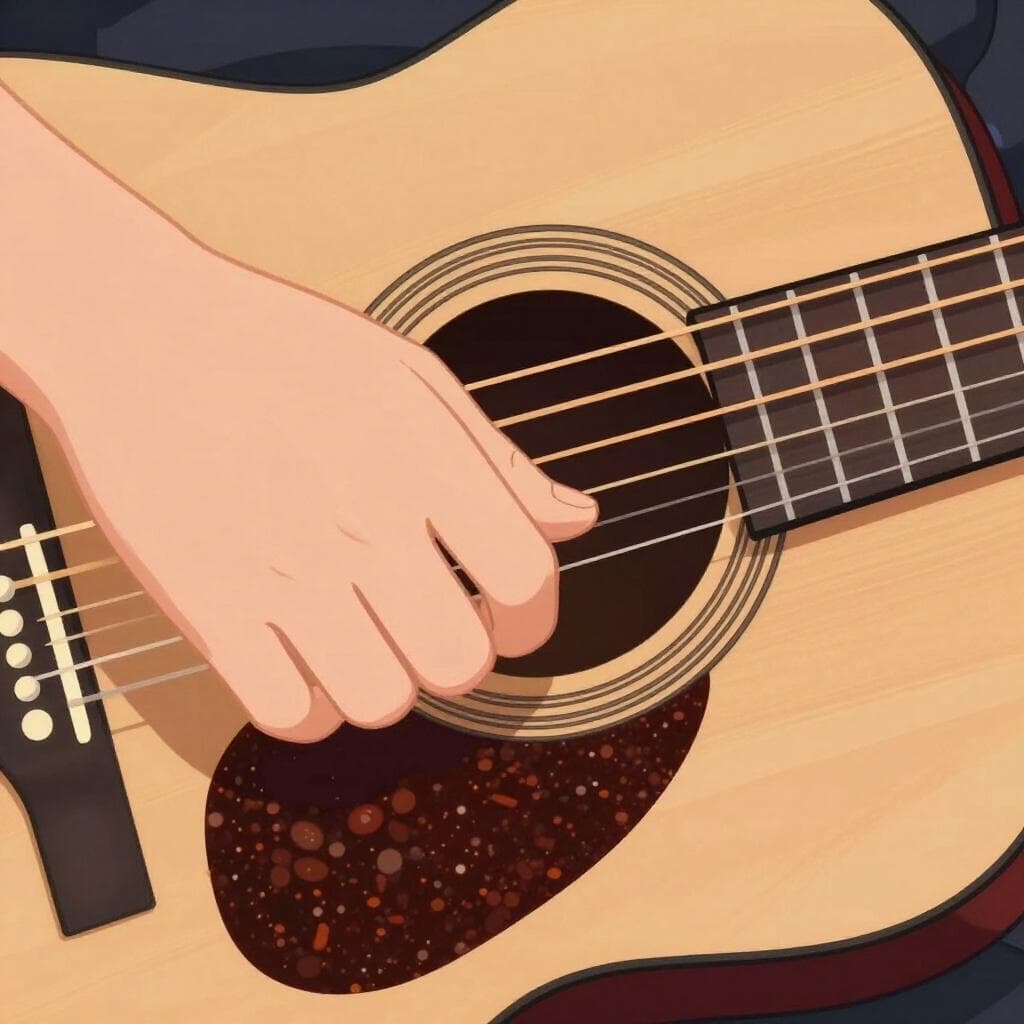
Comenzó a pulsar las cuerdas de la guitarra con suavidad.
He began to pluck the guitar strings gently.
Physical vs. Emotional 'Touch'
Related Translations
Learn Spanish with Inklingo
Interactive stories, personalized learning, and more.