How to Say "train" in Spanish
The most common Spanish word for “train” is “tren” — use 'tren' when referring to the actual vehicle that travels on railway tracks.
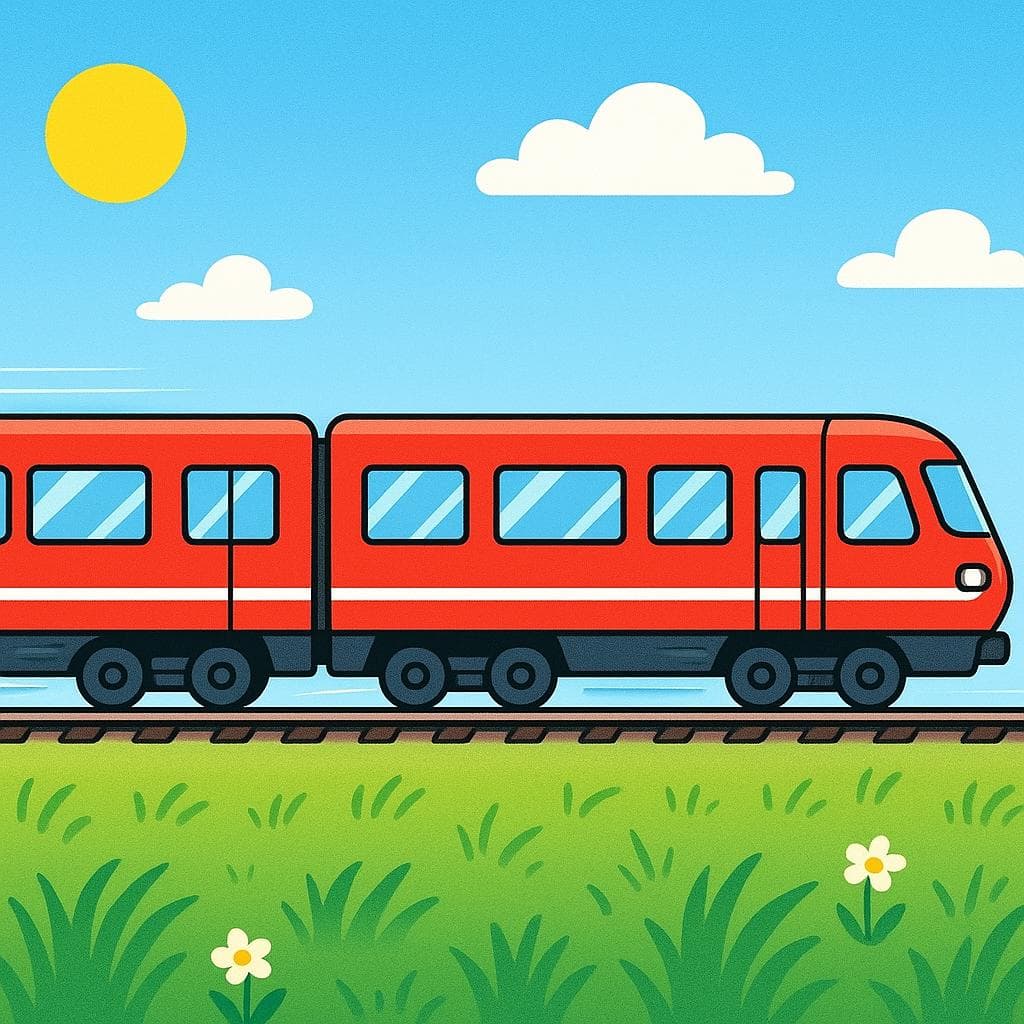
Use 'tren' when referring to the actual vehicle that travels on railway tracks.
Learn more →
Use 'cola' to describe the long, trailing part of a dress, similar to a train on a wedding gown.
Learn more →
Use 'ferrocarril' to refer to the railway system or infrastructure, or historically, the train vehicle itself.
Learn more →trentɾen
Examples
El tren llega a la estación a las cinco.
The train arrives at the station at five.
Prefiero viajar en tren porque es más relajante.
I prefer to travel by train because it's more relaxing.
Perdimos el último tren de la noche.
We missed the last train of the night.
Always Masculine: 'el tren'
Remember that 'tren' is a masculine word, so you'll always use 'el tren' (the train) or 'un tren' (a train).
KOH-lahˈko.la

Examples
El gato tiene una cola muy larga y esponjosa.
The cat has a very long and fluffy tail.
La novia caminó con su impresionante cola de vestido.
The bride walked with the impressive train of her dress.
Gender Reminder
Even though 'cola' ends in '-a', remember that not all feminine words end in '-a' and not all masculine words end in '-o', but 'cola' follows the common pattern.
fe-rro-ka-RREELferokaˈril

Examples
El ferrocarril llegó a esta ciudad en 1850.
The railway arrived in this city in 1850.
Prefiero viajar por ferrocarril porque es más ecológico.
I prefer to travel by rail because it is more eco-friendly.
The Strong 'RR' Sound
This word has two 'rr' sounds. You must roll your tongue strongly for both. It's the classic 'trilled' sound that Spanish is famous for!
Gender Identification
Words ending in '-il' are usually masculine. Use 'el' before ferrocarril.
Ferrocarril vs. Tren
Mistake: “Using 'ferrocarril' to say 'I'm on the train right now.'”
Correction: Use 'tren' for the physical vehicle you ride. Use 'ferrocarril' for the tracks, the system, or the company.
Confusing 'tren' and 'ferrocarril'
The most common mistake is using 'ferrocarril' for the everyday vehicle. Remember that 'tren' is the standard word for the train itself. 'Ferrocarril' usually refers to the railway system or is a more formal/historical term.
Related Translations
Learn Spanish with Inklingo
Interactive stories, personalized learning, and more.