How to Say "well" in Spanish
The most common Spanish word for “well” is “bien” — use 'bien' when describing how an action is performed correctly, effectively, or in a good manner.






bien
byenˈbjen

Examples
Ella canta muy bien.
She sings very well.
No me siento bien hoy.
I don't feel well today.
El examen me salió bien.
The exam went well for me.
Adverb vs. Adjective: `bien` vs. `bueno`
Bien usually describes how you do something (an action), while bueno describes what something is like (a person or thing). Think: 'sing well' (cantar bien) vs. 'a good song' (una buena canción).
Using `bueno` instead of `bien` for Health
Mistake: “Estoy bueno.”
Correction: Estoy bien. (I am well.)
sano
SAH-nohˈsa.no

Examples
Después de la cirugía, el paciente está completamente sano.
After the surgery, the patient is completely healthy.
¿Estás sano? No te vi en clase ayer.
Are you well? I didn't see you in class yesterday.
Gender and Number Agreement
As an adjective, 'sano' must match the gender (masculine/feminine) and number (singular/plural) of the noun it describes: 'un chico sano' (a healthy boy), 'una chica sana' (a healthy girl).
Using 'sano' for 'tasty'
Mistake: “This food is sano.”
Correction: Use 'rico' or 'delicioso' for tasty. While 'sano' means healthy, it doesn't imply flavor.
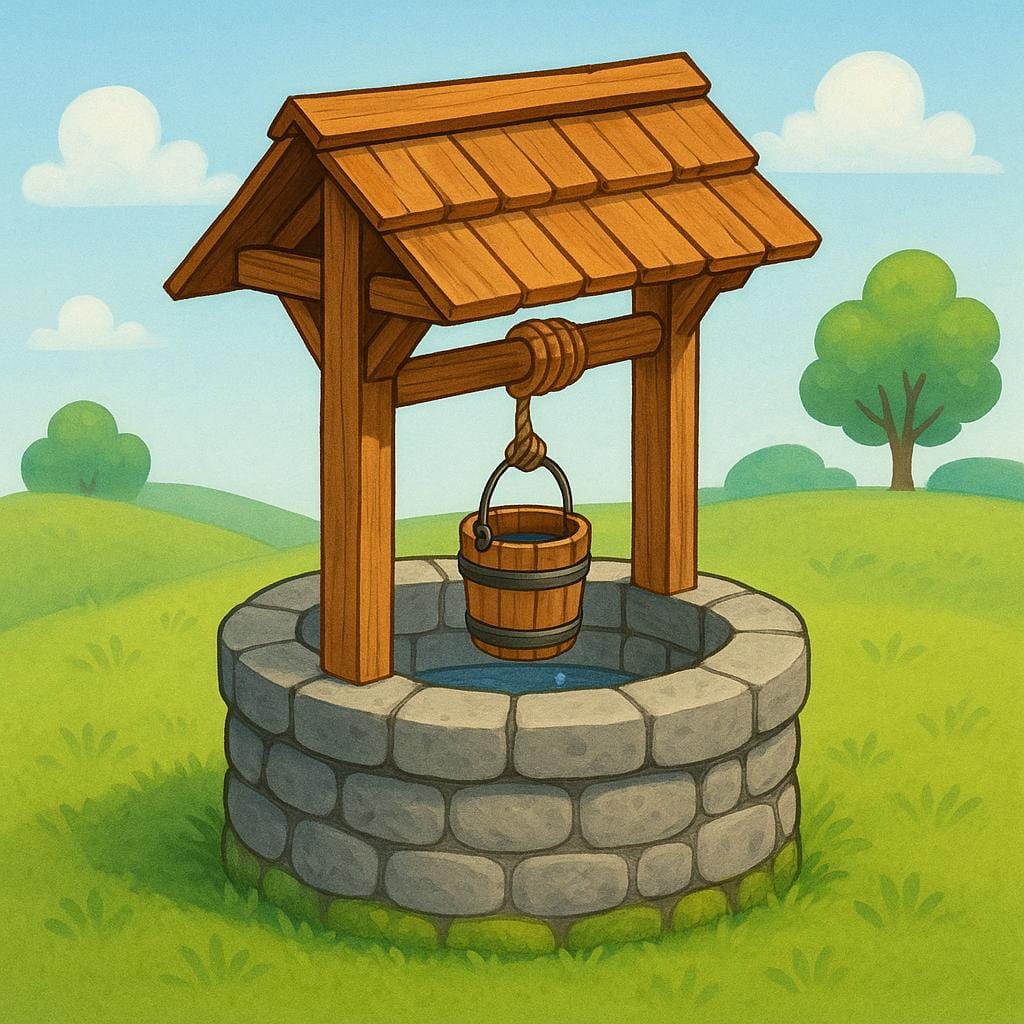
pozo
POH-sohˈpo.so
Examples
Necesitamos sacar agua del pozo para regar el jardín.
We need to draw water from the well to water the garden.
El pozo de la abuela es muy profundo y tiene agua muy fría.
Grandma's well is very deep and has very cold water.
Gender Reminder
'Pozo' is always masculine, so you must use 'el pozo' or 'un pozo'.
lindo
leen-dohˈlindo

Examples
Ella canta muy lindo.
She sings very nicely.
El equipo jugó lindo y ganó el partido.
The team played well and won the game.
Describing an Action
Sometimes in Spanish, you can use the masculine form of a describing word like 'lindo' to say how an action is done. It describes the verb (the action), not a noun, so it always stays 'lindo' and doesn't change to 'linda'.
Using the Feminine Form
Mistake: “Ella canta muy linda.”
Correction: Ella canta muy lindo. When you're describing *how* she sings (the action), you use 'lindo'. Saying 'canta muy linda' would sound like you're describing *her* as pretty *while* she sings, which is a bit different.
pos
pohspos

Examples
Pos... no sé qué decirte.
Well... I don't know what to tell you.
¿Vas a venir? — Pos sí.
Are you coming? — Well, yeah.
Pos vámonos ya, que es tarde.
Well then, let's go, it's late.
Slangy Shortening
This 'pos' is actually a relaxed, shortened version of the word 'pues.' It functions exactly the same way but sounds much more casual.
Using it in writing
po
pohpo

Examples
¡Sí, po! Vamos a la playa.
Yes, of course! Let's go to the beach.
Ya, po, apúrate que el bus ya viene.
Come on, then, hurry up because the bus is coming.
Si yo te dije que no, po.
Well, I already told you no.
A Shortened Version
This word is a shortened version of 'pues.' In Chile, people often cut the ends off words, and 'pues' simply became 'po' over time.
Sentence Placement
You almost always find this word at the very end of a short sentence or a command to give it extra punch or flavor.
Using it outside of Chile
Mistake: “Using 'po' while speaking with someone from Mexico or Spain.”
Correction: Use 'pues' instead. While they will understand you, 'po' is uniquely Chilean and might sound confusing or like you are imitating an accent in other countries.
ben
benben

Examples
Ben lo decía el sabio: 'conócete a ti mismo'.
The wise man said it well: 'know thyself'.
An Old-Fashioned Word
This is an old way to say 'bien' (well). You almost never see or hear it today, except in very old writing or poetry.
Don't Confuse with 'Bien'
Mistake: “Estoy ben, gracias.”
Correction: Estoy bien, gracias. In modern Spanish, you should always use 'bien' to say you are doing 'well' or 'fine'.
Bien vs. Lindo for manner
Related Translations
Learn Spanish with Inklingo
Interactive stories, personalized learning, and more.