escribo
“escribo” means “I write” in Spanish (General action in the present).
I write, I am writing
Also: I correspond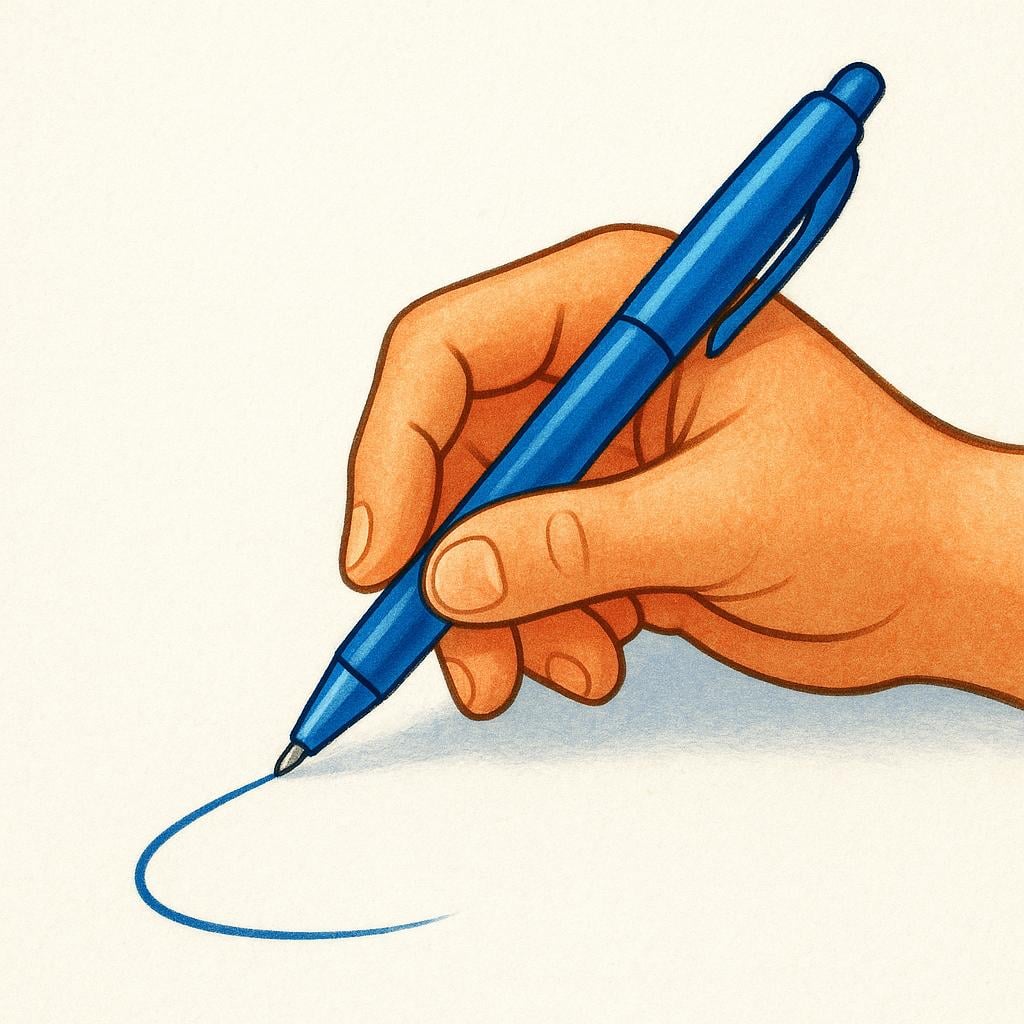
📝 In Action
Yo escribo un correo electrónico a mi madre todas las semanas.
A1I write an email to my mother every week.
¿Qué escribo en esta sección del formulario?
A2What am I writing in this section of the form?
Escribo poemas cuando me siento inspirado.
A2I write poems when I feel inspired.
Indicative
Present
Imperfect
Preterite
Subjunctive
Present Subjunctive
Imperfect Subjunctive
Translate to Spanish
✏️ Quick Practice
Quick Quiz: escribo
Question 1 of 2
Which sentence correctly uses 'escribo'?
📚 More Resources
👥 Word Family▼
📚 Etymology▼
The word comes from the Latin verb *scribere*, meaning 'to scratch, engrave, or write.' It has maintained its core meaning of forming letters or text since ancient times.
First recorded: Old Spanish (around the 11th century)
Cognates (Related words)
💡 Master Spanish
Take your Spanish to the next level. Read 200+ illustrated and narrated Spanish stories tailored to your level with the Inklingo app!
Frequently Asked Questions
Do I need to say 'Yo escribo' or just 'Escribo'?
You can usually just say 'Escribo.' Spanish verb endings like the '-o' on 'escribo' already tell the listener that 'I' am the one doing the action, so the 'Yo' is often left out unless you need to emphasize who is writing.
Is 'escribir' an irregular verb?
No, 'escribir' is considered a very regular verb in Spanish. Its stem ('escrib-') does not change in the present tense, unlike verbs like 'dormir' or 'tener'.