falla
“falla” means “fault” in Spanish. It has 4 different meanings depending on context:



fault, errorAlso: flaw, failure

📝 In Action
Hay una falla en el sistema eléctrico del coche.
A2There is a fault in the car's electrical system.
La caída del servidor se debió a una falla humana.
B1The server crash was due to a human error.
Revisamos el informe pero no encontramos ninguna falla.
B1We checked the report but didn't find any mistake.
Word Connections
he/she/it fails, it malfunctionsAlso: fail!

📝 In Action
Si la luz roja se enciende, es porque el motor falla.
A2If the red light comes on, it's because the engine is failing/malfunctioning.
Siempre falla cuando tiene que tomar una decisión difícil.
B1He always fails when he has to make a difficult decision.
No falla el examen, solo necesita estudiar más.
A2She is not failing the exam, she just needs to study more. (Note: Often used with 'no')
Word Connections
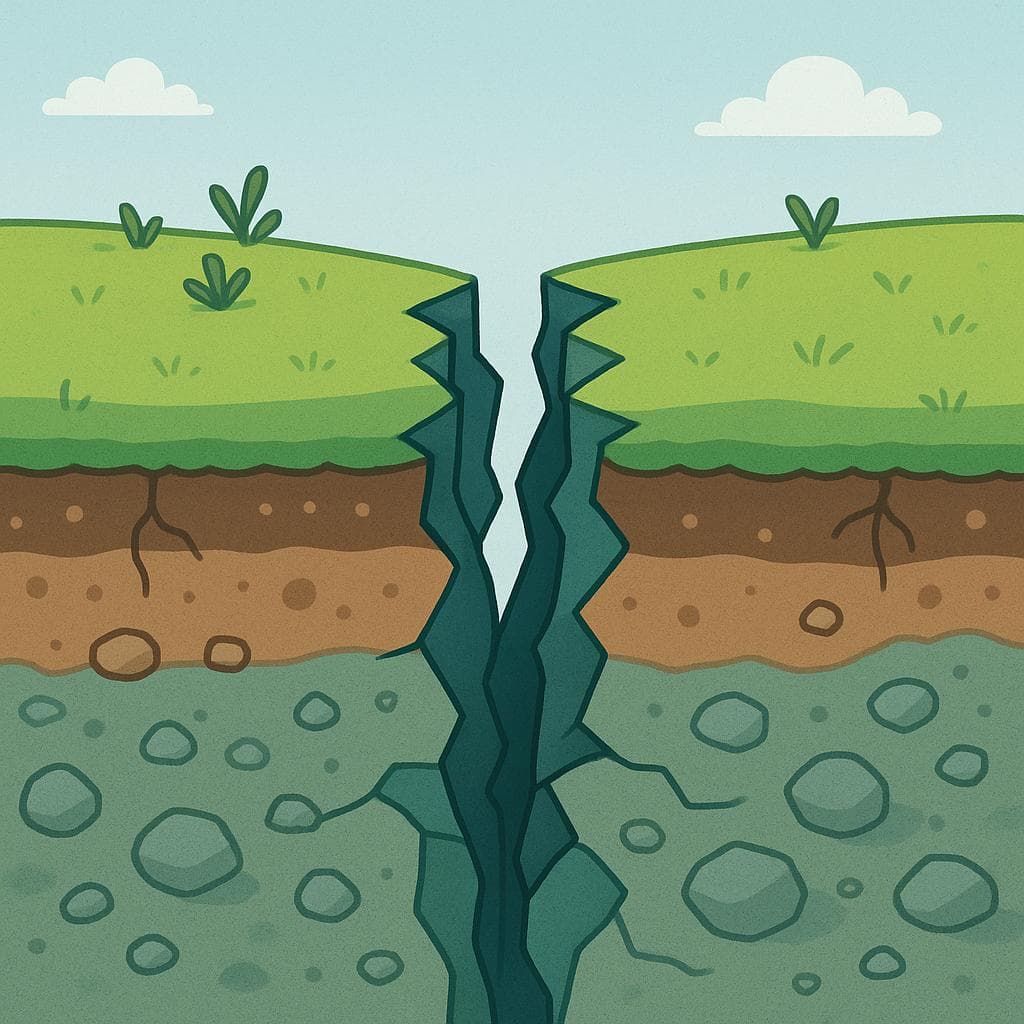
fault lineAlso: fissure

📝 In Action
Los sismólogos estudian la falla de San Andrés.
B2Seismologists are studying the San Andreas Fault.
La actividad sísmica es mayor cerca de las fallas activas.
C1Seismic activity is higher near active fault lines.
Word Connections
FallaAlso: festival structure

📝 In Action
La Falla municipal de este año medía 20 metros de altura.
C1This year's municipal Falla (monument) was 20 meters tall.
Miles de personas se reúnen para ver la 'cremà' de las fallas.
C2Thousands of people gather to watch the burning of the fallas.
Word Connections
Indicative
Present
Imperfect
Preterite
Subjunctive
Present Subjunctive
Imperfect Subjunctive
Translate to Spanish
Words that translate to "falla" in Spanish:
✏️ Quick Practice
Quick Quiz: falla
Question 1 of 2
Which sentence uses 'falla' as a noun meaning 'defect'?
📚 More Resources
👥 Word Family
🎵 Rhymes
📚 Etymology
Comes from the Old Spanish word *falla*, derived from the Latin verb *fallere*, meaning 'to deceive,' 'to disappoint,' or 'to fail.' This root connects the idea of a mistake (noun) with the action of failing (verb).
First recorded: 13th century
Cognates (Related words)
💡 Master Spanish
Take your Spanish to the next level. Read 200+ illustrated and narrated Spanish stories tailored to your level with the Inklingo app!
Frequently Asked Questions
Is 'falla' the same as 'fallo'?
No, they are very close but used differently. 'La falla' (feminine) usually means a mistake, flaw, or defect (like a technical problem). 'El fallo' (masculine) usually means a ruling or verdict (like a judge's decision) or, less commonly, a minor error.
How do I know if 'falla' is the noun or the verb?
Look at the words around it! If it has 'la' or 'una' in front of it ('la falla'), it is the noun (the mistake). If it is used after a subject like 'él,' 'ella,' or 'el motor,' it is the verb form (he/she/it fails).