How to Say "bald" in Spanish
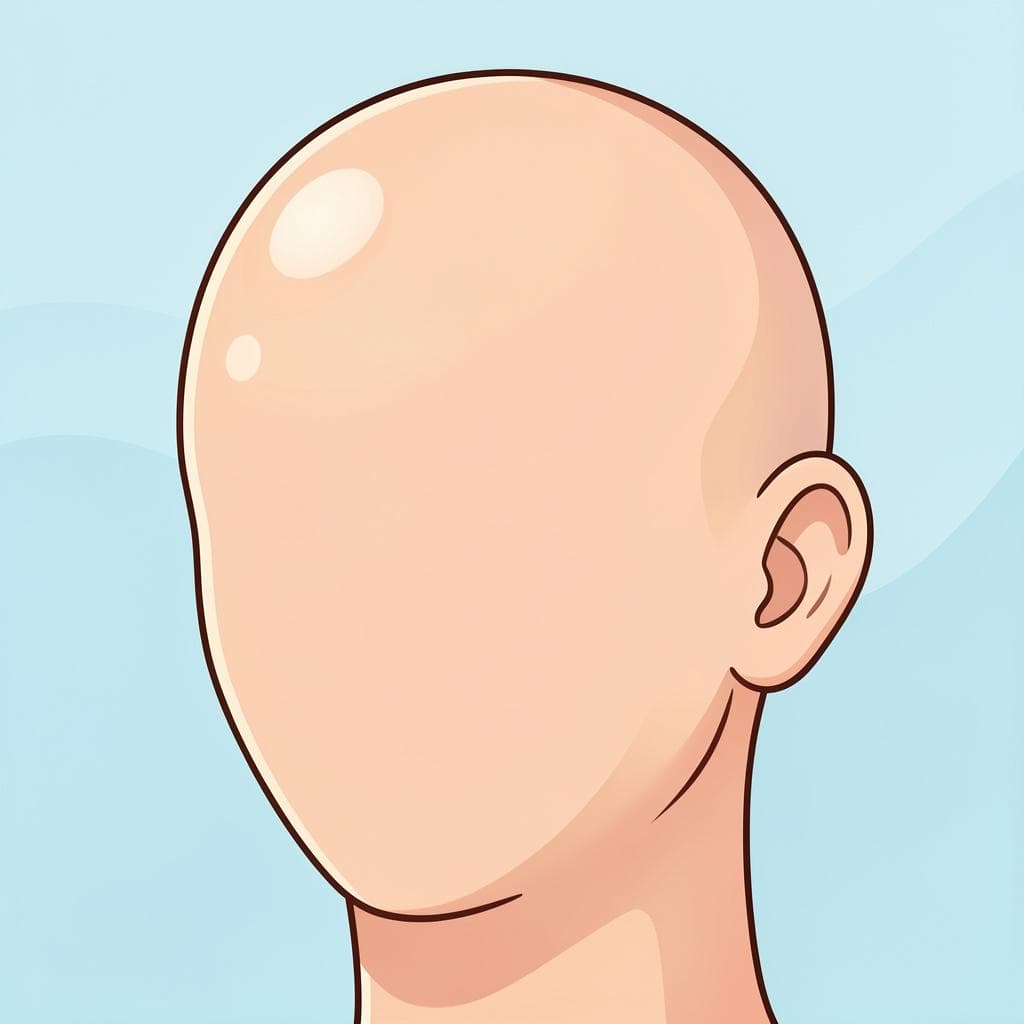
The most common Spanish word for “bald” is “calvo” — use 'calvo' exclusively to describe a person who is lacking hair on their head.

calvo
KAHL-bohˈkalβo
Examples
Mi tío es calvo y siempre lleva gorra.
My uncle is bald and always wears a cap.
Se quedó calvo cuando era muy joven.
He went bald when he was very young.
Esa montaña está calva por falta de lluvia.
That mountain is barren due to lack of rain.
Using Ser vs. Estar with Calvo
Use 'ser' if someone is naturally bald (a permanent trait). Use 'estar' if you are commenting on how someone looks now, or if they have recently shaved their head.
Confusing 'Calvo' and 'Calvo'
Mistake: “Using 'calvoso' to say someone is going bald.”
Correction: There is no such word as 'calvoso'. Just use 'calvo' or the phrase 'se está quedando calvo' (he is going bald).
pelado
peh-LAH-dohpeˈlaðo

Examples
Prefiero las manzanas peladas.
I prefer peeled apples.
El niño va pelado para el verano.
The boy has a buzz cut for the summer.
Era un monte pelado, sin un solo árbol.
It was a bare mountain, without a single tree.
Agreement with Objects
Like most words that describe things, this changes to 'pelada' if the object is feminine (like 'naranja') and 'pelados/peladas' for plural items.
Using 'Estar' vs 'Ser'
Use 'estar' to say a fruit is currently peeled (a state), and 'ser' if you are describing a person who is naturally bald (a characteristic).
Using it for 'skinned' knees
Mistake: “Me pelé la rodilla y ahora está pelada.”
Correction: While 'pelar' is used for the action, we usually say 'tengo la rodilla raspada' for a scrape. 'Pelado' is better for fruit or total hair removal.
Confusing 'calvo' and 'pelado'
Learn Spanish with Inklingo
Interactive stories, personalized learning, and more.