How to Say "breath" in Spanish
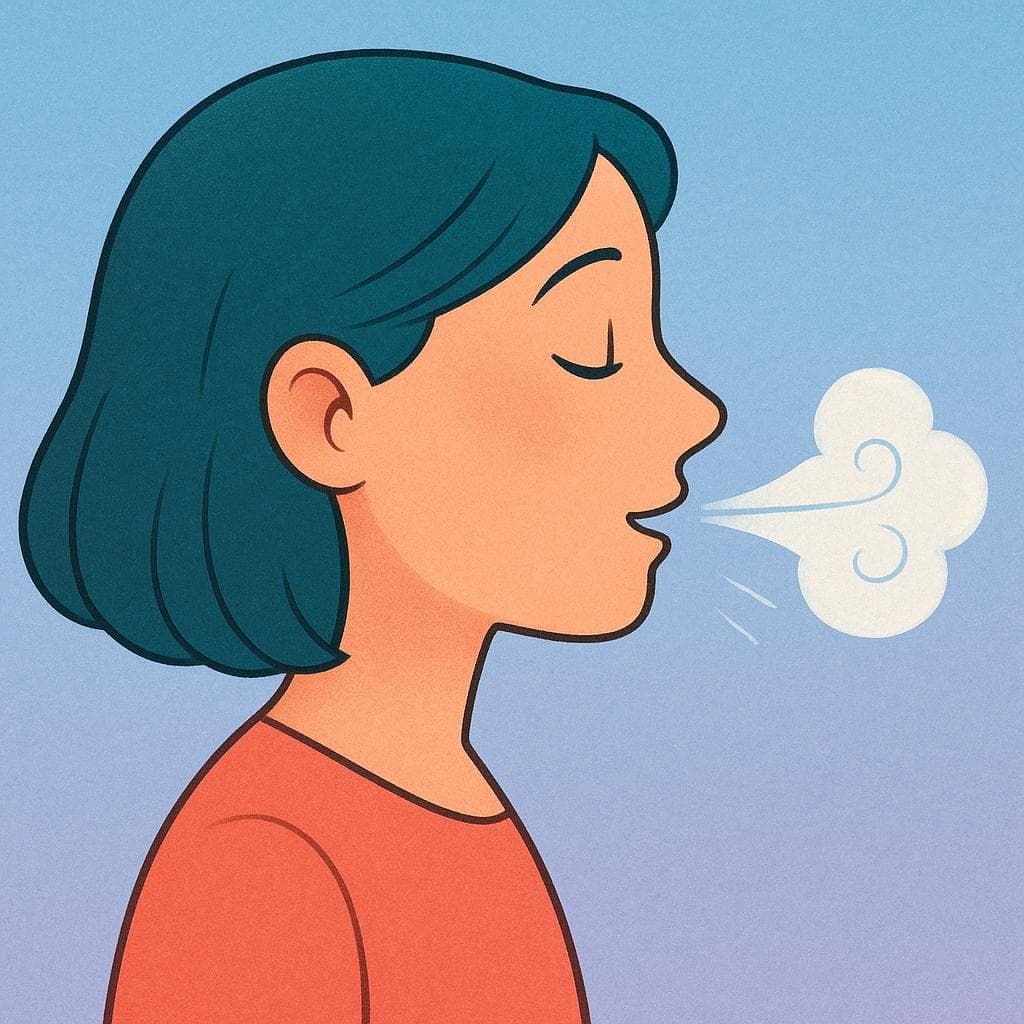
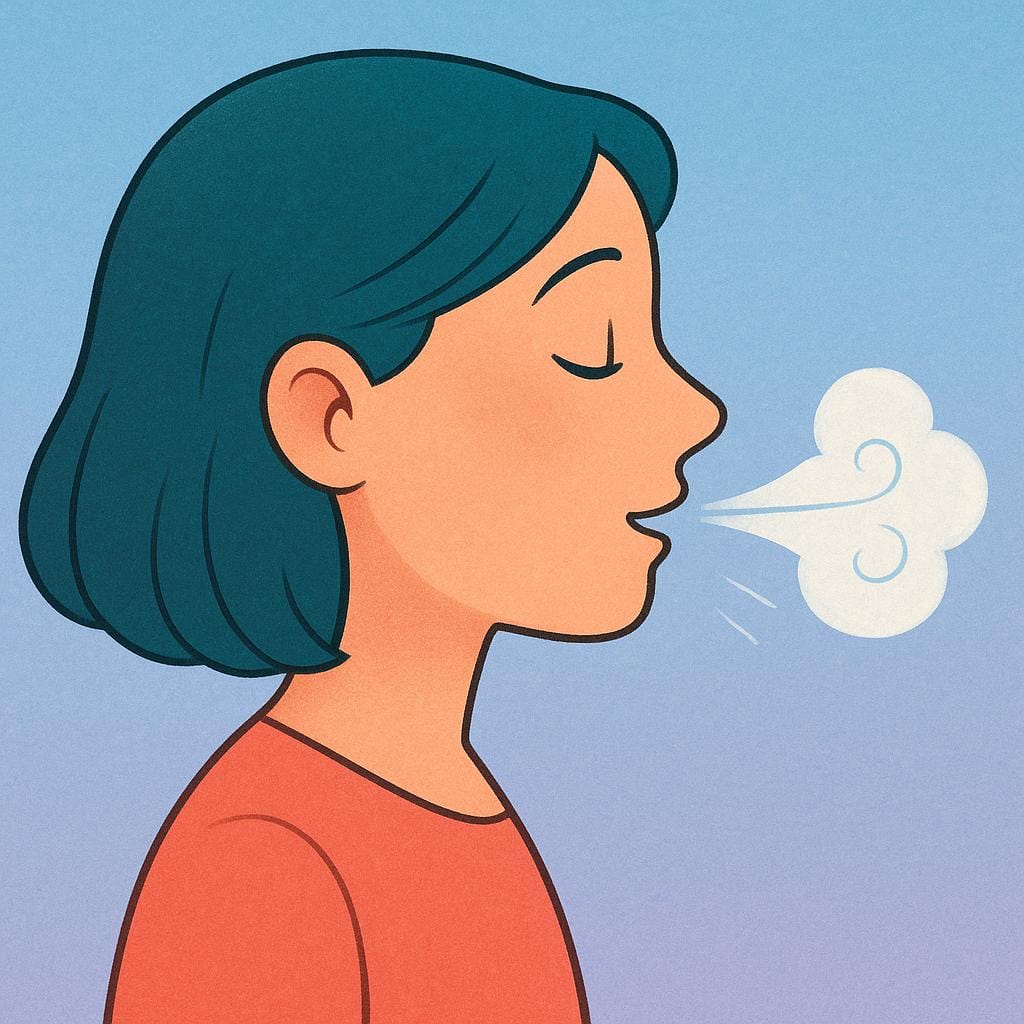
The most common Spanish word for “breath” is “aliento” — use this word for the general act of inhaling or exhaling air, or for the air itself that is inhaled or exhaled.



aliento
ah-LYEN-tohaˈljento
Examples
Tomé un aliento profundo antes de saltar a la piscina.
I took a deep breath before jumping into the pool.
El corredor se quedó sin aliento después de la carrera.
The runner was left breathless after the race.
Siempre mastico chicle para evitar el mal aliento.
I always chew gum to avoid bad breath.
Masculine Noun
Even though it starts with 'a,' 'aliento' is a masculine noun, so you use 'el' and 'un' (el aliento, un aliento).
Aliento vs. Respiración
Mistake: “Using 'aliento' when you mean the continuous action of breathing.”
Correction: Use 'respiración' for the *act* of breathing ('Mi respiración es lenta'). Use 'aliento' for the *air* or a single puff ('Tomé un aliento').
soplo
SOH-plohˈsoplo

Examples
Apagó la vela con un solo soplo.
He blew out the candle with a single puff.
Ese soplo de aire fresco nos reanimó a todos.
That breath of fresh air revived us all.
La estructura se cayó con un pequeño soplo de viento.
The structure fell down with a small gust of wind.
Using 'Soplo' with 'Un'
Since it is a masculine noun, always use 'un' or 'el'. It usually refers to the act of blowing once.
Soplo vs. Respiración
Mistake: “Using 'soplo' to mean the act of breathing regularly.”
Correction: Use 'respiración' for the biological process; 'soplo' is specifically the air you push out or a sudden breeze.
suspiro
soo-SPEE-rohsusˈpiɾo

Examples
Soltó un largo suspiro de alivio cuando supo que estaba a salvo.
She let out a long sigh of relief when she knew she was safe.
El suspiro de María se escuchó en toda la habitación.
Maria's sigh was heard throughout the whole room.
Me dio un suspiro de esperanza ver su sonrisa.
Seeing her smile gave me a breath of hope.
Noun Gender
This word is always masculine. Even if a woman is the one sighing, you say 'un suspiro'.
Verbs for Sighing
In Spanish, you 'give' (dar) or 'release' (soltar) a sigh, rather than 'making' one.
Suspiro vs. Suspirar
Mistake: “Yo hice un suspirar.”
Correction: Yo di un suspiro.
saliva
sah-LEE-bahsaˈliβa

Examples
Hablarle a esa pared es pura saliva.
Talking to that wall is just wasting your breath.
La saliva es importante para empezar la digestión.
Saliva is important for starting digestion.
El perro dejó rastro de saliva en el suelo.
The dog left a trail of spit on the floor.
Tragué saliva antes de empezar mi presentación porque estaba muy nervioso.
I swallowed hard (gulped) before starting my presentation because I was very nervous.
A Regular Feminine Noun
Saliva ends in 'a' and is feminine. You should always use it with feminine words like 'la saliva' or 'toda la saliva'.
Using 'Saliva' as a Mass Noun
Just like in English, we treat saliva as a substance you can't count. You don't usually say 'three salivas'; you just say 'much saliva' (mucha saliva).
Gender confusion
Mistake: “El saliva es transparente.”
Correction: La saliva es transparente. (Always use feminine articles and adjectives).
Confusing 'Saliva' with 'Baba'
Mistake: “Using 'saliva' when a baby is drooling.”
Correction: While not technically wrong, 'baba' is much more common for drool or slime. Use 'saliva' for the general biological term.
Aliento vs. Soplo
Related Translations
Learn Spanish with Inklingo
Interactive stories, personalized learning, and more.