How to Say "forgive" in Spanish
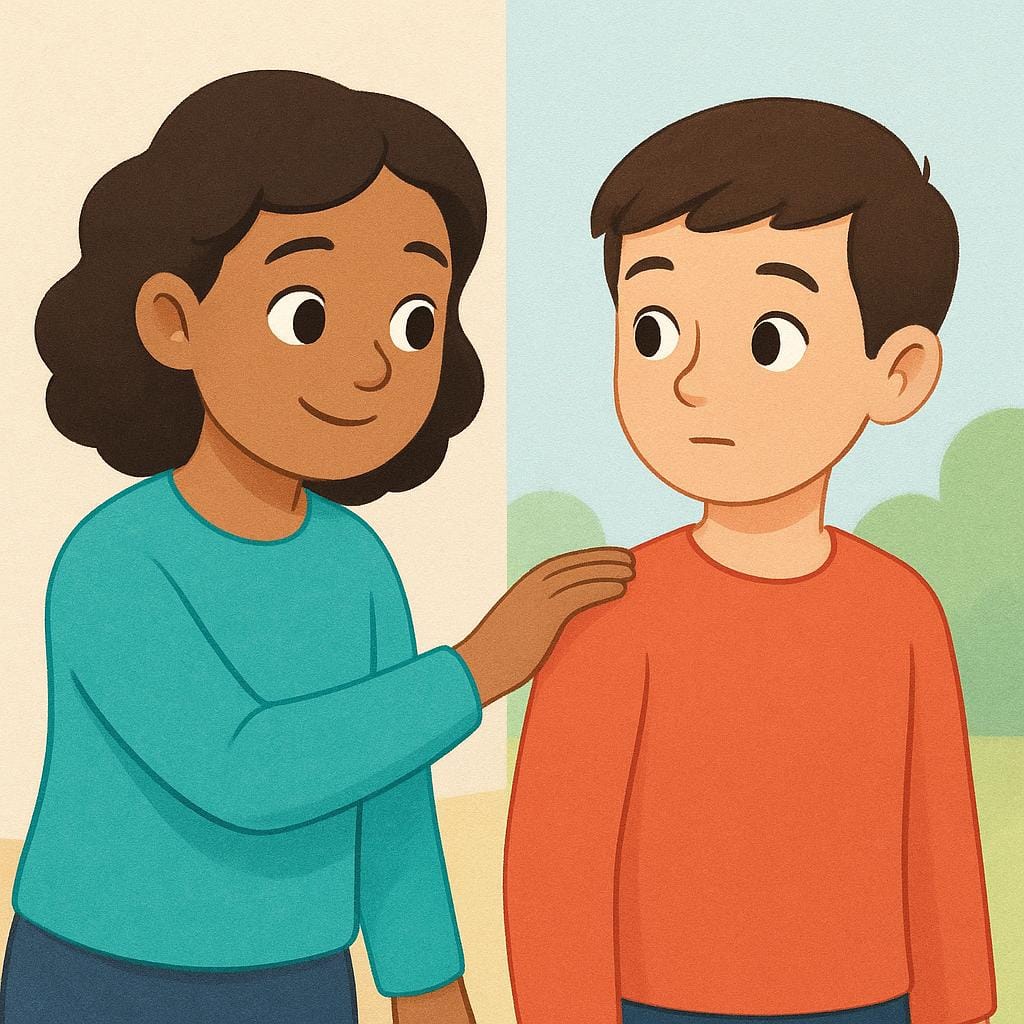
The most common Spanish word for “forgive” is “disculpa” — use 'disculpa' when you are asking for forgiveness in an informal context, or when someone is excusing themselves.
disculpa
dis-KOOL-pahdis'kulpa
Examples
Disculpa, ¿me puedes decir la hora?
Excuse me, can you tell me the time?
Disculpa, ¿sabes dónde está la estación de metro?
Excuse me, do you know where the subway station is?
¡Uy, disculpa! No te vi.
Oops, sorry! I didn't see you.
Mi hermana siempre me disculpa cuando llego tarde.
My sister always forgives me when I arrive late.
A Command in Disguise
When you say 'Disculpa' to get someone's attention, you're actually giving a friendly command: '(You) excuse me'. This form, 'disculpa', is for talking to one person you know well (the 'tú' form).
Using 'Disculpa' with Strangers
Mistake: “Disculpa, señor, ¿qué hora es?”
Correction: Disculpe, señor, ¿qué hora es? When talking to an older person, a stranger, or someone in a position of authority, it's more polite to use the 'usted' form, which is 'disculpe'.
perdonen
pehr-DOH-nenpeɾˈdonen
Examples
Perdonen, ¿han visto mi bolso?
Excuse me (everyone), have you seen my bag?
Perdonen, ¿saben dónde está la estación?
Excuse me (everyone), do you know where the station is?
Perdonen la tardanza, había mucho tráfico.
Forgive the lateness (everyone), there was a lot of traffic.
Espero que me perdonen por lo que dije.
I hope they (or you all) forgive me for what I said.
Addressing a Group
Use 'perdonen' when you are speaking to two or more people. If you are only talking to one friend, use 'perdona' instead.
Two Roles for One Word
This form works as both a command ('Everyone, excuse me!') and in sentences about feelings ('I hope they forgive me').
Don't Mix Up 'Perdonan' and 'Perdonen'
Mistake: “Using 'perdonan' to ask for an excuse.”
Correction: Use 'perdonen'. 'Perdonan' (with an 'a') simply describes a fact, like 'They forgive easily.' 'Perdonen' (with an 'e') is the form used for requests and wishes.
disculpe
dis-COOL-pehdis'kulpe
Examples
Disculpe las molestias que esto le haya podido causar.
Please excuse any inconvenience this may have caused you.
Por favor, disculpe mi ignorancia sobre el tema.
Please, excuse my ignorance on the subject.
Espero que me disculpe por la respuesta tardía.
I hope you'll forgive me for the late reply.
Le pido que disculpe a mi hijo por su comportamiento.
I ask that you excuse my son for his behavior.
A Command Form
'Disculpe' is the command form of 'disculpar' for 'usted' (the formal 'you'). It's a direct but polite way to ask someone to excuse something.
A Special Form for Wishes and Doubts
'Disculpe' is also a special verb form (called the present subjunctive) used after phrases that express wishes, doubts, or emotions, like 'Espero que...' (I hope that...) or 'No creo que...' (I don't think that...).
perdone
pehr-DOH-nay (Stress on the second syllable)peɾˈðo.ne
Examples
Espero que me perdone por mi error.
I hope you forgive me for my mistake.
No creo que mi jefe me perdone por llegar tarde.
I don't think my boss will forgive me for being late.
Dudo que él perdone tan fácilmente.
I doubt that he forgives so easily.
Espero que usted me perdone, señora.
I hope that you (formal) forgive me, ma'am.
Subjunctive Trigger
This form ('perdone') is necessary after certain phrases like 'No creo que...' (I don't believe that...) or 'Dudo que...' (I doubt that...), because they express uncertainty.
Matching Subjects
If the main part of the sentence (e.g., 'Yo creo') has a different person performing the action than the second part ('que él perdone'), the subjunctive form is required.
Informal vs. Formal Apologies
Related Translations
Learn Spanish with Inklingo
Interactive stories, personalized learning, and more.