How to Say "excuse me" in Spanish
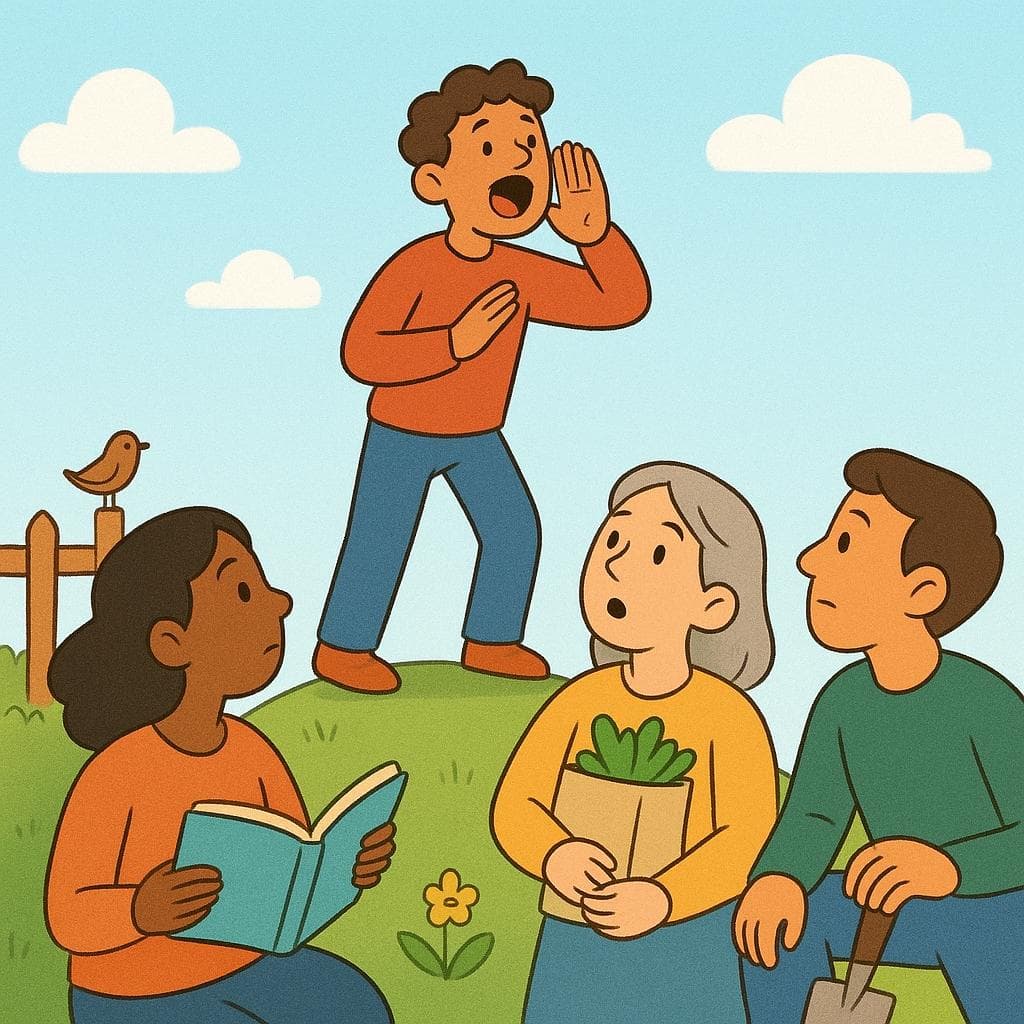
The most common Spanish word for “excuse me” is “perdón” — use 'perdón' as a general, all-purpose way to get someone's attention or apologize quickly, similar to 'sorry!' or 'pardon me'. It's very common in everyday, informal situations.







perdón
Examples
¡Perdón! ¿Me dejas pasar?
Excuse me! Can you let me pass?
disculpa
dis-KOOL-pahdis'kulpa

Examples
Disculpa, ¿tienes la hora?
Excuse me, do you have the time?
Disculpa, ¿sabes dónde está la estación de metro?
Excuse me, do you know where the subway station is?
¡Uy, disculpa! No te vi.
Oops, sorry! I didn't see you.
Mi hermana siempre me disculpa cuando llego tarde.
My sister always forgives me when I arrive late.
A Command in Disguise
When you say 'Disculpa' to get someone's attention, you're actually giving a friendly command: '(You) excuse me'. This form, 'disculpa', is for talking to one person you know well (the 'tú' form).
Using 'Disculpa' with Strangers
Mistake: “Disculpa, señor, ¿qué hora es?”
Correction: Disculpe, señor, ¿qué hora es? When talking to an older person, a stranger, or someone in a position of authority, it's more polite to use the 'usted' form, which is 'disculpe'.
disculpe
dis-COOL-pehdis'kulpe

Examples
Disculpe, ¿me podría ayudar?
Excuse me, could you help me?
Disculpe, ¿me puede decir la hora?
Excuse me, can you tell me the time?
Disculpe, no entendí. ¿Puede repetirlo?
Pardon me, I didn't understand. Can you repeat that?
¡Ay, disculpe! Fue sin querer.
Oh, sorry! I didn't mean to.
Formal vs. Informal 'Excuse Me'
Use 'disculpe' when talking to someone you don't know, an older person, or in a professional setting (the 'usted' form). For friends, family, or people your age (the 'tú' form), you would say 'disculpa'.
For Big vs. Small Apologies
Mistake: “Using 'disculpe' when you've made a serious mistake.”
Correction: 'Disculpe' is for small things. If you need to make a more serious apology, it's better to use 'lo siento' (I'm sorry) or 'perdón'.
perdona
per-DOH-nahpeɾˈðo.na

Examples
Perdona, ¿puedo hacerte una pregunta?
Excuse me, can I ask you a question?
Perdona, ¿sabes dónde está el baño?
Excuse me, do you know where the bathroom is?
¡Uy, perdona! No te vi.
Whoops, sorry! I didn't see you.
A Command Form
This word is the 'tú' command form of 'perdonar' (to forgive). In Spanish, we often use the command form as a quick way to ask for attention.
Informal vs. Formal
Since this is the informal 'tú' form, only use 'perdona' when speaking to friends, family, or people your age. Use 'perdone' (the 'usted' form) when speaking formally.
Using 'Perdona' Formally
Mistake: “Perdona, señor, ¿cuánto cuesta esto?”
Correction: Perdone, señor, ¿cuánto cuesta esto? (Use the formal 'perdone' when addressing strangers or elders respectfully.)
perdone
pehr-DOH-nay (Stress on the second syllable)peɾˈðo.ne

Examples
Perdone, ¿sabe dónde está la farmacia?
Excuse me, do you know where the pharmacy is?
Perdone, ¿me puede decir la hora?
Excuse me, can you tell me the time?
Perdone la tardanza, el tráfico estuvo horrible.
Pardon the delay, the traffic was horrible.
Perdone, ¿no es usted el señor López?
Excuse me, aren't you Mr. Lopez?
Formal Command
'Perdone' is the polite command used when addressing someone formally (using 'usted'). Use 'perdona' only for close friends or family.
Implicit 'Me'
When used alone, 'Perdone' often implies 'Perdóneme' (Forgive me), but the word itself is usually enough to signal an apology or request.
permiso
per-MEE-sohpeɾˈmiso

Examples
Permiso, ¿puedo pasar por aquí?
Excuse me, may I pass here?
Permiso, ¿puedo pasar?
Excuse me, may I pass?
¡Permiso! El tren va a cerrar las puertas.
Excuse me! The train is about to close its doors.
Permiso, señora, se le cayó la cartera.
Pardon me, ma'am, you dropped your wallet.
discúlpame
Examples
Discúlpame, ¿podrías mover tu mochila?
Excuse me, could you move your backpack?
discúlpeme
Examples
Discúlpeme, señor, ¿me da su número de asiento?
Excuse me, sir, can you give me your seat number?
perdóneme
Examples
Perdóneme la interrupción, pero necesito preguntarle algo.
Excuse my interruption, but I need to ask you something.
oiga
oi-gaˈo.i.ɣa

Examples
Oiga, ¿me puede decir cuánto cuesta esto?
Excuse me, can you tell me how much this costs?
¡Oiga! ¿Me puede decir dónde está la estación de metro?
Excuse me! Could you tell me where the subway station is?
Oiga, eso no es cierto. Yo lo vi con mis propios ojos.
Listen, that's not true. I saw it with my own eyes.
A Polite Way to Interrupt
Using '¡Oiga!' is a very common and neutral way to interrupt a formal conversation or approach a stranger without being rude. It directly addresses the person formally (usted).
disculpen
dees-KOOL-pehndisˈkulpen

Examples
Disculpen, ¿alguien ha visto un gato negro?
Excuse me (all of you), has anyone seen a black cat?
Disculpen, ¿pueden decirme dónde está el metro?
Excuse me (all of you), can you tell me where the subway is?
Por favor, disculpen el retraso. Tuvimos un problema técnico.
Please, pardon the delay. We had a technical problem.
Espero que disculpen mi error. No volverá a pasar.
I hope you (all formal) excuse my mistake. It won't happen again.
A Formal Plural Command
This word is the 'ustedes' form of the verb 'disculpar,' used when you are giving a formal command or making a polite request to a group of people.
Three Ways to Excuse
Remember the three main forms for asking for an excuse: 'Disculpa' (informal, one person), 'Disculpe' (formal, one person), and 'Disculpen' (formal, multiple people).
Mixing up formality
Mistake: “Using 'Disculpan' instead of 'Disculpen' when asking for attention.”
Correction: The command form requires the special ending: 'Disculpen' is the correct command; 'Disculpan' is just 'they excuse' (Present Tense).
oigan
OY-gahnˈoi.ɣan
Examples
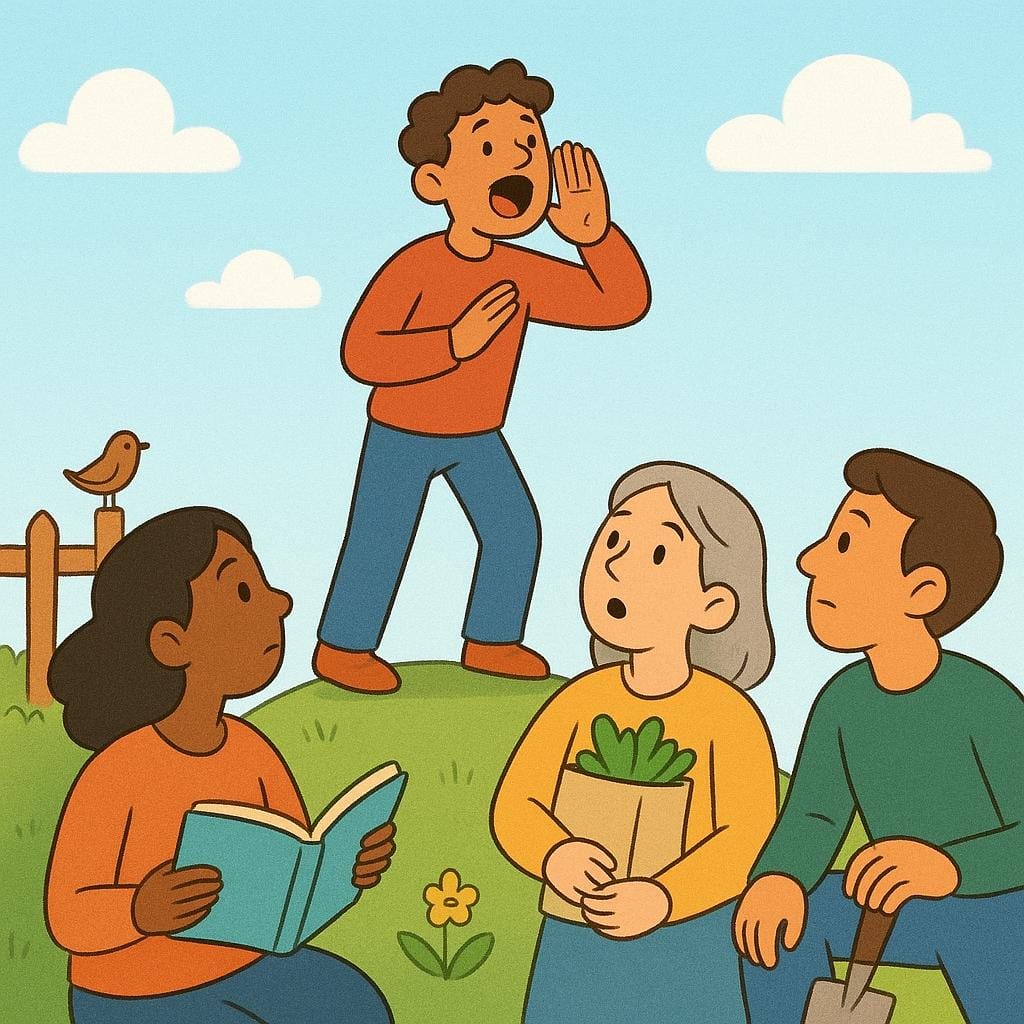
¡Oigan! Por favor, guarden silencio un momento.
Listen! Please, be quiet for a moment.
¡Oigan! Necesito su ayuda con este proyecto.
Listen! I need your help with this project (addressing a group).
Oigan, ¿quién dejó la luz encendida?
Hey, who left the light on?
Oigan bien lo que voy a decir.
Listen closely to what I'm going to say.
A Command for 'You All'
This word is a command telling a group of people ('ustedes' or 'you all') to listen. It is taken from a special verb form (the subjunctive) often used for wishes and commands.
Formal Plural Command
When giving a command to a group using the 'ustedes' form, Spanish uses the form that normally goes with 'ellos/ellas' in the present subjunctive. In this case, it's the command form of the verb oír (to hear).
permítame
Examples
Permítame presentarle a mi jefe.
Allow me to introduce you to my boss.
permíteme
Examples
Permíteme llevar esas bolsas por ti.
Let me carry those bags for you.
Formal vs. Informal 'You'
Related Translations
Learn Spanish with Inklingo
Interactive stories, personalized learning, and more.