How to Say "hardness" in Spanish
The most common Spanish word for “hardness” is “dificultad” — use 'dificultad' when 'hardness' refers to the level of challenge or complexity of a task, problem, or situation.
dificultad
dee-fee-kool-TAHDdifi-kulˈtað
Examples
El examen de matemáticas tuvo mucha dificultad.
The math exam had a lot of hardness (was very difficult).
El examen tenía mucha dificultad.
The exam was very difficult (had a lot of difficulty).
Leemos libros con diferentes niveles de dificultad.
We read books with different levels of difficulty.
The '-dad' Rule
Most Spanish words that end in '-dad' are feminine. This means you should use 'la' or 'una' with them (la dificultad).
Making it Plural
To talk about more than one, simply add '-es' to the end: 'las dificultades'.
Using the wrong gender
Mistake: “el dificultad”
Correction: la dificultad (words ending in -dad are almost always feminine).
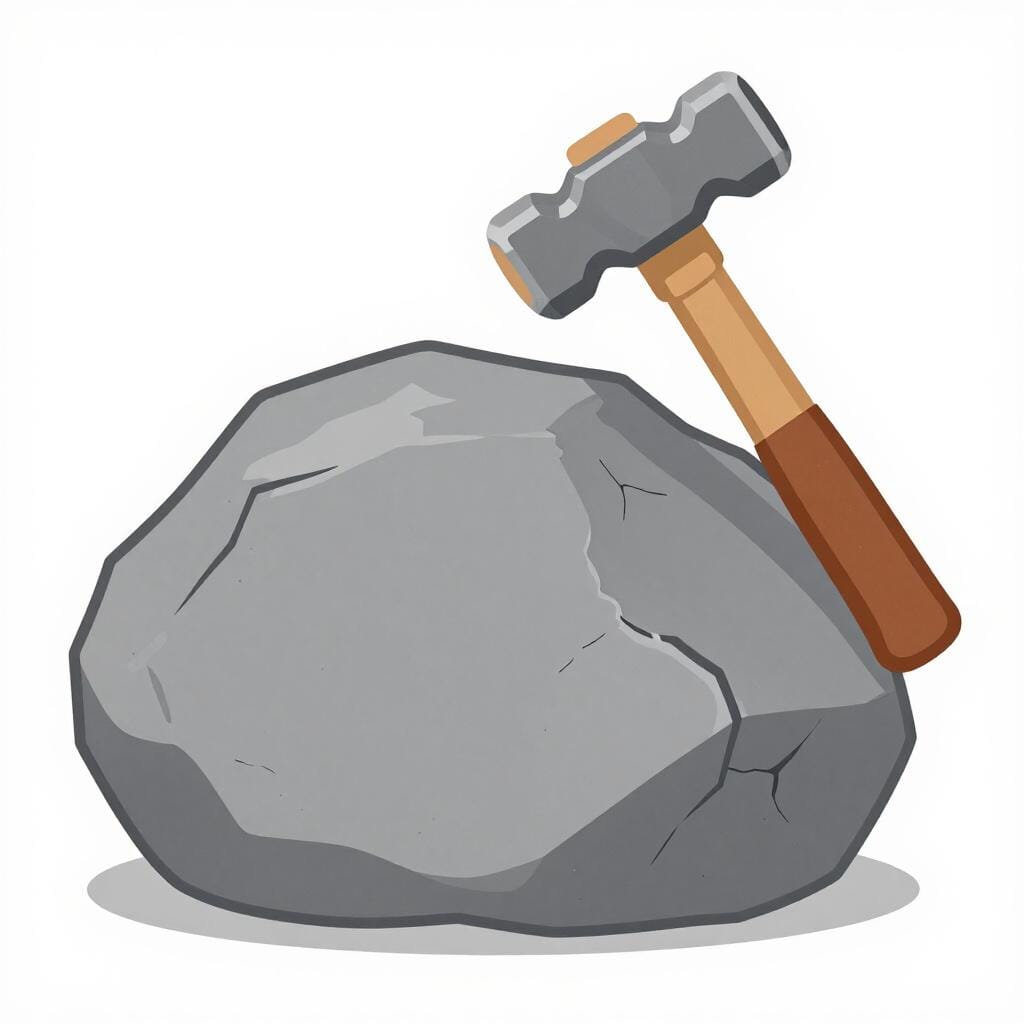
dureza
doo-REH-sahduˈɾesa
Examples
La dureza del acero es crucial para fabricar herramientas.
The hardness of steel is crucial for manufacturing tools.
La dureza del diamante lo hace muy valioso.
The hardness of the diamond makes it very valuable.
Comprobó la dureza del colchón antes de comprarlo.
He checked the firmness of the mattress before buying it.
La dureza del agua depende de los minerales que tiene.
Water hardness depends on the minerals it contains.
Nouns ending in -eza
Words that end in '-eza' are almost always feminine (la dureza) and usually describe a quality based on an adjective (duro → dureza).
Noun vs Adjective
Mistake: “La piedra es dureza.”
Correction: La piedra es dura OR La piedra tiene mucha dureza. Use 'duro' to describe the object and 'dureza' to name the quality itself.
temple
TEM-plehˈtem.ple

Examples
El temple adecuado del metal previene fracturas.
The proper hardness (tempering) of the metal prevents fractures.
El temple del acero se logra enfriándolo rápidamente.
The tempering of steel is achieved by cooling it quickly.
La guitarra ha perdido el temple por la humedad.
The guitar has lost its tuning because of the humidity.
El artesano comprobó el temple de la hoja.
The craftsman checked the hardness (temper) of the blade.
Technical Use
In this sense, 'temple' describes the result of a process (tempering) rather than the process itself.
Dificultad vs. Dureza
Related Translations
Learn Spanish with Inklingo
Interactive stories, personalized learning, and more.