How to Say "home" in Spanish
The most common Spanish word for “home” is “casa” — use 'casa' when referring to the physical building or structure where someone lives, like your house or apartment.



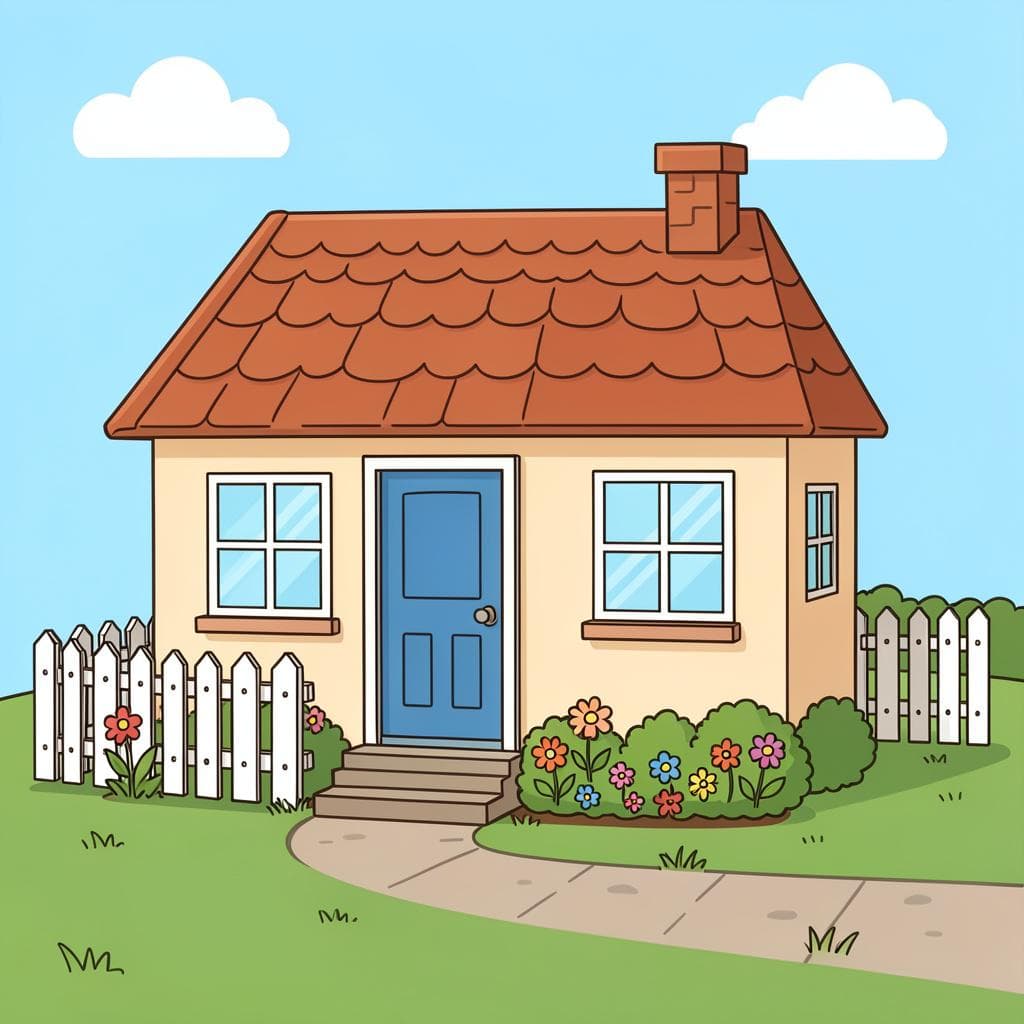




casa
KAH-sahˈkasa

Examples
Mi casa es tu casa.
My house is your house.
Vamos a casa de María.
Let's go to Maria's house.
Trabajo desde casa.
I work from home.
Using 'a casa' vs. 'en casa'
Use 'a casa' for movement towards home (like 'go home'), and 'en casa' for location at home (like 'be at home'). For example: 'Voy a casa' (I'm going home) vs. 'Estoy en casa' (I'm at home).
Forgetting the Gender
Mistake: “El casa es grande.”
Correction: La casa es grande. Remember that 'casa' is a feminine word, so it uses 'la' and adjectives that describe it usually end in '-a'.
hogar
oh-GARoˈɣaɾ

Examples
No hay lugar como el hogar.
There's no place like home.
Creamos un hogar feliz para nuestros hijos.
We created a happy home for our children.
Es un centro de acogida para personas sin hogar.
It's a shelter for homeless people.
Hogar vs. Casa
'Hogar' is about the feeling of home—the family, warmth, and comfort. 'Casa' is the physical building or house. You live in a 'casa', but you create a 'hogar'.
Mixing up 'hogar' and 'casa'
Mistake: “Compré un nuevo hogar con tres dormitorios.”
Correction: Compré una nueva casa con tres dormitorios. You buy the physical building ('casa'), and then you make it a 'hogar' by living in it.
residencia
reh-see-DEN-see-ahresiˈðenθja

Examples
Su residencia principal está en la capital.
Their main residence is in the capital.
Necesitamos la dirección de su residencia para enviarle el paquete.
We need the address of your residence to send you the package.
El presidente se mudó a su residencia oficial.
The president moved to his official residence.
Always Feminine
Remember that 'residencia' is always a feminine word, so you must use feminine articles and adjectives with it (e.g., 'la residencia', 'una residencia grande').
Confusing with 'Hogar'
Mistake: “Usando 'residencia' cuando se refiere a un sentido emocional de hogar.”
Correction: Use 'hogar' (home) when talking about the feeling of comfort and belonging, and 'residencia' for the physical location or official address.
domicilio
doh-mee-SEE-lyohdomiˈsiljo
Examples
Por favor, escriba su domicilio actual en el formulario.
Please write your current home address on the form.
El sospechoso no se encontraba en su domicilio.
The suspect was not at his residence.
Gender and Number
It is a masculine noun. Always use 'el' or 'un'. To make it plural, just add an 's': 'los domicilios'.
Domicilio vs. Casa
Mistake: “Using 'domicilio' to sound cozy.”
Correction: Use 'casa' or 'hogar' for a warm, personal 'home.' Use 'domicilio' for paperwork, deliveries, or official talk.
vivienda
bee-bee-EN-dahbiˈβjenda

Examples
El precio de la vivienda ha subido mucho este año.
The price of housing has gone up a lot this year.
Todos tienen derecho a una vivienda digna.
Everyone has the right to decent housing.
Es una zona con muchas viviendas unifamiliares.
It is an area with many single-family homes.
Vivienda vs. Casa
While 'casa' is the word you use to talk about your personal home or a physical building, 'vivienda' is a broader, more formal term used to talk about the concept of housing or a residential unit in official contexts.
Always Feminine
This word is always used with 'la' (la vivienda) or 'una' (una vivienda), even if a man lives there alone.
Inviting friends over
Mistake: “Ven a mi vivienda mañana.”
Correction: Ven a mi casa mañana. 'Vivienda' sounds way too formal for a social invitation; it’s like saying 'Come to my residential unit'.
nido
nee-dohˈniðo

Examples
Después de la universidad, volví a mi nido familiar por un tiempo.
After university, I returned to my family home/haven for a while.
Este pueblo es mi nido; no importa dónde vaya, siempre vuelvo.
This town is my birthplace; no matter where I go, I always return.
Using 'nido' for any house
Mistake: “Mi nido es grande.”
Correction: Mi casa es grande. ('Nido' implies warmth and belonging, use 'casa' for a neutral building description.)
natal
nah-TAHLnaˈtal

Examples
Ella siempre extraña su ciudad natal.
She always misses her hometown.
Regresó a su suelo natal después de diez años.
He returned to his native land after ten years.
El español es su lengua natal.
Spanish is his native language.
One Form for All
This word stays the same whether you are describing a masculine thing (un país natal) or a feminine thing (una ciudad natal). It doesn't change its ending for gender.
Natal vs. Nativo
Mistake: “Using 'natal' to describe a person.”
Correction: Use 'nativo' for people ('él es nativo de aquí') and 'natal' for places or things related to birth ('su ciudad natal').
interno
een-TEHR-nohinˈteɾno

Examples
El motor tiene un problema interno que no podemos ver.
The engine has an internal problem that we cannot see.
La política interna de la empresa cambió la semana pasada.
The company's internal policy changed last week.
Sentí una alegría interna muy grande después de ganar.
I felt a very great inner joy after winning.
Gender Agreement
As an adjective, 'interno' must change its ending to match the noun it describes. Use 'interna' for feminine nouns (e.g., 'política interna') and 'internos'/'internas' for plural nouns.
Confusing Adjective and Adverb
Mistake: “Usar 'internamente' cuando se necesita el adjetivo. (e.g., 'El daño fue internamente')”
Correction: Use the adjective form: 'El daño fue interno.' 'Internamente' (internally) is an adverb describing how an action is done.
Casa vs. Hogar
Related Translations
Learn Spanish with Inklingo
Interactive stories, personalized learning, and more.