How to Say "offended" in Spanish
The most common Spanish word for “offended” is “ofendido” — use 'ofendido' when someone explicitly feels insulted or hurt by a remark or action, implying a direct offense taken.




ofendido
oh-fehn-DEE-dohofenˈdido

Examples
Me siento ofendido por tus comentarios irrespetuosos.
I feel offended by your disrespectful comments.
Él se siente ofendido porque no lo invitaste a la fiesta.
He feels offended because you didn't invite him to the party.
No te pongas ofendida, solo era una broma.
Don't get offended (female), it was just a joke.
Habló con un tono de voz ofendido.
He spoke with an offended tone of voice.
Matching the Person
This word changes its ending based on who you are talking about. Use 'ofendido' for a man and 'ofendida' for a woman.
Being vs. Feeling
We usually use this word with 'estar' (to be in a state) or 'sentirse' (to feel) because it describes a temporary emotion, not a permanent personality trait.
Watch the 'a'
Mistake: “ofendido con el comentario”
Correction: ofendido por el comentario
dolido
doh-LEE-dohdoˈliðo

Examples
Está dolido porque no lo consideraron para el proyecto.
He is hurt because they didn't consider him for the project.
Juan está dolido porque no lo invitaste a tu fiesta.
Juan is hurt because you didn't invite him to your party.
Me siento muy dolida por las palabras que me dijiste ayer.
I feel very hurt by the words you said to me yesterday.
A pesar de que pasó mucho tiempo, él sigue dolido por la traición.
Even though a long time passed, he is still resentful about the betrayal.
Matching the Person
Since this is an adjective (a describing word), it must match the gender of the person you are talking about. Use 'dolido' for men and 'dolida' for women.
Using 'Estar' or 'Sentirse'
To say someone IS hurt, always use 'estar' (temporary state) rather than 'ser.' You can also use 'sentirse' to say someone FEELS hurt.
Emotional vs. Physical Pain
Mistake: “Estoy dolido de la espalda.”
Correction: Tengo dolor de espalda / Me duele la espalda. Use 'dolido' for feelings and 'dolorido' or the verb 'doler' for physical body aches.
Forgetting the 'A' for Women
Mistake: “Ella está muy dolido.”
Correction: Ella está muy dolida. Always change the ending to -a when describing a female.
sentido
sen-TEE-dohsenˈti.ðo

Examples
Sus palabras me dejaron muy sentido.
His words left me feeling very hurt.
Fue un discurso muy sentido y emocionante.
It was a very heartfelt and emotional speech.
Ella está muy sentida contigo porque no la llamaste.
She is very offended with you because you didn't call her.
Mis más sentidas condolencias.
My most heartfelt condolences.
A Word That Describes
'Sentido' is the past participle of the verb 'sentir' (to feel). This means it can be used like an adjective to describe a noun. Because it's an adjective, it must change to match the noun it describes: 'un discurso sentido' (a heartfelt speech) but 'una carta sentida' (a heartfelt letter).
Forgetting to Change the Ending
Mistake: “Mi amiga está muy sentido.”
Correction: Mi amiga está muy sentida. Because 'amiga' is feminine, the adjective 'sentida' must also be feminine.
lastimado
las-tee-MAH-dohlastiˈmaðo
Examples
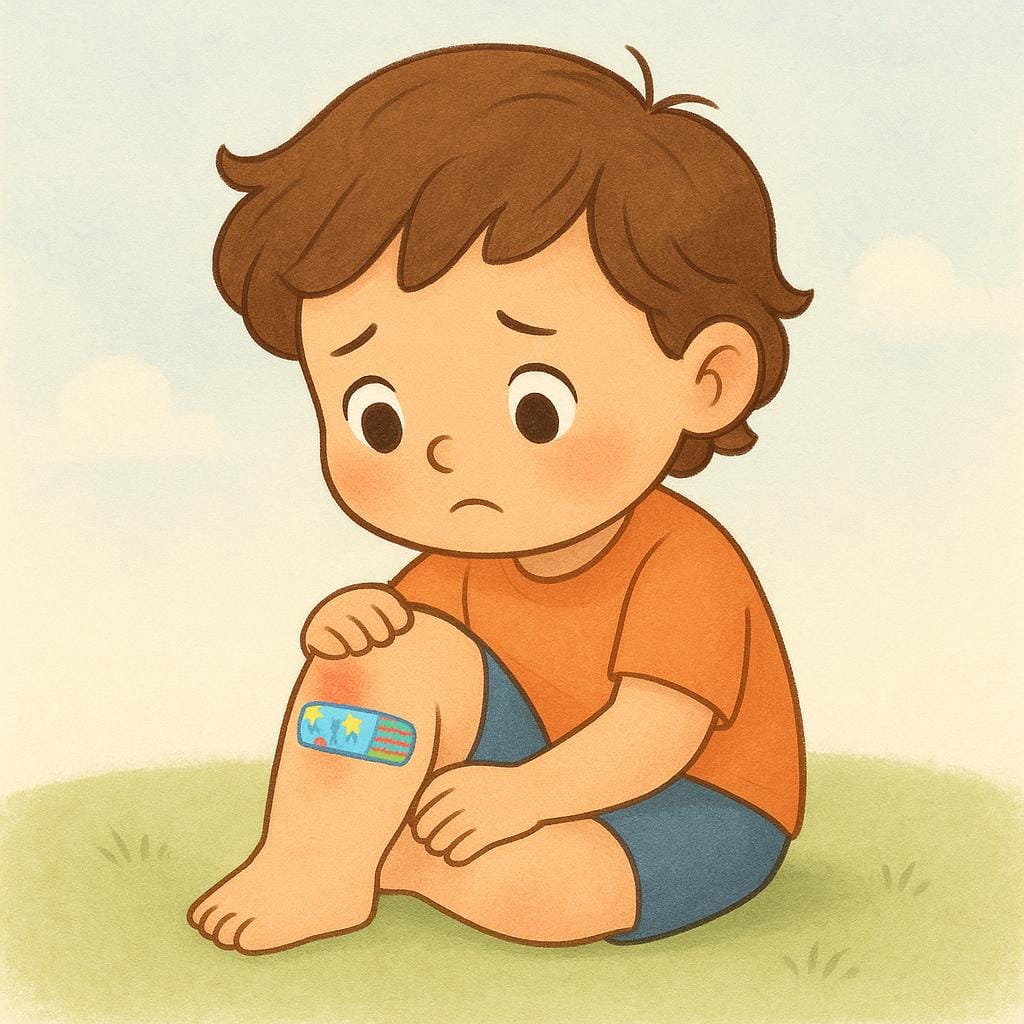
El niño está lastimado porque se cayó jugando.
The child is hurt because he fell while playing.
Mi perro está lastimado de la pata después de correr mucho.
My dog's paw is hurt after running a lot.
Ella se sintió muy lastimada por sus comentarios groseros.
She felt very hurt by his rude comments.
Hay que tener cuidado con las rodillas lastimadas.
You have to be careful with injured knees.
Adjective Agreement
As an adjective, 'lastimado' must change its ending to match the gender and number of the noun it describes: 'lastimada' (feminine singular), 'lastimados' (masculine plural), 'lastimadas' (feminine plural).
Using 'Ser' vs. 'Estar'
Mistake: “Soy lastimado.”
Correction: Estoy lastimado. Use 'estar' (to be in a state) because being hurt is usually a temporary state or condition.
Distinguishing 'Ofendido' from 'Dolido'
Related Translations
Learn Spanish with Inklingo
Interactive stories, personalized learning, and more.