How to Say "settlement" in Spanish
The most common Spanish word for “settlement” is “acuerdo” — use 'acuerdo' for a general agreement or resolution, often in a legal or formal context, implying mutual consent.





acuerdo
ah-KWEHR-dohaˈkweɾ.ðo

Examples
Finalmente, llegaron a un acuerdo.
Finally, they reached an agreement.
Estoy de acuerdo contigo.
I agree with you.
El acuerdo de paz fue firmado ayer.
The peace accord was signed yesterday.
The Super-Phrase: 'De acuerdo'
Think of 'de acuerdo' as a single block that means 'okay' or 'in agreement'. You use it with the verb 'estar', not 'ser'. For example, 'Estamos de acuerdo' (We agree).
'un acuerdo' vs. 'de acuerdo'
Mistake: “Using them interchangeably. For example, saying 'Soy un acuerdo' to mean 'I agree'.”
Correction: Use 'un acuerdo' when talking about the agreement itself (a thing): 'Tenemos un acuerdo' (We have a deal). Use 'de acuerdo' to say you agree: 'Estoy de acuerdo' (I agree).
arreglo
ah-rreh-gloaˈrreɣlo

Examples
Finalmente, llegaron a un arreglo con la compañía de seguros.
Finally, they reached an agreement with the insurance company.
Necesitamos hacer un arreglo para que todos podamos usar el coche.
We need to make an arrangement so that we can all use the car.
Preposition Use
When talking about reaching a deal, use the verb 'llegar' followed by the preposition 'a': 'llegar a un arreglo'.
pago
PAH-goˈpa.ɣo

Examples
El pago de la renta es el primer día del mes.
The rent payment is on the first day of the month.
Ella recibió el pago por su trabajo inmediatamente.
She received the payment for her work immediately.
Aceptamos el pago con tarjeta de crédito o en efectivo.
We accept payment by credit card or in cash.
Always Masculine
Even though money (la moneda) is feminine, 'pago' is a masculine noun, so use 'el pago' or 'un pago'.
Confusing Noun and Verb
Mistake: “Using 'pago' as the action when you mean the verb 'pagar' (to pay).”
Correction: Remember 'pago' is the thing (the payment), while 'pagar' is the action (to pay).
asentamiento
ah-sen-tah-myen-tohasentaˈmjento
Examples
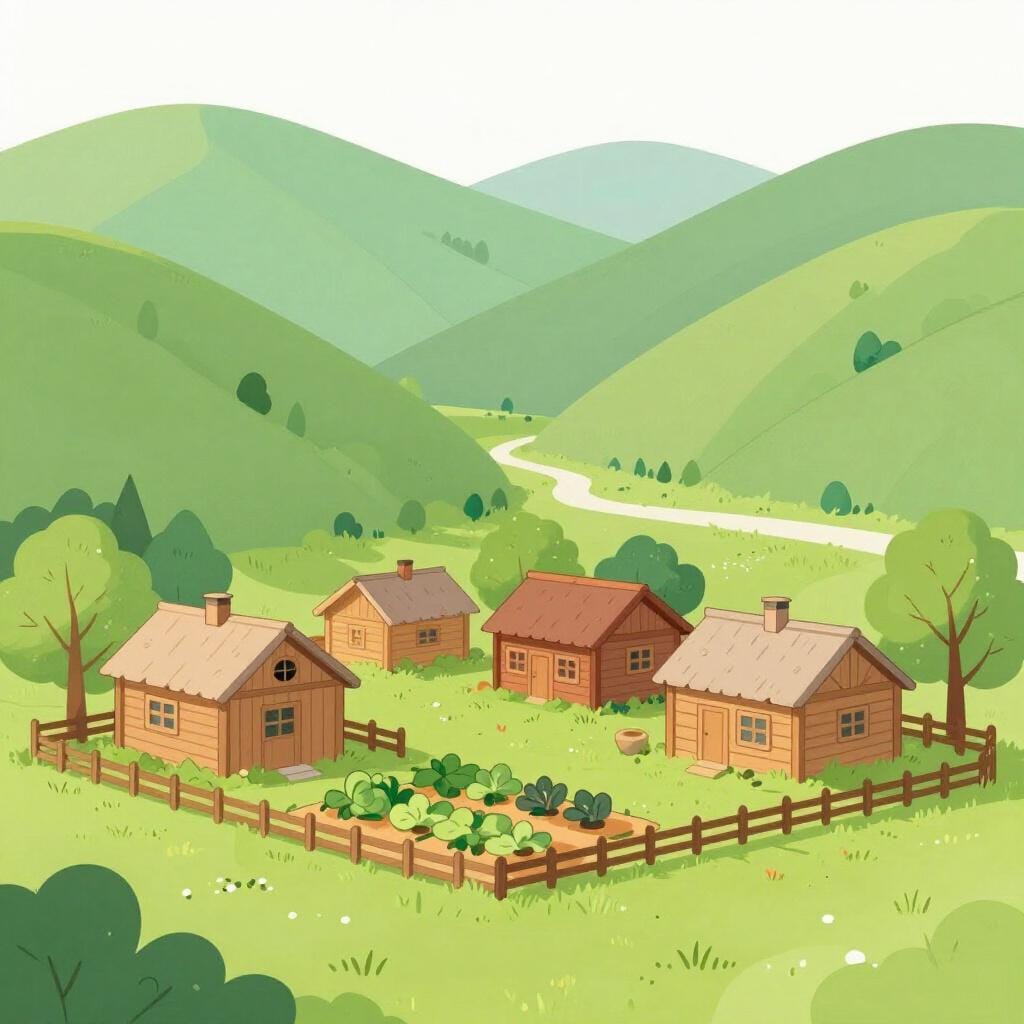
Los arqueólogos descubrieron un antiguo asentamiento romano.
Archaeologists discovered an ancient Roman settlement.
El gobierno está mejorando los servicios en el asentamiento.
The government is improving services in the settlement.
Muchos asentamientos se formaron cerca del río.
Many settlements were formed near the river.
Action to Noun
The ending '-miento' is a common way to turn an action word (verb) into a thing (noun). It's like turning 'to settle' into 'settlement'.
Gender Check
Since this word ends in 'o', it is masculine. You should always use 'el' or 'un' with it (el asentamiento).
Don't confuse with 'Asiento'
Mistake: “Me senté en el asentamiento.”
Correction: Me senté en el asiento. (Asentamiento is a community/place; asiento is the physical chair you sit on.)
poblado
po-BLAH-dohpoˈβlaðo

Examples
Los arqueólogos encontraron un poblado antiguo cerca del río.
The archaeologists found an ancient settlement near the river.
Es un pequeño poblado de pescadores.
It is a small fishing village.
Vivían en un poblado remoto en las montañas.
They lived in a remote settlement in the mountains.
Pueblo vs. Poblado
While 'pueblo' is the standard word for 'town,' 'poblado' is often used for smaller, older, or more informal settlements.
Using for Big Cities
Mistake: “Madrid es un poblado muy grande.”
Correction: Madrid es una ciudad muy grande. 'Poblado' is only for very small settlements or specific housing groups.
compensación
Examples
Recibí una compensación por el vuelo cancelado.
I received compensation for the canceled flight.
ajuste
ah-HOOS-tehaˈxuste

Examples
El gobierno anunció un ajuste en el presupuesto de educación.
The government announced a cutback in the education budget.
Hubo un ajuste salarial para compensar la inflación.
There was a salary adjustment to compensate for inflation.
Plural Usage
In financial news, you will often hear the plural 'ajustes' to refer to a series of economic measures.
Economic context
Mistake: “Saying 'corte' for budget cuts.”
Correction: While 'corte' means cut, in economics, 'ajuste' or 'recorte' are much more natural for budget reductions.
liquidación
Examples
La empresa entró en proceso de liquidación.
The company entered into a liquidation process.
transacción
Examples
Llegaron a una transacción para evitar ir a juicio.
They reached a settlement to avoid going to trial.
Agreement vs. Place
Related Translations
Learn Spanish with Inklingo
Interactive stories, personalized learning, and more.