How to Say "shoes" in Spanish
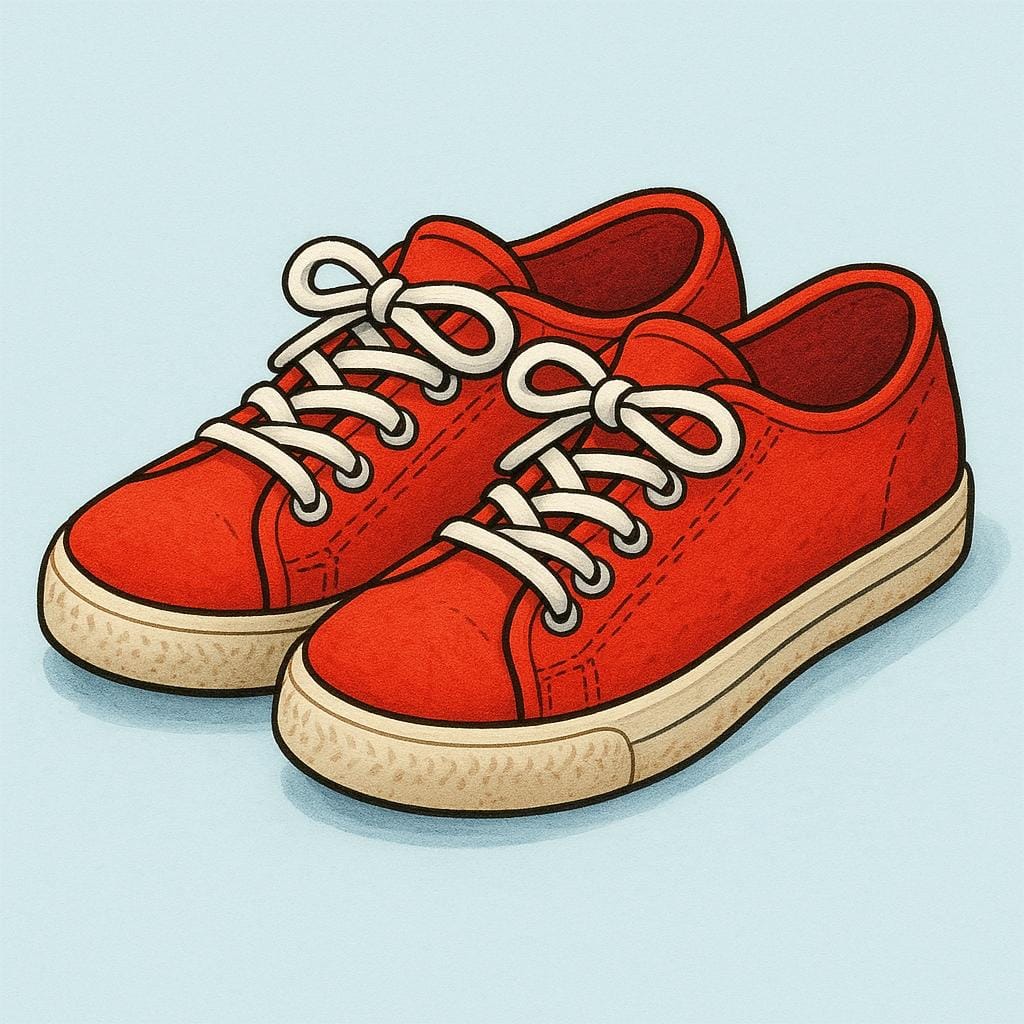
The most common Spanish word for “shoes” is “zapatos” — use 'zapatos' as the general, everyday word for shoes when referring to a pair of shoes you wear on your feet.

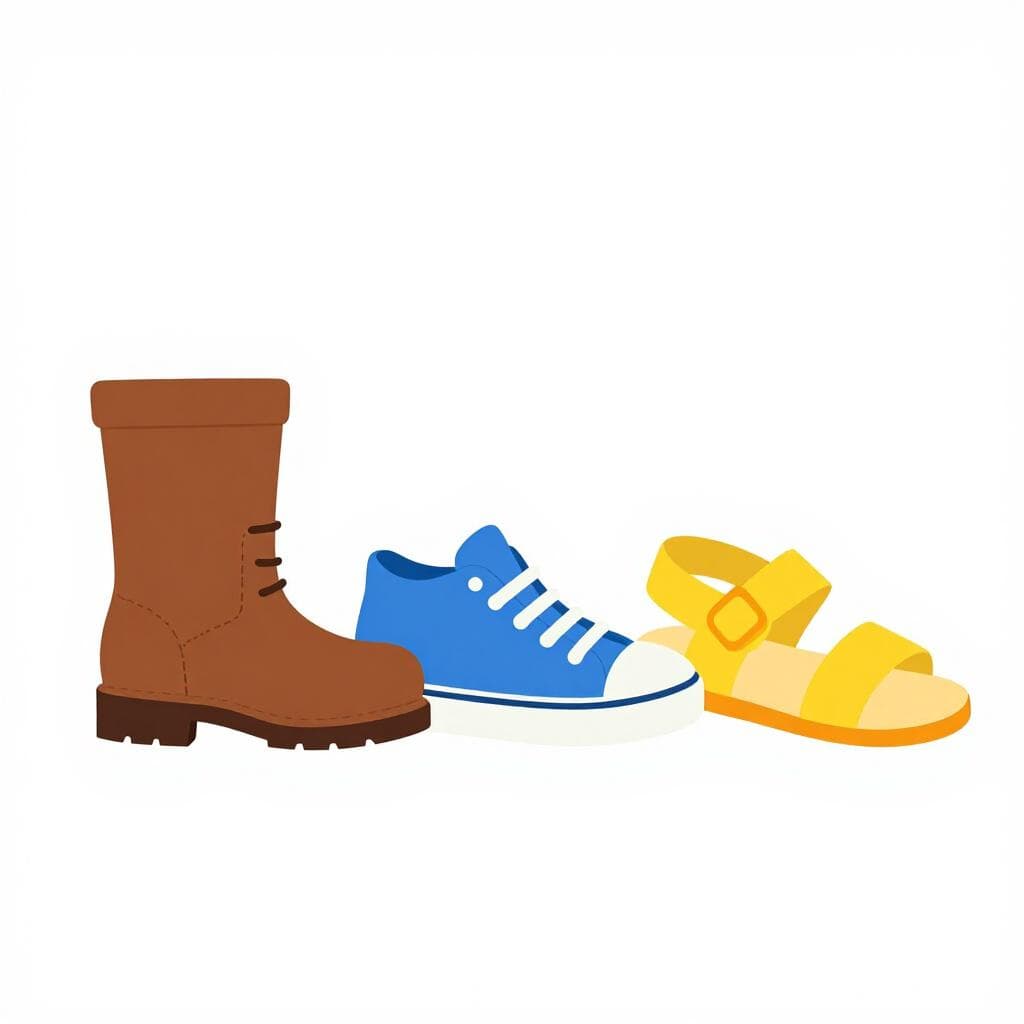
zapatos
sa-PA-tossaˈpatos
Examples
Necesito comprar unos zapatos nuevos para la fiesta.
I need to buy some new shoes for the party.
Estos zapatos de cuero son muy elegantes.
These leather shoes are very elegant.
Por favor, quítate los zapatos antes de entrar.
Please, take off your shoes before coming in.
Always Masculine and Plural
Zapatos is the plural form of zapato (one shoe). Because it's a masculine word, you must use masculine words with it, like los, unos, and adjectives ending in -os. For example: los zapatos negros (the black shoes).
Singular vs. Plural
You use zapatos (plural) to talk about a pair of shoes. If you need to talk about just one shoe, you use the singular form: zapato. For example, 'Perdí un zapato' (I lost a shoe).
Mixing up Gender
Mistake: “Me gustan las zapatos.”
Correction: Me gustan los zapatos. Even though `zapatos` ends in '-os', remember it's a masculine noun, so it needs `los`, not `las`.
Using Singular for a Pair
Mistake: “Compré un zapato nuevo.”
Correction: Compré (unos) zapatos nuevos. Unless you really bought only one shoe, use the plural `zapatos` to talk about buying a new pair.
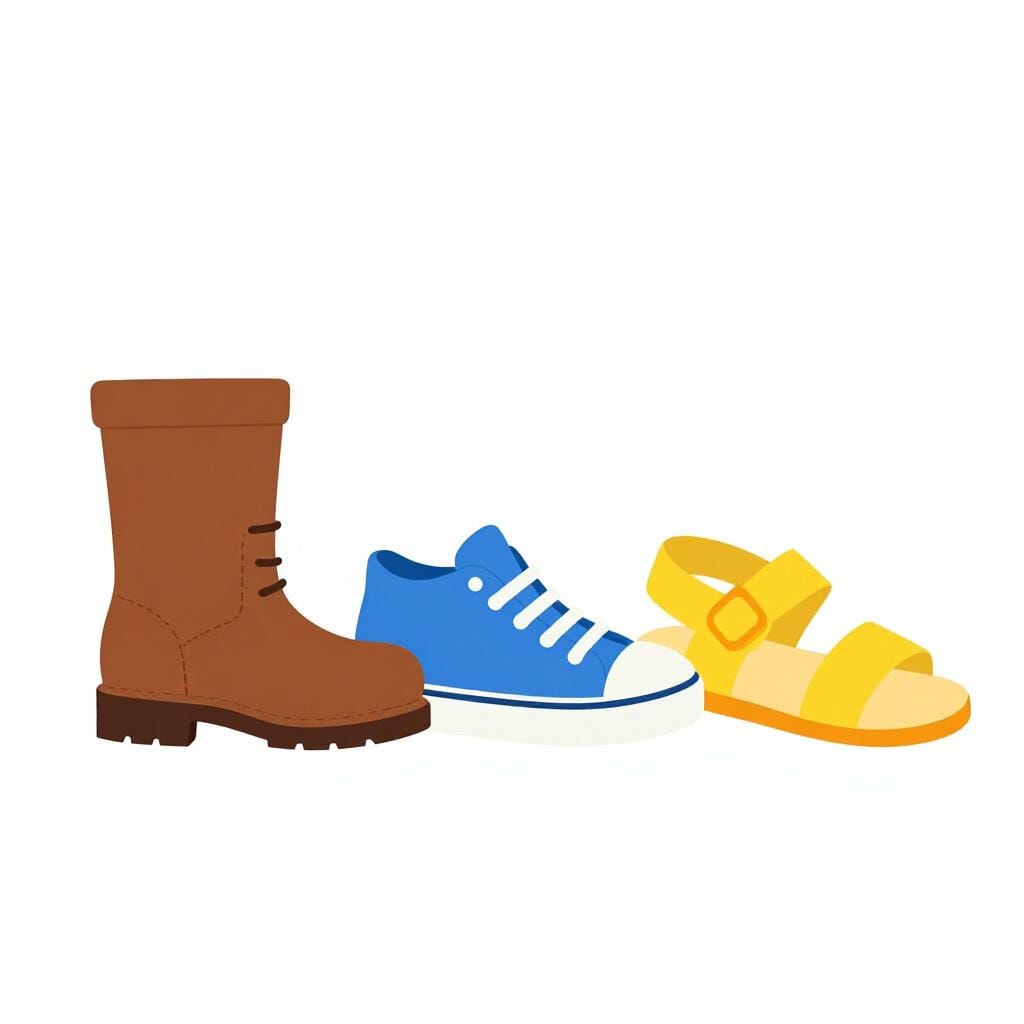
calzado
kal-SAH-dohkalˈθaðo
Examples
Es importante elegir un calzado cómodo para caminar mucho.
It is important to choose comfortable footwear for walking a lot.
En esta tienda venden calzado de cuero de alta calidad.
In this shop, they sell high-quality leather footwear.
El calzado de seguridad es obligatorio en la construcción.
Safety footwear is mandatory in construction.
Group Word vs. Specific Object
Think of 'calzado' as a group word like 'furniture'. You wouldn't usually say 'I bought a footwear'; instead, you'd say 'I bought some footwear' or just 'shoes'.
Gender and Articles
It is a masculine word. Even if you are talking about women's shoes, you always use 'el calzado' or 'un calzado'.
Using it for a single shoe
Mistake: “Perdí un calzado en la playa.”
Correction: Perdí un zapato en la playa.
pellejo
peh-YEH-hopeˈʎexo
Examples
El bombero se jugó el pellejo para salvar al gato.
The firefighter risked his life to save the cat.
Por fin logramos salvar el pellejo.
We finally managed to save our necks.
No me gustaría estar en su pellejo ahora mismo.
I wouldn't want to be in his shoes right now.
Idiomatic usage
In these phrases, 'pellejo' acts as a stand-in for your whole body or existence.
Confusing 'zapatos' and 'calzado'
Learn Spanish with Inklingo
Interactive stories, personalized learning, and more.