How to Say "to" in Spanish
The most common Spanish word for “to” is “a” — use 'a' when indicating direction or destination, or when a person is the direct object of a verb.



a
aha

Examples
Voy a la tienda.
I am going to the store.
Llegamos a Madrid ayer.
We arrived in Madrid yesterday.
El niño se acercó a su madre.
The boy approached his mother.
Vi a mi hermana en el mercado.
I saw my sister at the market. (Sister is the direct object, but because she is a person, 'a' is required.)
Direction and Destination
Use 'a' when expressing movement toward a physical place or goal. Think of it as the opposite of 'de' (from).
Contraction 'al'
If 'a' is followed by the masculine article 'el' (the), they must combine to form 'al'. Example: Voy al cine (I go to the cinema). This is mandatory.
The Personal 'A'
If the word receiving the action (the direct object) is a person, a group of people, or a beloved pet, you must put 'a' right before it. It has no English translation here.
When NOT to use it
If the direct object is a thing (La vi la mesa), or if the person is the subject of the sentence, you do not use the personal 'a'.
Forgetting 'al'
Mistake: “Voy a el parque.”
Correction: Voy al parque. (The contraction 'al' is required when 'a' meets 'el'.)
Omitting the Personal 'A'
Mistake: “Visito mi abuela cada semana.”
Correction: Visito a mi abuela cada semana. (Since 'abuela' is a person, 'a' is mandatory.)
Using 'A' with 'Tener'
Mistake: “Tengo a un hermano.”
Correction: Tengo un hermano. (The verb 'tener' (to have) is one of the few exceptions where 'a' is usually skipped, even for people.)
para
PAH-rahˈpaɾa

Examples
Estudio mucho para aprender español.
I study a lot in order to learn Spanish.
Necesito gafas para ver mejor.
I need glasses to see better.
Ahorramos dinero para comprar una casa.
We save money in order to buy a house.
Este regalo es para ti.
This gift is for you.
Stating Your Goal
When you want to explain WHY you are doing something, use 'para' followed by the basic '-ar', '-er', or '-ir' form of a verb. It translates to 'in order to'.
Identifying the Recipient
Use 'para' to show who or what something is intended for. It answers the question, 'Who is this for?'
Setting a Destination
Use 'para' to talk about the final destination of a journey. While 'a' also means 'to', 'para' often emphasizes the endpoint of the trip.
Confusing 'Para' and 'Por'
Mistake: “Viajo por practicar mi español.”
Correction: Viajo para practicar mi español. Use 'para' to talk about your goal or purpose (practicing Spanish). 'Por' is often used for the reason or motivation behind something.
Recipient vs. Exchange
Mistake: “Te doy $20 por el libro.”
Correction: This is correct for an exchange! But if it's a gift, you'd say 'Este libro es para ti.' Use 'por' for trades and exchanges, and 'para' for final recipients.
Direction vs. Destination
Mistake: “Camino para el parque. (If you just mean you're walking in that direction).”
Correction: Camino hacia el parque. Use 'hacia' for 'towards' a general direction. Use 'para' when the park is your final, intended stop.
hacia
ah-see-ahˈasja

Examples
Caminamos hacia la playa.
We are walking toward the beach.
Mira hacia arriba.
Look upwards.
El coche se dirige hacia el norte.
The car is heading toward the north.
Hacia vs. A
'Hacia' means 'toward' and talks about the general direction of movement. 'A' means 'to' and usually focuses on the final destination. 'Voy hacia la tienda' means you're going in the store's direction, while 'Voy a la tienda' means the store is your goal.
Confusing Direction with an End Point
Mistake: “Conduje hacia la ciudad y paré.”
Correction: This isn't wrong, but if the city was your final limit, it's clearer to use 'hasta'. 'Conduje hasta la ciudad' (I drove as far as the city). Use 'hacia' for the direction, and 'hasta' for the boundary.
pa
pahpa

Examples
¿Tienes dinero pa' comprar eso?
Do you have money to buy that?
Voy pa' la casa de mi abuela.
I'm going to my grandma's house.
Esto es pa' ti, lo hice con cariño.
This is for you, I made it with love.
What 'pa' means
"Pa" is a quick, casual way of saying the preposition "para," which means "for," "to," or "in order to." Think of it like saying "gonna" instead of "going to" in English.
Use in Formal Settings
Mistake: “Escribir 'pa' en un ensayo o correo electrónico formal.”
Correction: Always use the full form 'para' in any written text or formal conversation. 'Pa' is strictly for quick, casual speaking.
menos
MEH-nohsˈme.nos
Examples
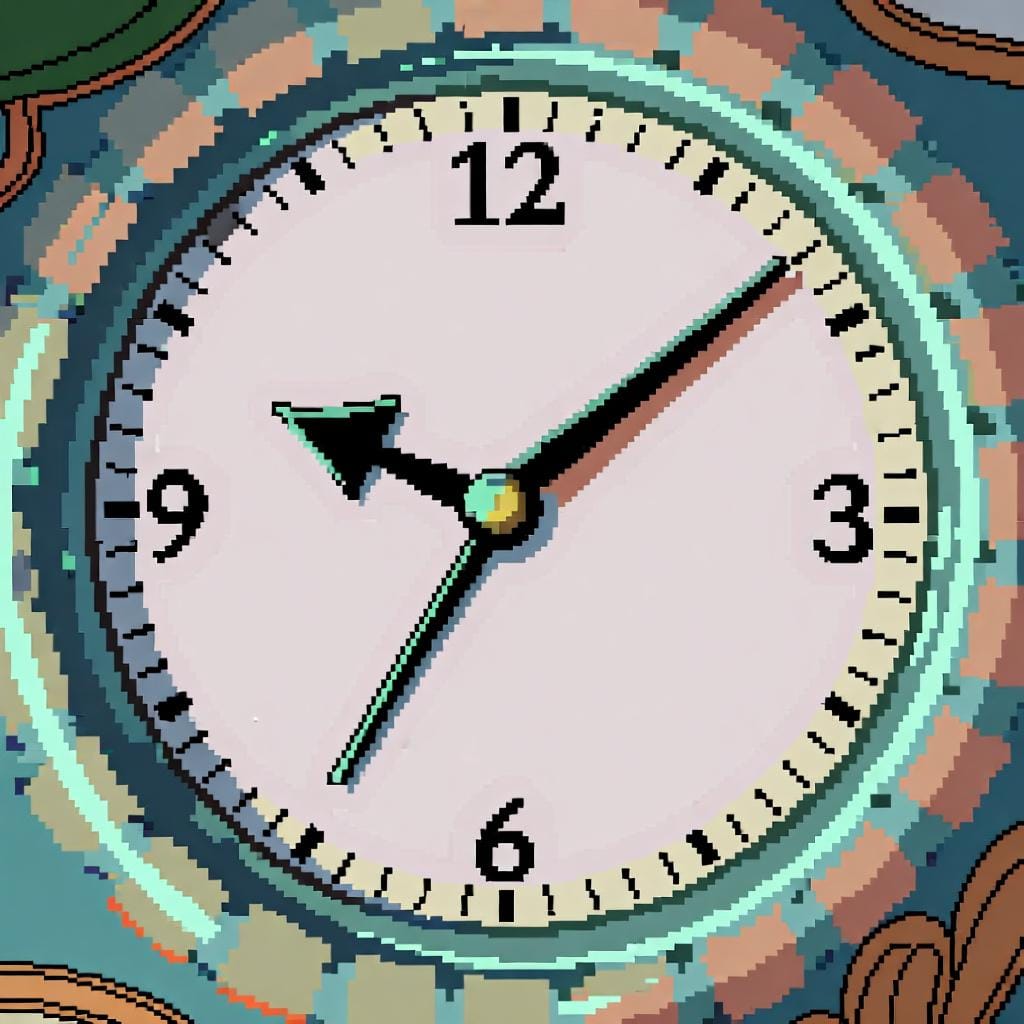
Son las diez menos cuarto.
It's a quarter to ten.
Nos vemos a las seis menos veinte.
See you at twenty to six.
Faltan cinco para las ocho. / Son las ocho menos cinco.
It's five to eight.
Telling Time After the Half-Hour
For minutes 1-30, you use 'y' (e.g., 'son las dos y diez'). For minutes 31-59, you state the next hour and use 'menos' to subtract the minutes (e.g., 'son las tres menos veinte' for 2:40).
Using 'y' Instead of 'menos'
Mistake: “Saying 'Son las siete y cincuenta' for 7:50.”
Correction: While understandable, it's much more natural to say 'Son las ocho menos diez'. Think of it as '10 minutes to 8'.
Confusing 'a' and 'para' for destination
Learn Spanish with Inklingo
Interactive stories, personalized learning, and more.